
CG NEWS ARTICLE OF THE WEEK: Islam’s Next Democratic Test
Brian Hanley, the Country Director of Search for Common Ground – Indonesia, discusses the high stakes of Indonesia’s Presidential election in the On Faith section of the Washington Post and this week’s edition of the Common Ground News Service.
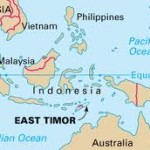
Jakarta, Indonesia — On 8 July, Indonesia will hold its second direct presidential election since embracing democracy in 1998. As the world’s fourth most populous country with more than 240 million people, Indonesia is the third largest democracy in the world, and home to the world’s largest community of Muslims. The stakes are high.

Photo from Flickr used under a Creative Commons license.
Religious extremism in particular has become a significant concern to Indonesians, and by extension to the world, as exemplified by the recent conviction of a terrorist cell in Palembang, South Sumatra. A group of ten men stand convicted of killing a local Christian educator and for conspiracy to carry out large-scale attacks on other civilian targets in Indonesia. This case illustrates the relative ease by which small groups of young men can be recruited and motivated to participate in political violence, but also the commitment of Indonesia’s government to tackle terrorism.
Java, the world’s most densely populated island with more than 130 million inhabitants, is an area of particular concern. The extremist organization Jemaah Islamiyah, often referred to as “Indonesia’s Al-Qaeda” due to their training style and role in the Bali bombings of 2002 and 2005, has set up a thriving publishing industry aimed at recruiting new followers to advance its radical agenda of establishing a world caliphate uniting all Muslim nations. Millions of young people across Indonesia are the targets.
From Aceh, where Islamic principles have been integrated into local law, causing disagreements among the region’s diverse population; to Central Sulawesi, where Christian and Muslim communities have become increasingly polarized since violence wreaked havoc on the region several years ago; to Papua, where Christians and animists square off with Muslims in a battle for a “Christian island in a Muslim nation”, religious tensions have the potential to seriously set back development efforts in Indonesia.
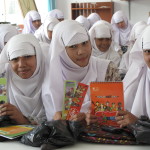
Prisons, universities, and pesantrens (Islamic boarding schools) are particularly vulnerable to radicalization. Extremist recruiters trigger young people’s disdain for the government and the West and build on that resentment to promote their values, packaged as the only authentic Islamic discourse.
Although the problems seem daunting, many groups are already working on solutions.
Numerous Indonesian civil society organizations are working to promote religious tolerance, pluralism and understanding through education, media, and public awareness activities in the most vulnerable areas in Indonesia. This includes curricular programming in pesantrens and universities to educate students, scholars, journalists, and religious leaders about the compatibility of Islam with human rights and religious pluralism.
The government is also working in some of the thorniest places to combat radicalism. For instance, the Indonesian Corrections Department has initiated innovative projects aimed at countering and preventing radicalization in prisons, through a combination of theological and conflict management training for administrators, guards and inmates.
With anecdotal evidence of tens of thousands of youth engaging in “self-radicalization” on the internet – hits on radical websites are skyrocketing in Indonesia – it is critically important for Indonesia’s next president to prevent extremism from taking root by supporting innovative media and grass-roots dialogue initiatives aimed at national reconciliation and violence reduction.
The international community can further help offset the rising tide of radicalism. Development assistance, technical support to Indonesia’s nascent media – the fourth pillar of democracy -, cross-cultural study and exchanges and long term peacebuilding support is much needed in conflict-affected areas, to bring together disparate communities and heal the wounds from years of violence.
Taken as a whole, these initiatives will help Indonesia realize its full potential as a modern, pluralistic society.
All indications suggest that the incumbent president will do well in July’s polls, mirroring the notable performance of his Democratic Party in April’s remarkably peaceful legislative elections. Whoever wins, however, the next administration must be more forceful in standing up to religious extremism and violence, in all its forms, and will need the support of Indonesia’s civil society in meeting these challenges.
During her visit to Jakarta in February of this year, Secretary of State Hillary Clinton stated that “if you want to know if Islam, democracy, modernity and women’s rights can coexist, go to Indonesia”. She is right to highlight Indonesia as an example for the Muslim world. But now is not the time for complacency.
Brian D. Hanley is the Country Director of Search for Common Ground in Indonesia, an international peacebuilding NGO. This article was written for the Common Ground News Service (CGNews). It can also be seen in the On Faith section of the Washington Post.
Read the full edition of this week’s Common Ground News Service.



Comments are closed.