
Rwandan actor faces his enemy — and finds himself
Patrick was six years old during the 1994 Rwandan Genocide. Both of his parents were murdered. Of eight children, only he and two siblings survived. They lost everything in the destruction.
“Losing our parents put us in difficult situations, almost impossible…” I was not interested in reconciliation. I wished those who killed my parents and people like them would be apart and live their own lives and I would do the same,” Patrick explained. “I didn’t want to discuss my feelings and problems with anyone,” so he struggled in silence.
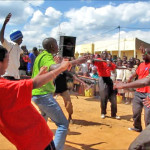
Patrick developed a love for acting in high school. After graduation, he heard that Search for Common Ground was recruiting actors for a new kind of play, called participatory theater. The troupe would start a scene, then invite members of the audience to improvise the ending. After his years of hardship, he was elated to make the cut for a paid position.
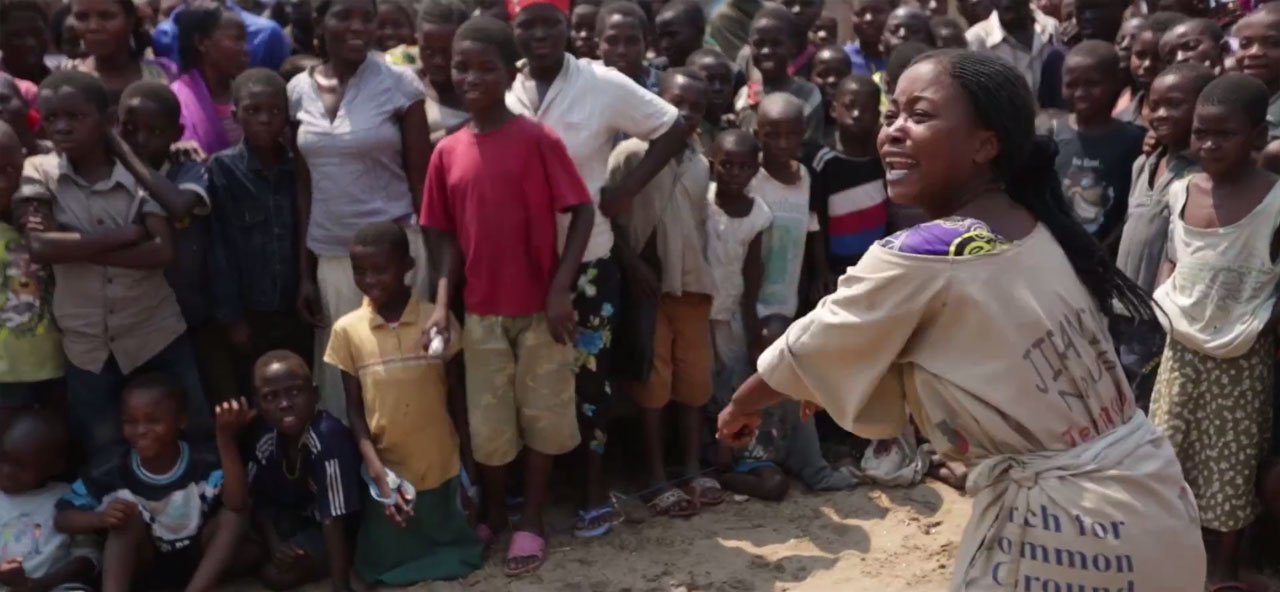
Thrill turned to dread when Patrick heard the role he was assigned. He would play a young man whose parents had participated in the genocide. “We are actors. No one could say, ‘I will not play this role.’” He told his fellow troupe members, “You know, money makes us immoral. How can I ignore my history and stand before people to play a student whose parents murdered people? While the bodies of my true parents are in Memorial sites and others we don’t even know where they are buried? Those people, their parents are still alive. Their property is still there…”
Torn, Patrick decided to go ahead with the role. After a few performances, something changed. “I tried to put myself in their shoes, and I asked myself, ‘How is a child whose parents perpetrated genocide living now?’” The student he played had no parents to look after him because they were in prison. The property of the student’s family had been paid as part of the victim compensation process, so he also grew up with hardship.
“These performances became very beneficial to me and to the whole team because we became open and started sharing our own stories between ourselves,” said Patrick.
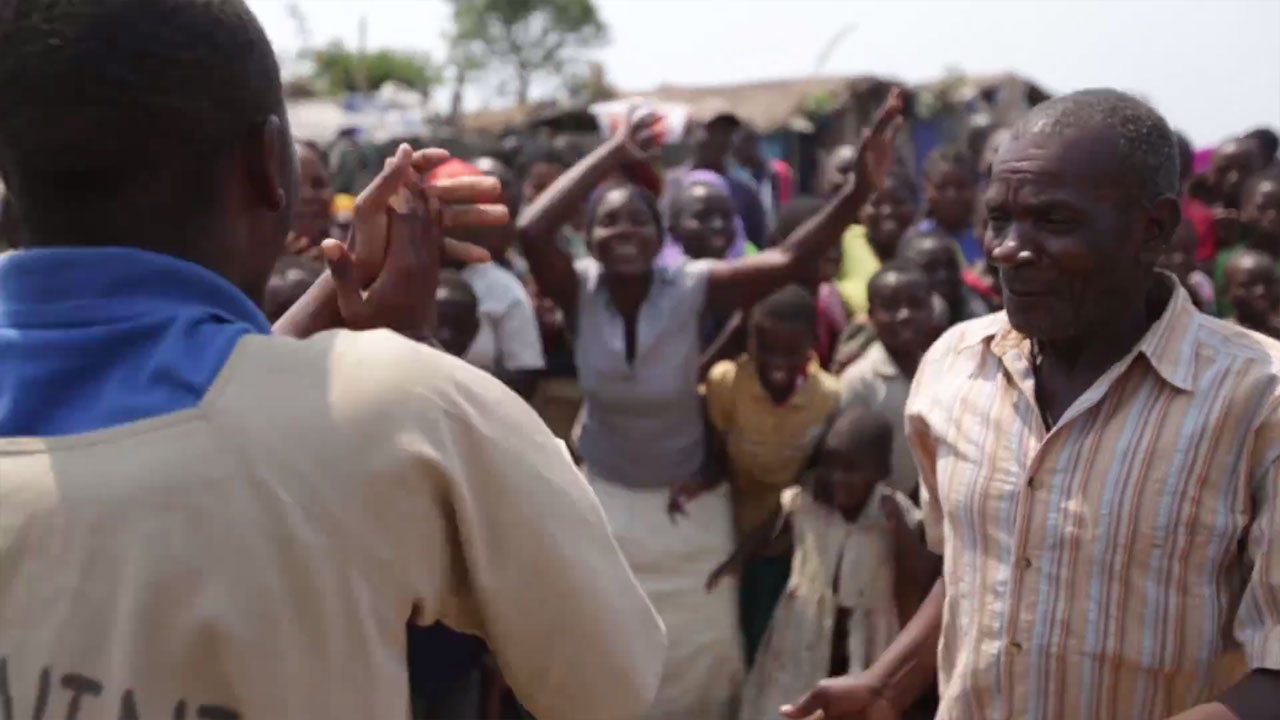
Patrick realized the student he played was as alone and in pain as he was. For the first time, Patrick looked at the children of his enemies and saw himself. Somehow his indifferent scorn melted into a compassionate understanding.
“Both parties, whether the children from families who have lost their relatives during the genocide, and children whose families participated in the genocide, we all have problems,” concluded Patrick.
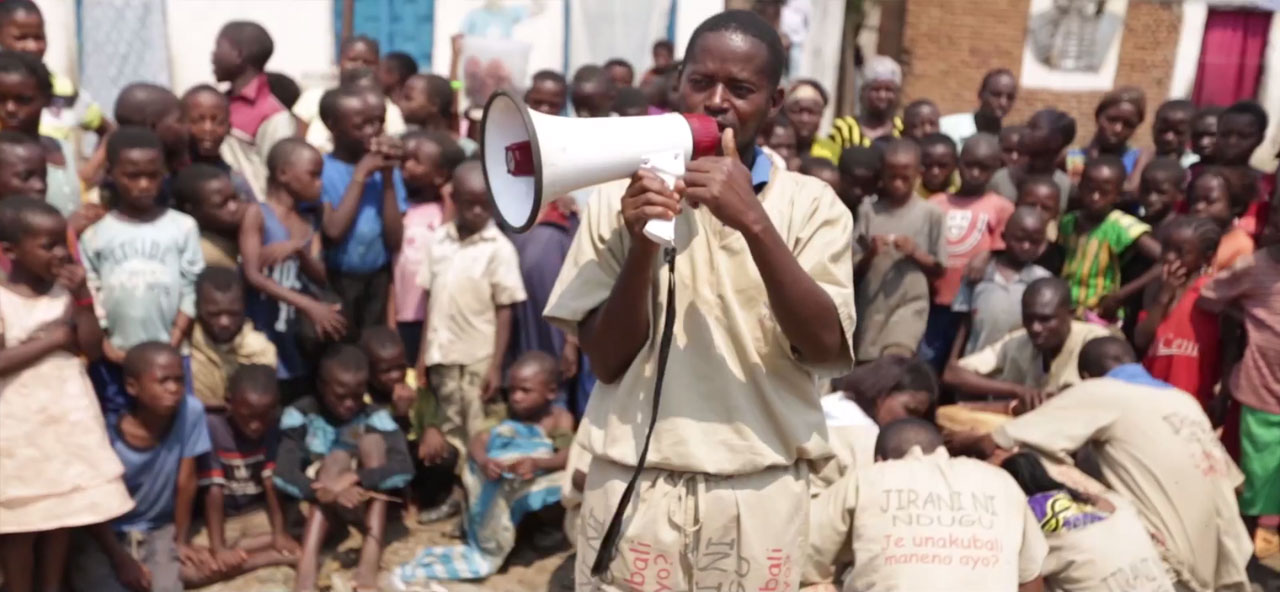
Since 2011, Patrick and our participatory theater troupe members have engaged almost fifty-two thousand Rwandan high school students in their reconciliation performances. They offer students a path to empathy and understanding, often for the first time.
April marks the 20th anniversary of the Rwandan Genocide. As we remember, we also look ahead. By transforming their response to violent conflict, young people like Patrick can build a better future for every Rwandan.
To learn more about the work of Search for Common Ground, click here.
Related Posts
 Tackling Conflict with Creativity
 After Genocide: A Rwandan Love Story
 Radio inspires 2 women to strive for reconciliation in Rwanda
  Two men, fifteen scars–one act of forgiveness
 Participatory Theater Sets the Stage for Non-Violent Solutions in Guinea & Beyond
 SFCG’s Participatory Theater in Rwanda Featured in Africa Peace and Conflict Journal

Comments are closed.