
Comics with a Cause
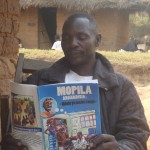
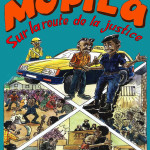
 A zany taxi driver is helping to teach important issues in the DRC. Mopila, who began life as a character on an eponymous radio drama has moved to print as the star of his own comic book series. The latest edition has just been released and sees Mopila caught up in helping a sexual violence victim, assisting a courageous young policewoman and getting himself arrested. The 24-page comic book shows both positive and negative police characters, and includes a mixture of SFCG’s famous radio drama characters from “Tomorrow is a New Day”, “My Neighbour is my Brother” and of course, the Mopila series. The comic provides an accessible format to communicate good governance and citizens’ rights. Already, more than 90,000 copies of “Mopila on Justice Avenue” have been produced in French, Swahili and Lingala, and are being distributed around the country.
Pre-tests revealed that the messages led to concrete learning and positive shifts in attitudes amongst a diverse audience ranging from police officers and magistrates to ordinary youth and market women. The comic book will soon be available for download at the SFCG website, and hard copies are available at SFCG’s offices in Kinshasa, Bukavu and Goma.
Comics are a great way to communicate diverse issues that really engage their audiences. Naif Al-Mutawa was recently praised by Barack Obama for his comic creation, The 99 which presents Islamic influenced superheroes as a way of combating stereotypes and offering different perspectives on Islam. Religion is not directly mentioned in the series and the heroes themselves come from 99 different countries, but the series is based on Muslim archetypes and each hero represents one of the 99 attributes of God. The 99 has been hugely popular and already has a theme park, The 99 Village in Kuwait, the creator’s home; it’s been published in eight different languages and will air as an animated series in the US this Fall.

from www.cabein.com
Al Mutawa says “My hope is to one day have Muslim and Jewish kids reading “THE 99.” I also wanted to show that although these positive values are inherent in Islam, they are values we share with humanity. When you focus on religious behaviors, then you focus on differences. But, when you focus on values, more people can relate to that as we all share those.”
Read the rest of the interview here.
What other comics have been used to communicate social issues?
Related Posts
 How comics changed a community and opened the “doors of hell”
 100 episodes: Radio bridges youth of DRC, Burundi & Rwanda
 Removing Child Soldiers’ Scarlet Letter: ‘Body Mapping’ and ‘PhotoVoice’ help reintegration
 Former militant turned peacebuilder brings ‘comic’ relief to Congo
 Building Bridges Across the Great Lakes Region Through Live Radio
  Radio Across Borders: New Levels of Connectivity Uniting a Region’s Youth

Trackbacks and Pingbacks
Comments are closed.