
Radio’s Star Still Bright – Rwanda

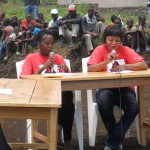
Community mediators(“Abunzi”) discuss the causes of land conflict using a diagram training tool.
Continued from Timor-Leste and Nepal…
Due to overpopulation and dependence on agriculture, land conflicts are common in Rwanda and empowering those who work to mediate such conflict is critical.
In July Search and the Rwandan Ministry of Justice organized an intensive summer training program, called Abunzi, for 200 recently elected community mediators in six districts across the country.
For every training session, the new skills were practiced through role-playing where both the Abunzi and the villagers took part in an effort to resolve fictional conflicts. By the end of the month-long training, the Abunzi had improved their skills on how to effectively deal with numerous conflicts, particularly focusing on land-based conflicts.
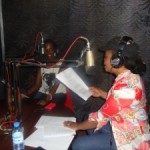
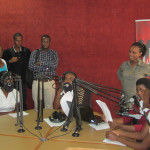
Search also tackles land-conflict through Radio. With funding from USAID, Search has produced a radio program around the issue of land expropriation in Gasabo District:
“For two years, Ignace Karangwa was afraid to invest in his land because he was told it had been expropriated by a local bank. ‘I watched as the bank confiscated the land of my neighbors bit by bit. I was unable to invest anything durable on my land because it seemed that my land could also be taken at any minute,’ Ignace said. The confiscations apparently continued even after the Mayor of Gasabo said the expropriations would stop.”
“Before the radio program, district residents tried to solve the expropriation issue by talking among themselves and to bank officials to no avail. Ignace said the radio program made it clear that property in Gasabo hadn’t truly been expropriated and that people had a right to invest on their land. He said the program stopped the rumors that people didn’t have true ownership of their land.”
Read more about the land conflict transformation project here.
Question: what kind of new media technologies have the power to overtake the importance of radio in developing areas?
Related Posts
 After Genocide: A Rwandan Love Story
 Radio inspires 2 women to strive for reconciliation in Rwanda
  100 episodes: Radio bridges youth of DRC, Burundi & Rwanda
 Two men, fifteen scars–one act of forgiveness
 The Second-Annual RFPA Awards: Three African Journalists Awarded for Their Contributions to Peacebuilding
 Building Bridges Across the Great Lakes Region Through Live Radio

Comments are closed.