
Our Piece of Land

A SFCG participatory theater production on land conflict in Burundi
Land continues to be a major source of conflict in Burundi and in one of Africa’s most densely populated countries, clashes between repatriated refugees and residents are common.
Kibago a village in the southern part of the country has been the site of much conflict. Located near the Tanzanian border, it has one of the highest return rates in the country. At one point, 300 families lived in makeshift shelters around the outskirts of the village. Most of the repatriates fled Burundi’s ethnic conflict in 1972 which set the country’s largest ethnic groups (the Hutus and Tutsis) against each other. They have returned only recently claiming land they left behind that has since been occupied by others in the intervening decades. A year ago, the situation was fragile enough that the vice-president made several visits to call for a calming of tensions. The National Land Commission, CNTB also paid extra attention to the area.
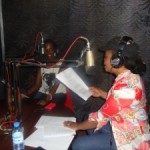
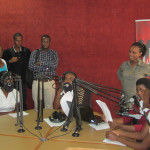
To help address the problem, Search for Common Ground produced Icibare Cacu, “our piece of land”, an award-winning radio show. Icibare Cacu played a major role in raising national awareness on the conflicts and provided its listeners with practical solutions to deal with their conflicts in collaborative ways. Six months ago, Narcissi Mababa, a resident who had been the local elected representative for more than five years decided to set an example and share his land with its former owner:
“You know yourself that it is not easy to yield some of the land you have occupied for more than 30 years. I finally understood, but sadly, we often understand too late. Now I gave back some of this land to Elias Sayumwe, and we live side by side in peace. We share everything. If I run out of salt, he gives me some, and vice-versa. Finally, it is good to live together.”
In one Icibare Cacu show, Caritas Irakoze, the local administrator, said that the situation has considerably improved “People have eventually understood that in this context the only sustainable option is to collaborate,” he says. But important issues still remain: some people do not respect the Land Commission’s agreements. Actions in favor of repatriates create resentment among the population. “We shared the land, but when it comes to aid for reconstruction, only the repatriates receive sheet iron for roofing. We too live in straw houses” said a resident. Caritas Irakoze promised to share these concerns with the organizations distributing sheet iron to prevent resentment from triggering new conflicts. He also pledged to sanction those who are breaching the CNTB’s agreements.
The issue of sheet iron shows how easy it is for resentment to develop as well as the importance of clear communication and awareness of local priorities. It is crucial that national media keep conveying people’s concerns, especially in remote areas, and follow-up with actions and policies to promote long term reconciliation. “Treat us equally if you want to strengthen social cohesion” concluded the resident. Icibare Cacu’s journalists are committed to this, and will continue to visit Kibago to ensure that the fragile bridges built between the two groups grow stronger.
Related Posts
 100 episodes: Radio bridges youth of DRC, Burundi & Rwanda
 The Second-Annual RFPA Awards: Three African Journalists Awarded for Their Contributions to Peacebuilding
 Building Bridges Across the Great Lakes Region Through Live Radio
  SFCG in Burundi: a retrospective of success
 Radio Across Borders: New Levels of Connectivity Uniting a Region’s Youth
 International Women’s Day: Women Empowerment and Mainstreaming Gender Issues in Peacebuilding

Comments are closed.