
Democratic Republic of Congo: Past. Present. Future?

from Forced Migration Review
Foundations for repatriation and peace in DRC
By Vanessa Noël Brown
Parties to the protracted Congolese conflict have long promoted fear of ‘the other’ and a thirst for revenge; these attitudes must be addressed if peace is to have a chance.
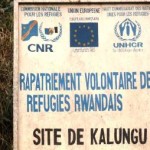
In 2010 there has been a steady return of Congolese refugees from Zambia and the beginnings of an official process for the return of refugees from the camps in Burundi. Returns to South Kivu from Tanzania, however, have been at a standstill due to persistent insecurity in return zones while North Kivu’s repatriation process remains highly politicised. The return of Congolese refugees from Rwanda and Burundi is expected to be problematic given the ethnic minorities involved, and what stability currently exists may deteriorate. NGOs have an important role to play in advancing reconciliation, social cohesion and healthy relationships in refugee return zones.
This article explores Search for Common Ground (SFCG) initiatives to educate refugees and the communities in the return zones about the conditions of repatriation and reintegration, to build trust across ethnic lines, and to shift attitudes to favour the fight against sexual and gender-based violence. SFCG’s arts-based approach in disseminating conflict management skills highlights how international non-governmental initiatives can address the psychosocial needs of both returning refugees and residents alike.
In DRC, SFCG (known locally as Centre Lokolé) collaborates with 100 local partners including radio stations, youth associations, religious organisations and civil society networks. Since 2005, the Participatory Theatre for Conflict Transformation has reached 1.6 million Congolese in refugee camps and return zones in eastern DRC. Actors trained by SFCG in conflict transformation skills and participatory theatre techniques travel to refugee camps in Tanzania, Burundi and Zambia, as well as throughout the refugee return zones in South and North Kivu and Katanga provinces (primarily in Uvira and Fizi territories in South Kivu, Moba and Pweto in North Katanga, as well as North Kivu).
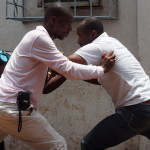
Live theatre mirrors the conflicts that the target populations have experienced and, with the participation of the audience, the actors search for non-violent solutions to the conflicts, highlighting key information as well as collaborative attitudes and behaviour. The theatre troupes perform under the banner of Jirani ni Ngugu (Swahili for ‘My Neighbour is My Brother’), the name of SFCG’s popular Swahili radio drama that addresses the issue of conflict and collaborative solutions. The most common conflicts addressed through the theatre performances are land/property disputes, conflicts related to assistance for returnees, inter-community tensions, rumours and manipulation, and conflicts related to pervasive insecurity and a weak state.
SFCG also produces radio and television programmes to promote peaceful reintegration of Congolese returnees in eastern DRC. These initiatives seek to impart accurate, impartial and responsible information about the repatriation process, while highlighting non-violent and collaborative approaches to conflict. A 2008 UNHCR evaluation of SFCG work around the repatriation process found that exposure to these programmes led to increased knowledge of conflict resolution resources, repatriation information and non-violent methods of reconciliation including noted positive changes in attitudes related to ethnic tensions, land disputes and the integration of repatriated refugees.
…
SFCG also uses media programming and cultural events to reintegrate former child soldiers and to bring youth together in refugee return zones. An SFCG team of young journalists produce a weekly show that stresses the impact of conflict on Congo’s children. In 2007 SFCG organised a drumming festival in Baraka and Fizi involving Burundians and Banyamulenge alongside groups from other South Kivu tribes. In 2008 the drumming festival brought together 100 Rwandan, Burundian and Congolese of North and South Kivu for a tour through Rwanda and North and South Kivu.
…
Although eradication of sexual violence in Congo is an uphill battle, shifting soldiers’ attitudes towards rape is an essential component in changing social norms. In 2009 SFCG conducted a survey of 300 civilians and 100 soldiers in Goma to measure the impact of participatory theatre and other sensitisation sessions conducted in partnership with the Congolese army. In one instance, a military-civilian theatre troupe performed sketches about human rights violations and conflicts within their unit, after which 72% of the soldiers surveyed said that they identified with the conflict and 96% said they had subsequently applied its lessons. In response to why the theatre sessions left lasting impressions compared to standard military parades where the commander gives orders to the soldiers, one-third of respondents said it was because it was “practical” while one-sixth of soldiers said that it touched their conscience more than simply receiving orders.
…
Read the rest of the article here.
###
Vanessa Noël Brown currently works as a US-based Refugee Officer; prior to that, she was a Visiting Scholar at Search for Common Ground in Morocco.
Related Posts
 SFCG in Burundi: a retrospective of success
 100 episodes: Radio bridges youth of DRC, Burundi & Rwanda
 Congo: Tackling child exploitation in schools
 A Tale of Two Neighbors
 Return in Peace: Addressing the Rwandan Refugee Crisis (Retour en Paix: Faire face à la crise des réfugiés rwandais)
  Participatory Theater Sets the Stage for Non-Violent Solutions in Guinea & Beyond

Comments are closed.