
Radio Program Provides a Voice for Rwandans in Land Disputes

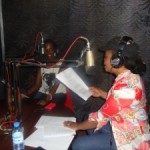
SFCG journalist Jean Paul Ntezimana speaks with a lawyer about land expropriation on the weekly show Ubutaka Bwacu, or “Our Land” in Kinyarwanda. The radio program addresses land issues in Rwanda such as land reform and expropriation.
In 2008, a local development bank in Rwanda expropriated land for a construction project in the suburban community of Ngaruyinka. This area was home to more than 400 families, most of whom were small-scale farmers. The bank paid compensation to some families as required under the law, and moved them off the land. The rest of the residents, however, received neither payment nor information about the planned move. The residents could not work on their land, fearing the loss of their crops if they were forced to move on short notice. Further, since some families had moved out leaving untended land, banditry and petty crimes increased in the area.
By early 2010, despite the people of Ngaruyinka demanding reparations as stipulated in Rwandan law, they still had not received compensation. They also wanted assurances that the development bank would not re-launch their construction project later and try to seize their land again. Search for Common Ground (SFCG) took up this issue, opening a forum for discussion between the bank and residents. SFCG’s weekly radio program, Ubutaka Bwacu (Our Land) served as the primary vehicle for dialogue, hosting representatives of the community, the bank, and land lawyers to come together and discuss the issue. The radio program offered a platform for different perspectives to voice their positions. Violating the bank’s contract and in doing so causing disruption in their livelihoods, the Ngaruyinka people demanded that the bank abandon any future claims on the land.
The radio program, Ubtaka Bwacu, succeeded in bridging the power gaps and easing the tensions between the bank and the community. On air, the bank agreed to end the project, and admitted it did not have the funds to pursue the contract again. This communication eased the fears of all the Ngaruyinka residents, and its transmission on the airwaves created a public record on the promise.
“Ubutaka Bwacu has very much increased the population’s knowledge on land law and land and we see that through phones calls that we get. People call from different places of the country asking directions of how to put in practice what they learnt and they tell us that they knew that through Ubutaka Bwacu”, Representative of the National Land Center
Ubataka Bwacu also raised the profile of this issue among government authorities. Following the program’s broadcast, Rwanda’s National Human Rights Commission contacted the community, asking to be involved in their case after hearing them on the air. Follow-up visits to the community confirm that people have returned to farming as their primary livelihood, with confidence that they will benefit from what they sow.
Related Posts
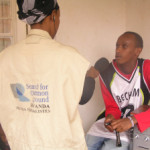 SEARCH FOR COMMON GROUND OP-ED IN THE PHILADELPHIA INQUIRER: A REMINDER OF RADIO’S POWER
 After Genocide: A Rwandan Love Story
 Radio inspires 2 women to strive for reconciliation in Rwanda
  Nepal: Woman radio host makes big splash over airwaves
  100 episodes: Radio bridges youth of DRC, Burundi & Rwanda
 Two men, fifteen scars–one act of forgiveness

Trackbacks and Pingbacks
Comments are closed.