
Building Peace Across Borders

A South Sudanese soldier keeps vigil at south Sudanese jungle town of Ri-kwangba, near Garamba forest on April 10, 2008, the venue of an anticipated peace agreement signing by Uganda's top rebel leader, Joseph Kony. (TONY KARUMBA/AFP/Getty Images)
Conflict doesn’t stop at borders, so why should peace?
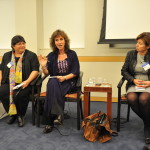
This was the central question asked at yesterday’s Conflict Prevention & Resolution Forum (CPRF). The forum is a monthly platform for highlighting and discussing methods and timely topics in the field of conflict resolution. The forums are a collaborative project of Search for Common Ground and co-sponsored by a consortium of organizations that specialize in conflict resolution and/or public policy formation.
The topic of yesterday’s discussion was “Building Peace Across Borders.” The forum addressed the “peacebuilding gap” that often occurs across borders and in border lands. Much of the discussion was informed by the latest edition of the Accord international Review of peace initiatives. The full issue can be found here and is a project of Conciliation Resources.
The panelists urged a new way to approach peacebuilding that thinks outside of the state. Often this translates as cross-border security but the Review stresses the need for soft, as well as hard approaches. Furthermore, a focus on security can only address the symptoms of conflict, rather than its causes. The panel identified grassroots level work, of the kind that SFCG employs, as necessary to sustain peace in borderlands. They are aware of and connected by social and cultural ties within communities that outside actors are not.
The panel also spoke of the benefits of engaging business in building and sustaining peace. The trade sector can react to changes in cross-border dynamics more quickly than governmental or civil society agents. While Illicit cross-border trade often plays a negative role in instigating conflict, such as the case of West Africa’s ‘blood diamonds’, there are cross-border trade relationships that can be a catalyst for positive change. SFCG is utilizing such resources in its regional strategy in the Great Lakes, where mineral extraction and trade play a role in driving conflict. In borderlands across Burundi, DRC and Rwanda SFCG uses participatory theater and dialogues to improve relationship between people across border, particularly traders. We also seek to create greater understanding between citizens in the Great Lakes and border officials.

Countries affected by the LRA (from enoughproject.org)
A recurring example of cross-border conflict was the Lord’s Resistance Army which began as an armed group in Northern Uganda against the government but has spilled across borders into DRC, CAR and Sudan. Yet despite the regional nature of the problem, agents in the region have not been working in tandem in a way that would more effectively confront the situation.
In this video from Conciliation Resources, Archbishop Odama of Uganda discusses regional attempts to resolve the LRA conflict and Ayesha Saeed from Pakistan and Zafar Choudhary from Jammu and Kashmir discuss new border trade in Kashmir that is building peace and reconnecting communities from across the Line of Control.
One of the next steps, reflected in the questions asked after the panel, was how to structure organizations regionally so that they are better able to deal with cross-border conflicts.
Last year SFCG reorganized and grouped its country programs into regions, to provide a support structure, share knowledge, expertise, and learning across borders.
- Middle East & North Africa (MENA)
- Asia
- Africa
- Europe
Within Africa, we have a regional strategy around not only the Great Lakes region but also West Africa. Our initiatives in these areas are designed to reduce potential for violent conflict through cross-border activities, with particular attention paid to engaging youth.
We want to hear from you: how can governments and organizations work more effectively in borderlands? What are the obstacles? And who’s doing it well right now?





Trackbacks and Pingbacks
Comments are closed.