
Arming Traders with Information Along the Border

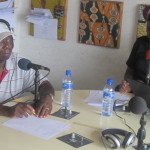
Congolese and Burundian traders address border officials at the forum. Our Director of Programs in Burundi, Floride Ahitungiye (standing) helps to guide the discussion.
Our Burundi office is working with COMESA (Common Market for Eastern and Southern Africa) to transform sensitive conflicts on the DRC-Burundi border and to support dialogue among the parties involved. Conflict across and around border zones is notoriously difficult to address because governments and peacebuilding organizations so often work within borders. But conflict is not restricted by man-made lines on a map; borders are a site of trafficking, illicit drug trade, bribery and more.
Many of the petty traders who frequently cross the border for commerce are women who are often sexually and financially exploited by border officials. Border officials, many of whom are paid poorly, or not paid with any regularity sometimes set up additional ‘unofficial’ checkpoints to supplement their income.And without accurate information, traders do not always know how much they should be paying or to whom.

Border officials explain protocol, tariffs and more.
COMESA has embarked on a trading for peace project, with the aim of making trade within the region easier and more efficient, launching information desks on the borders of each country, one in Kavinvira in DRC and the other in Gatumba in Burundi. The desks are intended to provide accurate information to traders regarding their rights, information and resources on trade standards and tariffs. Search recently organized a forum with over 100 traders from Bujumbura (Burundi) and Uvira (DRC) and border representatives from both countries to instruct traders on how to use the new desks to fight corruption. The forum also provided a place for grievances and issues to be discussed.
Charges were a major problem for most the traders. The price of services seems to change on whim of the border official and what you pay one day is not necessarily what you can expect to pay the next. Often the charges are not explained to the traders, so they are unclear about what each service or receipt has bought them. The biggest issue, for both traders and officials was the lack of information, which is exactly what this forum and subsequent ones will aim to rectify.





Comments are closed.