
Journalism …with a side of peace
Happy World Press Freedom Day!
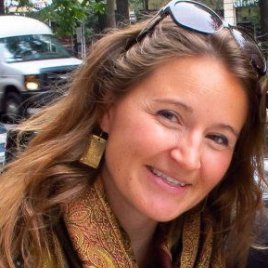
Juliette Schmidt, Director of Partners in Humanity and Editor-in-Chief of CGNews
From Sri Lanka to Rwanda, from radio to television, from Golden Children News to media for women, Search’s journalism work spans the globe. We wanted to hear from our Editor-in-Chief of Common Ground News Service, Juliette Schmidt, to see why journalism is so important to peacebuilding. The Common Ground News Service addresses key issues affecting Muslim-Western relations and race relations in the United States. Juliette manages an international team and has experience designing and leading programming and training workshops in the Middle East, Southeast Asia and South Asia. Here is her thoughts:
Why is freedom of the press important?
Schmidt: A free press can be a very effective tool in resolving conflict. Media plays an important role not only in shaping public opinion, but in determining which events or which stories become news, and thus part of the national discourse. The freer the media space is, the greater the diversity among media producers, making for a more comprehensive the picture of what’s happening. Also, free press promotes a healthy level of checks and balances to test one-sided perspectives. It creates a sort of dialogue between individuals and outlets that enables people to see commonalities and the “humanness” or the dignity of the “other”.
What role does journalism play in conflict and peacebuilding?
Schmidt: Professional and ethical journalism can go a long way to promoting a culture where diverse perspectives are 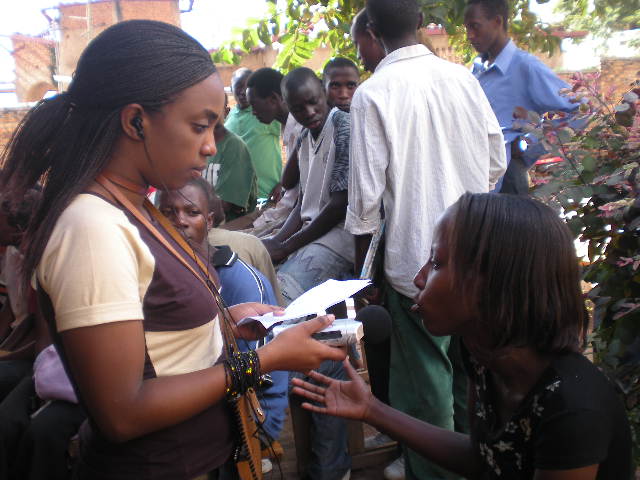 heard and rumors are either proven or dispelled. Dispelling a myth or rumor can be a contributor to resolving conflict.
At Search for Common Ground, and particularly in the Partners in Humanity program for Muslim-Western understanding, we have had the opportunity to engage with journalists around the world. From South/Southeast Asia to the US, from Europe to the MENA region, we connect with them through workshops, trainings and as writers for the Common Ground News Service. At the end of the day reporters are individuals often trying to produce the best journalism they can. They struggle with questions about what to cover and how to cover conflict when they themselves may come from a community that is affected by it.
There is power in media, and thus responsibility. Just as media can inflame tensions, it can also play a role in bridging communities.
What are some common ethical grievances you have encountered while training journalists in a conflict zone?
Schmidt: I think we often think of journalists as a monolithic group of tough, hardened individuals. In fact, in many cases journalists find themselves covering violent conflicts in their communities for the first time and feel unprepared. It becomes difficult when you feel your family and friends have been unjustly targeted and yet ethical journalism requires you to speak with and include the views of those whom you may see as a perpetrator of violence. It takes incredible courage and the ability to recognize the emotional triggers in oneself, in order to report professionally and constructively, in such a context.
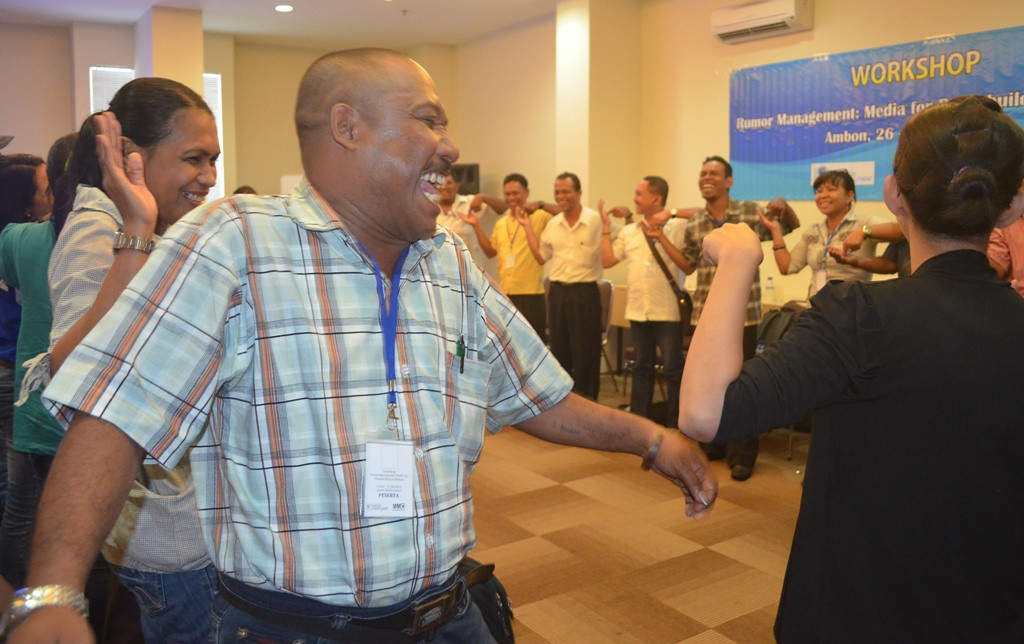
Journalism workshop in Indonesia
What is the common ground approach to Journalism training? Does that mean they should only report stuff that promotes peace?
Schmidt: Common Ground Media differs from “peace media” in that it does not seek to advocate for a particular solution. Instead it aims to rectify misconceptions, clarify issues, highlight commonalities and underscore the positives. It is rooted in the idea that instead of focusing on debate and differences, journalists can use a dialogue-style, which looks at the commonalities that humanizes the other and provides context around the differences. Such characteristics are based in professional and ethical journalism.
As mentioned above, the Common Ground News Service addresses key issues affecting Muslim-Western relations and race relations in the United States. What impact is CG News having? And what do you hope to achieve through it?
Schmidt: How many times found yourself describing to a friend an article or a story that expanded the way you think about the world. This is what we hope to achieve with the Common Ground New Service: to touch readers and provide a fuller story of what is taking place in the broad realm of Muslim-Western understanding by complementing existing media stories with context, back-stories, unheard voices and constructive recommendations for ending violent conflict.
In addition to our over 30,000 subscribers who receive the edition weekly in English, French, Arabic, Indonesian or Urdu, perhaps our greatest value is in reaching media audiences in the outlets that they already read. Each article is reprinted in diverse traditional and online media outlets an average of 30 times each reaching hundreds of thousands of readers.
Common Ground News Service contributors – who make up a growing network of over 2000 writers – frequently tell us that  they have been approached by other media outlets, conference organizers, partners, or even governments, to share more and develop on the topics they write about. Injecting these unique and diverse views into a larger discussion is also a key result of the news service.
And readers have gotten in touch to share how articles have touched them. These anecdotes count among our measures of success.
- “It is work like this that helps dispel the wrong notion we have about the Muslim world.” – CGNews reader from the United States
- “The editorial I wrote has opened doors and impacted others – I just returned from presenting the editorial at a peace conference in Italy. The opportunity you enabled has opened my eyes and impacted me. I am developing the idea I wrote about and looking to apply it.” – CGNews contributor
- “Because of [everyone who contributed to releasing my article] I received many useful comments and encouragement. Even the Ministry of Political Development asked to meet with me to discuss the content of the article.” – CGNews contributor
- “Reverend Lavender’s article has motivated me to ‘do something’ in response to recent depressing events instead of just feeling helpless and in shock. For one thing, I WILL forward and share this article and, hopefully, it will show people in this part of the world that not all Westerners are ignorant and unreasonable.” – CGNews English edition reader
- “No matter what I hear from our general media, there are a lot of people in this world who want to make it a better place for everyone.” – CGNews reader
“It is said that in the longer run, the pen is mightier than the sword … and it is truly manifested in these times where fear and hate are the result of improper information! In the present time, the whole world is polarised between two extremities. Firstly, one of fear and hatred… secondly, the focus on economic sustainability and ethics. It is at these times that your article showed a ray of hope.” – Qatari reader - “I used to think that Westerners and Muslims hate each other deeply, but this misconception was due to my being influenced by some extremist opinions and some conservative readings from other sides. [CGNews] has helped dissipate these ideas.” – CGNews Arabic edition reader from Yemen
Related Posts
 Rumor Has It Journalists Can Help Clear the Air
  2012 Angolan General Elections: what is the role of radio journalists?
 Press Freedom has Never Been More Critical
 Teen journalist rallies change in Kyrgyzstan
 Meet the 2012 Common Ground Awardees: Charlayne Hunter-Gault
 Building Bridges Across the Great Lakes Region Through Live Radio

Comments are closed.