Have you ever wanted to see our Common Ground principles brought to life? Our team in Indonesia has created speed drawing videos as training tools to illustrate some of our most important concepts.
Common Ground Principles
We base our work on the idea that conflict and differences are inevitable but violence is not. We work to change the way people deal with conflict, away from adversarial approaches and towards cooperative solutions. Watch to learn how our approach works to end violent conflict.
The Dangers of Extremism
Extremism can take many different forms that are detrimental to finding common ground. Understanding where extremist viewpoints come from and learning to avoid them can go a long way toward preventing violence. SFCG Indonesia is using this video to educate people about the dangers of extremism.
Why Should We Be Tolerant?
Tolerance is critical for transforming conflict. We can channel conflict to promote cooperation rather than violence by understanding and respecting the views of others. This video highlights some of the ways SFCG Indonesia is promoting tolerance.
Congolese Whistleblower Broadcasts the Sound of the Voiceless
By Idrees Ali 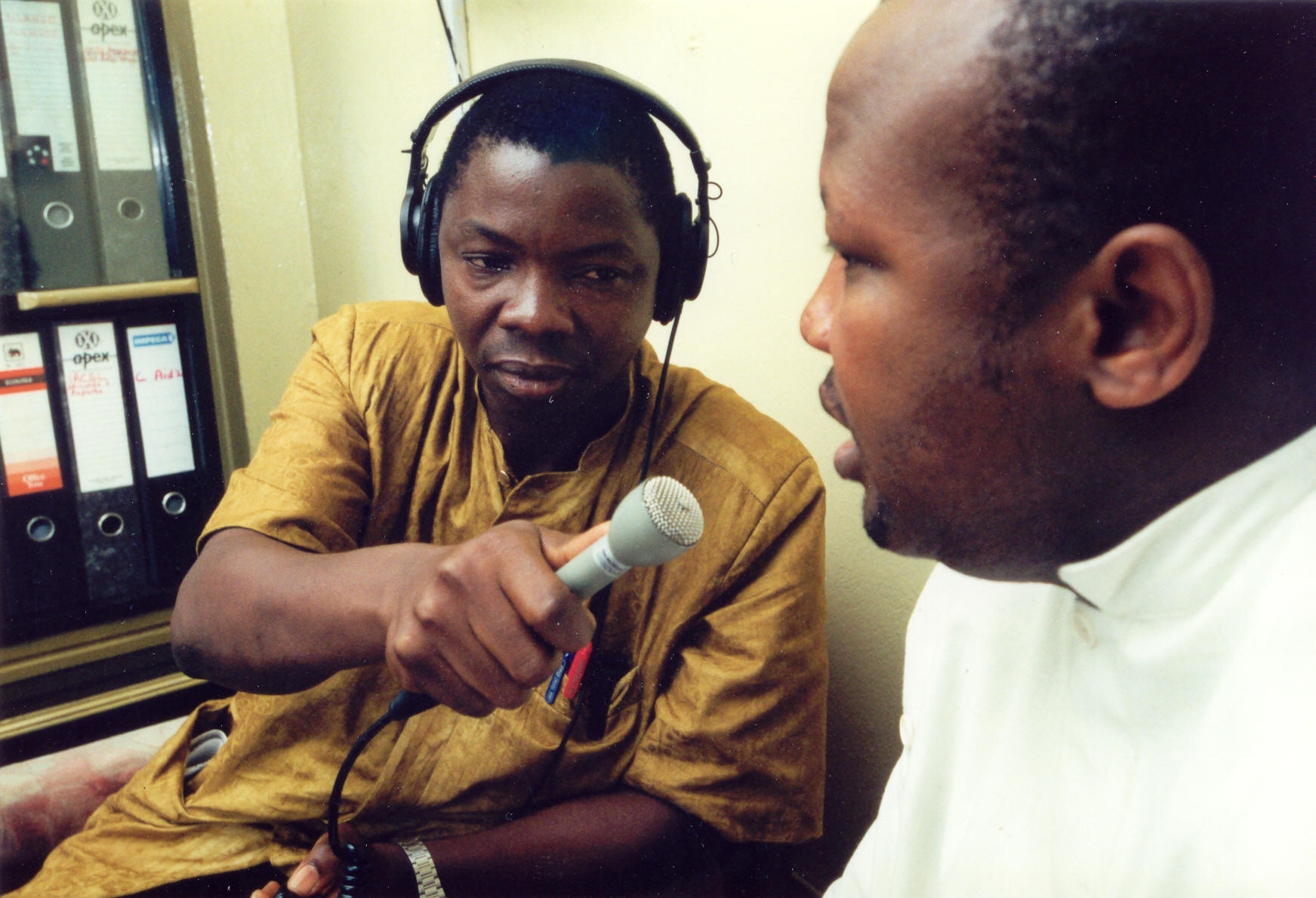
“The day I launched the [radio] signal, it was amazing. My dream had become a reality.”
When a volcanic eruption in 2002 forced Sekombi to flee Goma, his home in the eastern region of the Democratic Republic of Congo (DRC), he didn’t know if he would ever return. More than a decade later, Sekombi is now leading Eastern Congo’s fastest-growing radio station, highlighting everyday heroes from across the region. Sekombi had spent most of his life in Goma until 2002. The Nyiragongo Volcano eruption destroyed 15 percent of Goma and forced 400,000 people to evacuate. He fled to Uganda, where he became involved in a youth center that brought together children from across Africa. Sekombi had always been interested in the arts; as one of 13 siblings, his family stressed the importance of music and dance and the ways that they could be used to promote positive change. At the youth center, Sekombi learned how to speak seven different languages. He returned to Goma in 2005 with a more global perspective and a passion to change his country for the better by using the arts and media he had always loved.
In 2010, Google provided funding for Sekombi to create a radio station in Goma that would provide a neutral news source and insight into the lives of ordinary Congolese. Sekombi established the radio station because he believes that in a country like the DRC, torn apart by decades of war and conflict, radio has the power to heal the wounds of the past, encourage peace, and provide reliable information that promotes democratic governance.
“The most complicated issue is to be balanced, but I think that is also our strength,” Sekombi said. “The radio was a response to a need… to give voice to the voiceless.”
His radio station, Mutaani, carries a variety of different shows ranging from music to daily news. Sekombi’s favorite part is the news about the daily lives of Congolese who are working to make their country a better place. One story in particular touched him. One woman, an average Congolese, was making less than a dollar a day, but she continued to work, day in and day out, to feed her nine children. Sekombi feels that it is incredibly important to highlight everyday heroes that other Congolese can relate to and be inspired by. Sekombi is also a part of a campaign for peace in the DRC called Falling Whistles.
“The most important role in war zones is having an independent media…We know what happened with Rwanda and use of radio for genocide, we don’t want that happening anymore,” Sekombi said. He’s considered to be a whistle blower who uses his station as a voice for peace and tolerance rather than violence and destruction.
What does the future hold for Sekombi?
While he has faced a number of challenges since he created the station, including the destruction of its radio transmitter, Sekombi has big plans for Mutaani. With the largest radio station in Goma and a recording studio to go along with it, Sekombi hopes to extend the station’s reach throughout the country and build a top quality TV station to continue using media to create positive change in the DRC.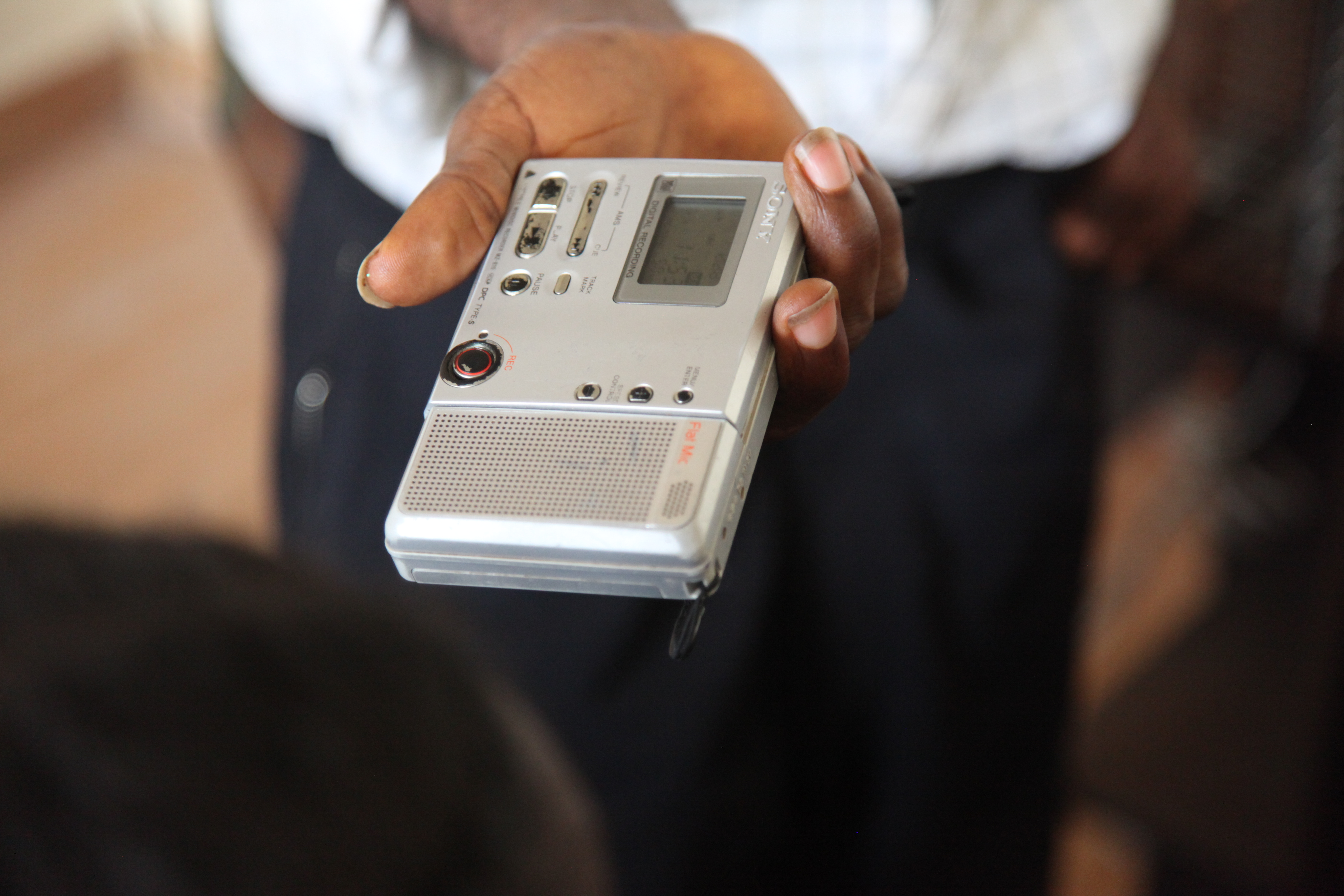
________________________________
Idrees Ali is a former New Media Intern at Search for Common Ground. He is pursuing a Master’s in Journalism at the Philip Merrill College of Journalism, University of Maryland College Park.
Press Freedom has Never Been More Critical
By Lena Slachmuijlder
Journalists possess power. Their words shape opinions, mobilize action, support open dialogue, promote positive change, or even incite violence.
As we celebrate World Press Freedom Day, we cannot afford to forget that supporting this freedom alone is not enough to ensure the media’s positive role within society.
They say you cannot shake hands with a clenched fist. But many journalists around the world decide to use the pen, the computer, the camera or the microphone like a fist. I know, because I did it myself when I was a journalist.
In the 1980s, apartheid was a shadow on our shared humanity. I wanted nothing more than to fight the system that supported this inequality and inhumane treatment. I went to South Africa to work as a journalist at a newspaper that was openly against the white government.
In the days before Twitter, Facebook, or mobile phones, you could buy a newspaper in the farthest corner of South Africa and read about white society and white culture, but you would find no reports on the liberation movement or the war that was being waged. No stories about the deaths of black South Africans.
Our paper was the opposite. We spoke only of what was happening in the townships, the abuse of human rights, the martyrs killed one after the other. We had a strong and critical voice, but it was one sided. We were nearly silent on the internal conflicts of the ANC or accusations of corruption. We did important, valuable work, but we were a fist, fighting against a system, even if it means contributing to the demonization of the other.
Papers like ours quickly went out of business after the elections of 1994. In its wake, South Africans and journalists felt safe to start listening to each other and hearing the perspectives of their fellow South Africans. Courageous journalists and talk show hosts such as Tim Modise made enormous contributions to building the New South Africa, enabling people to feel secure and proud in the country’s diversity.
Today, I have the privilege of working with journalists around the world through Search for Common Ground, an organization dedicated to ending violent conflict. We promote a Common Ground approach to journalism, supporting the professional principles of accuracy, fairness and responsibility.
This approach recognizes that at each turn, journalists must make choices: whom to interview, what to ask, how to frame the story. We enable journalists to understand the dynamics of conflict, and see how using these techniques of professionalism, they can be aware of how their story could fuel further conflict, deepen prejudice and stereotypes, or rather, highlight commonalities. We don’t tell journalists not to cover war, abuse and conflict, nor to ‘promote peace’. However, just by reflecting different perspectives, enabling dialogue and asking for possible solutions, journalists can use their freedom to move a community or a nation towards a new space of hope, common understanding and a shared future.
From enabling dialogue between the US and the Soviets during the Cold War to our media initiatives in the Balkans in the 90s, to our current work with journalists in the Middle East, Africa, Asia, and Europe, Search for Common Ground knows that the media are critical to building peace. In many places, despite the polarization of the media sector, journalists have learned the lessons of the Rwandan radio that fuelled hatred and division. Most journalists that I encounter today want to be honorable, responsible, and do their profession proud.
But they need the freedom to do so. As we celebrate World Press Freedom Day, we know that in many places this is not a given. For journalists to be allies in seeking collaborative solutions, they need the freedom to speak with all sides in a conflict, to access information, and protect their sources. To be able to shape a Better Future, as states this year’s theme, they need to be able to tackle difference, diversity and division with accuracy, impartiality and responsibility. No other part of society can be more effective in enabling dialogue and seeking collaborative solutions around each and every question for our future. As we protect journalists’ freedom, we’re also protecting ours.
_____________
Lena Slachmuijlder is the Vice President of Programs at Search for Common Ground.
Rwandan actor faces his enemy — and finds himself
Patrick was six years old during the 1994 Rwandan Genocide. Both of his parents were murdered. Of eight children, only he and two siblings survived. They lost everything in the destruction.
“Losing our parents put us in difficult situations, almost impossible…” I was not interested in reconciliation. I wished those who killed my parents and people like them would be apart and live their own lives and I would do the same,” Patrick explained. “I didn’t want to discuss my feelings and problems with anyone,” so he struggled in silence.
Patrick developed a love for acting in high school. After graduation, he heard that Search for Common Ground was recruiting actors for a new kind of play, called participatory theater. The troupe would start a scene, then invite members of the audience to improvise the ending. After his years of hardship, he was elated to make the cut for a paid position.
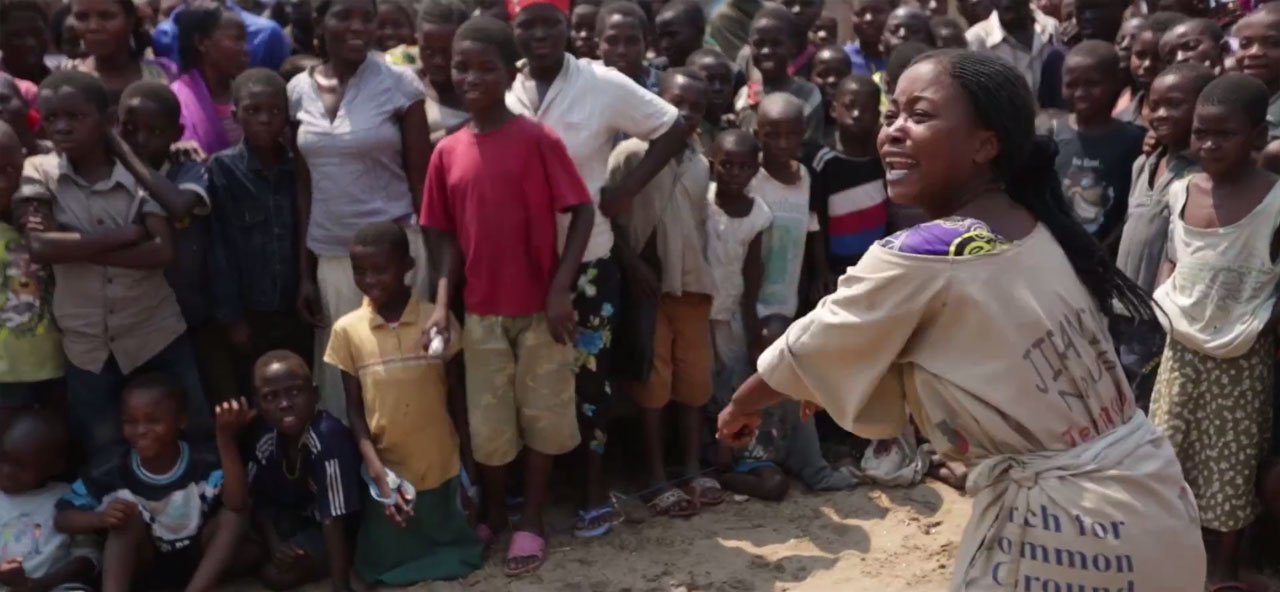
Thrill turned to dread when Patrick heard the role he was assigned. He would play a young man whose parents had participated in the genocide. “We are actors. No one could say, ‘I will not play this role.’” He told his fellow troupe members, “You know, money makes us immoral. How can I ignore my history and stand before people to play a student whose parents murdered people? While the bodies of my true parents are in Memorial sites and others we don’t even know where they are buried? Those people, their parents are still alive. Their property is still there…”
Torn, Patrick decided to go ahead with the role. After a few performances, something changed. “I tried to put myself in their shoes, and I asked myself, ‘How is a child whose parents perpetrated genocide living now?’” The student he played had no parents to look after him because they were in prison. The property of the student’s family had been paid as part of the victim compensation process, so he also grew up with hardship.
“These performances became very beneficial to me and to the whole team because we became open and started sharing our own stories between ourselves,” said Patrick.
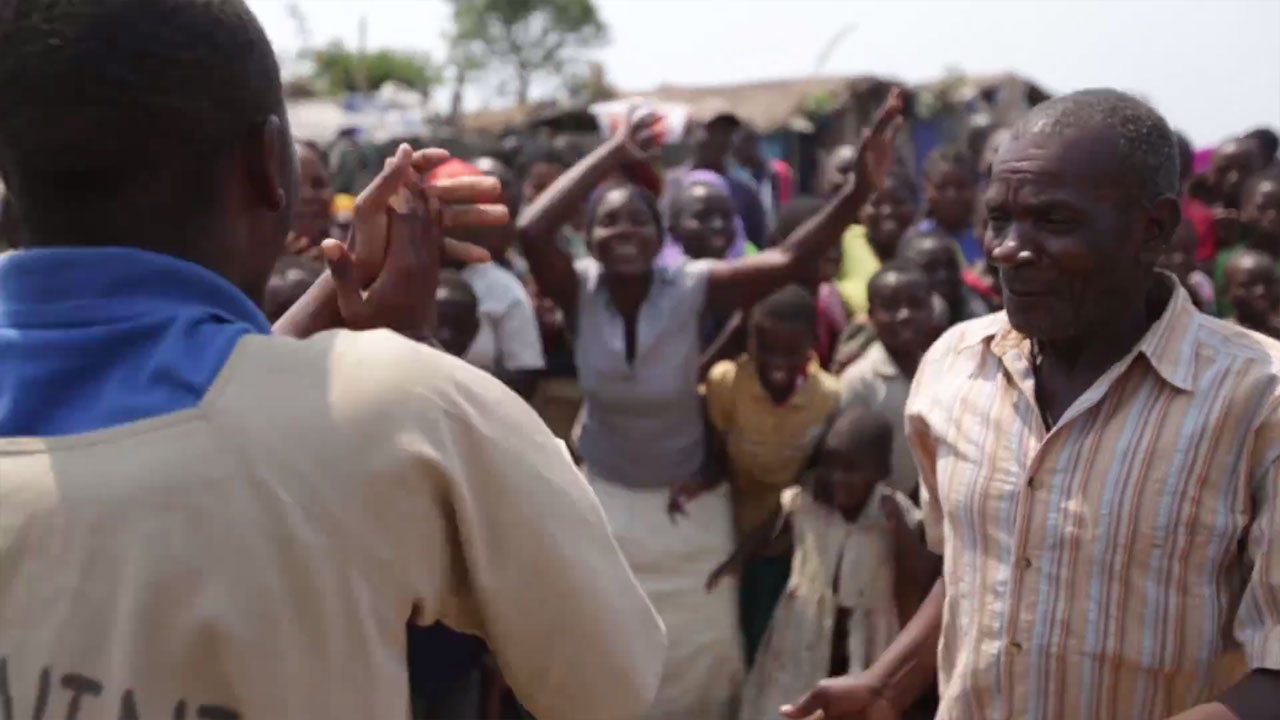
Patrick realized the student he played was as alone and in pain as he was. For the first time, Patrick looked at the children of his enemies and saw himself. Somehow his indifferent scorn melted into a compassionate understanding.
“Both parties, whether the children from families who have lost their relatives during the genocide, and children whose families participated in the genocide, we all have problems,” concluded Patrick.
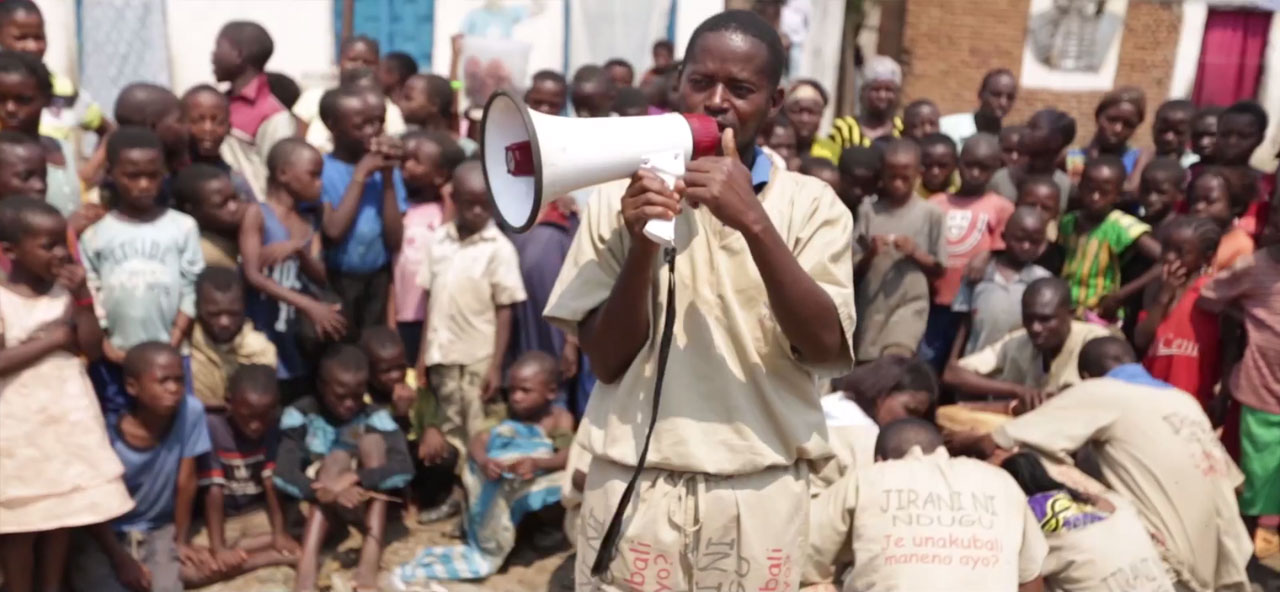
Since 2011, Patrick and our participatory theater troupe members have engaged almost fifty-two thousand Rwandan high school students in their reconciliation performances. They offer students a path to empathy and understanding, often for the first time.
April marks the 20th anniversary of the Rwandan Genocide. As we remember, we also look ahead. By transforming their response to violent conflict, young people like Patrick can build a better future for every Rwandan.
To learn more about the work of Search for Common Ground, click here.
Nigeria: A Modern Day ‘Good Samaritan’ story
By Idrees Ali
Lying injured and stranded on the side of the road, young priest Charles Kwuelum’s efforts to calm tensions between Christians and Muslims materialized in the form of an elderly Muslim man…
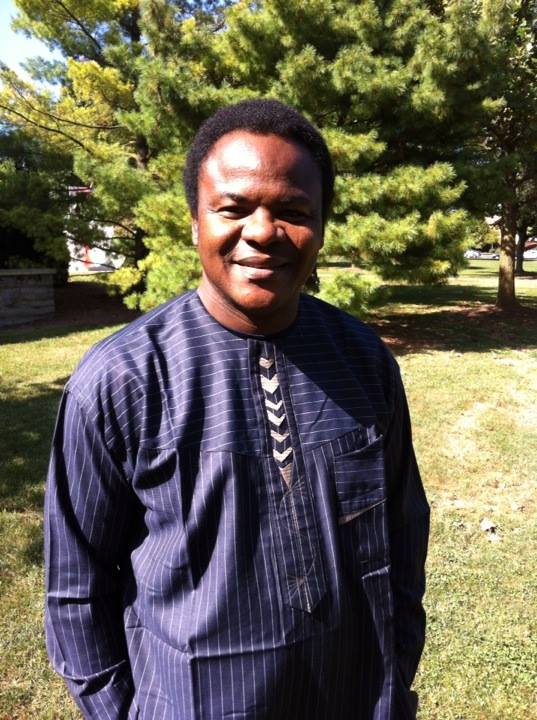
Charles, who grew up in the northern part of Nigeria, became a priest in 2004, sparking his passion for peacebuilding. As a priest, he had the opportunity to travel all over the country and help those in need.
“I found my way combining my local peacebuilding work with my pastoral work,” he said.
While traveling throughout Nigeria, he realized that one of the biggest issue in the country was inter-religious tensions, mainly between Muslims and Christians. Nigeria is a country of almost a 170 million, made up of 50 percent Muslims and 40 percent Christians.
Charles faced an uphill challenge: how could he bring together communities that were divided on religious grounds? It wasn’t uncommon for an invisible line to separate communities of Muslims and Christians. Different groups didn’t wander into each other’s territories or even trade with each other.
Like peacebuilders around the world, Charles used sports to bring together the community. He gathered the community’s children, irrespective of their religion, and provided them with footballs, volleyballs, and a place to play.
It was only a matter of time before they were playing together and the community elders warmed to each other. Charles mediated between Muslims and Christians to help them resolve their issues.
Charles started to see the difference, but he had no idea that the collaboration would end up saving his life.
One night on his way home, his car’s tire burst, flipping the car over several times. When the car finally came to the stop, Charles was pinned inside. In the middle of nowhere, Charles was injured, alone, and had no way to call for help.
Meanwhile, an elderly Muslim man cycled home after a long day’s work. He sold meat in the square and came to know the Christian community through Charles’ work. Charles was the only person in the community with a car, so when the man came upon the scene, he immediately recognized that Charles was in trouble.
Urgently, the old man pried open the door and pulled Charles out of the car. Realizing that he couldn’t help Charles alone, he rushed back to the village, crossed the invisible line into the Christian community, and brought others to help Charles.
“For this person to have rendered assistance and gone back to communicate with my community meant there was a breakthrough…It would’ve been unlikely before,” Charles explained.
The interreligious tension Charles faces as a peacebuilder is also one of the greatest threats to Nigerians as they go to the polls next year. Recently, Nigeria has seen a spike in violence with over 1,000 people killed during the election period in 2011. Poor education, religious tensions, unemployment, alienation of youth, and terrorism are just some of the challenges peacebuilders face leading up to the 2015 elections.
These challenges made Charles realize his future is in peacebuilding. He founded the Solid Life Foundation, an NGO that empowers orphans and widows through workshops and training.
To further his aim of peacebuilding, Charles is currently a fellow at Search for Common Ground and has completed a Master’s of International Relations from Ahmadu Bello University, providing skills he hopes will allow him to work as a peacebuilder throughout the world.
So what does the future hold for Charles?
He says that he is willing to go wherever peacebuilding is needed.
“I have the heart to work beyond borders and as a peacebuilder. Every context and issue must be looked at.”
________________________________
Idrees Ali is currently the New Media Intern at Search for Common Ground, pursuing a Masters in journalism with a focus on international at Philip Merrill College of Journalism, University of Maryland College Park.
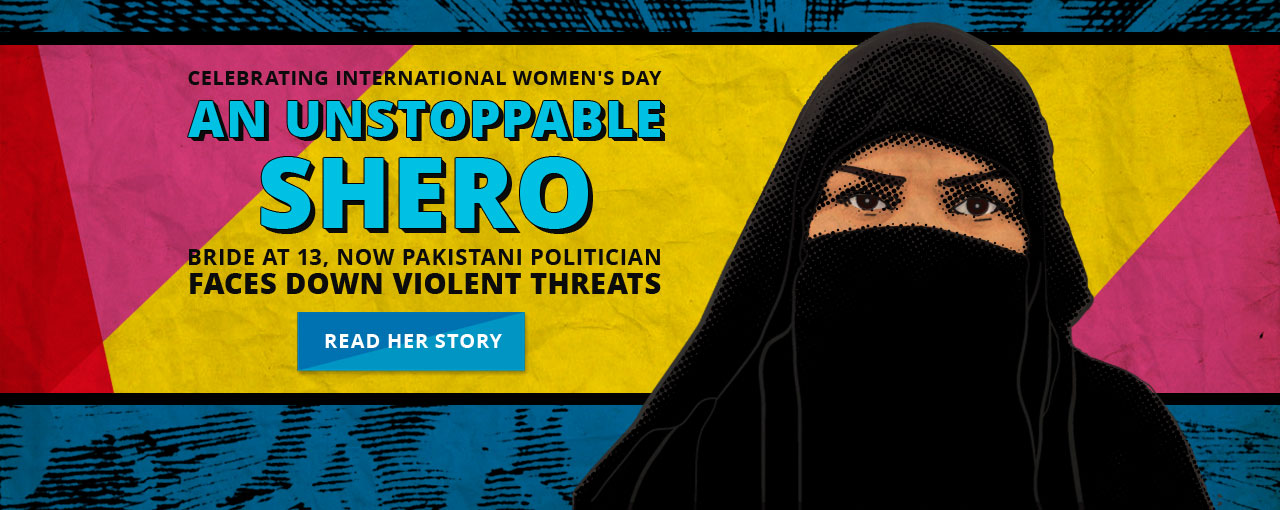
Nasim was married at 13. Child marriage is customary where she lives in the Khyber Pakhtunkhwa Province of Pakistan. It consigns young girls to lifelong illiteracy, poverty, and ill-health. A 13-year old girl is five times as likely to die giving birth as a woman in her 20s.
But Nasim was fortunate. Her husband encouraged her continued education. Eventually she earned a Master’s degree and ran a private school for 95 girls. Nasim wasn’t satisfied, however, with helping only those girls who could pay for school. She boldly ran as a local council member to promote girls education.
Shocked at the impropriety of a political woman, Nasim’s family and neighbors shunned her and her staunchly supportive husband. Despite threats from local politicians to “have their thumbs cut off” if women voted, Nasim led the way for women to the polling stations.
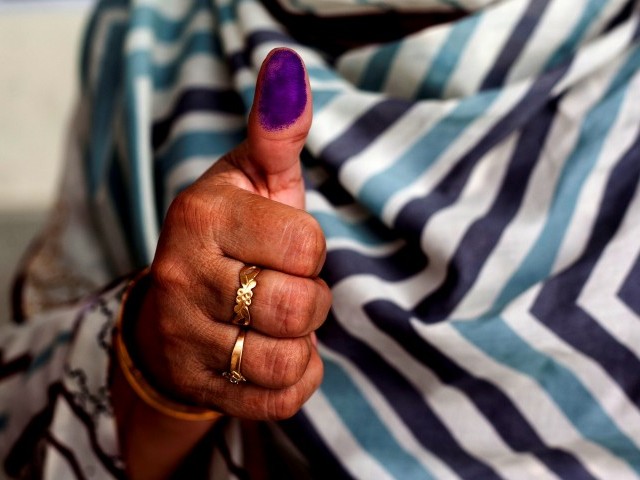
Today, Nasim is the Women’s Wing Provincial Coordinator for one of Pakistan’s major political parties. While she wants to make a difference at the national level, she’s hit another barrier.
While Pakistan’s constitution reserves a certain number of seats in the National Assembly for women, to run for one of the seats, Nasim had to raise 75,000 rupees. Despite succeeding, her party leaders did not choose her as a candidate. Often, the parties reward male candidates by allotting the reserved bids to their female family members, edging out women like Nasim. Female relatives tend to side with their male counterparts on the issues, even if it goes against broader women’s interests.
Defeated, Nasim heard about Search’s program, Women’s Initiatives for Learning & Leadership (WILL). She joined other Pakistani women politicians to learn legislative processes and leadership skills in negotiation, dialogue, and media relations.
Farsighted and courageous, Nasim credits Search for her political confidence. Now understanding women’s electoral rights, she is committed to reforming unfair practices. She is currently engaging her party chairman’s daughter to achieve a more transparent candidacy process. With other WILL women, Nasim is also launching a national Women’s Caucus to help women representatives stand up for common interests, across party lines and family allegiances, and collaborate with male allies on key policy issues.
Nasim founded the organization Safar to promote education, health, and business skills among women, girls, and boys. Safar provides scholarships, giving poor students the same privilege that Nasim’s husband provided her. Recipient of the 2013 Women Human Rights Defender award, Nasim is “very grateful to WILL for building my capacity and confidence and for the opportunities Search gave women to come to the forefront.”
Hear from Nasim and other women leaders in Pakistan in the video below:
To learn more about these and other Women’s Initiative for Learning & Leadership (WILL) initiatives, click here .