After Genocide: A Rwandan Love Story
By Jean Baptiste Ndabananiye and Jessica Murrey
In every great love story there’s adversity, seemingly impossible obstacles to overcome. Often, the greater the obstacles, the greater the love story. Romeo and Juliet, Tristan and Isolde – they battled intense hatred between their clans, but their stories ended in tragedy.
Our “Romeo” is from Rwanda, and he makes the obstacles cooked up by Shakespeare or Hollywood look like an ant hill.
During the 1994 genocide, Giraneza was brutally attacked. He spent six years in a coma at Kigali Kanombe Hospital and now must rely on a cane to walk. After being nearly paralyzed, Giraneza awoke to find out that groups of Hutus killed most of his family.
“I vowed to kill each and every Hutu who would enter my house. I bought a machete and had it excellently sharpened because I hated all Hutus,” he said.
The aftermath of the genocide caused unbearable grief and pain to Giraneza:
“I used to suffer too extremely to stand it,” he said. “I attempted to commit suicide twice, but failed; I thought I deserved to die because life was nothing for me then. I harbored too much heavy sorrow, suffering, insecurity, hatred and drives of revenge.”
Giraneza never intended to forgive the Hutus—let alone marry one, but fate had other plans.
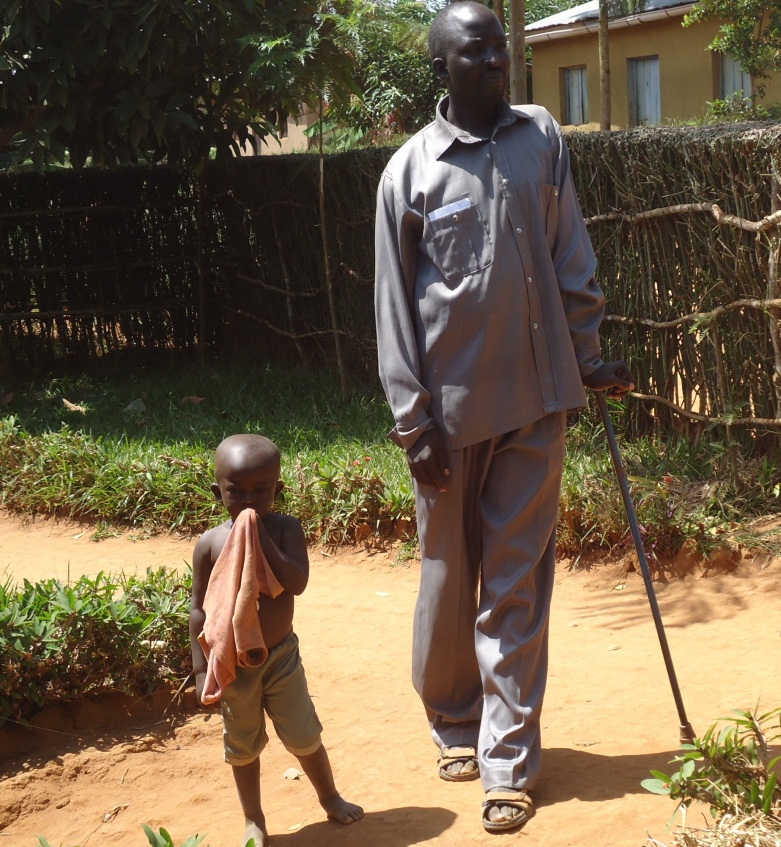
Giraneza and his son at home
To help the reconciliation process, our Search for Common Ground team in Rwanda used radio broadcastings to promote solidarity and forgiveness. The radio program Turumwe (translating to We Are One) strives to reconnect the shattered ties between the Hutus and Tutsis. Besides Turumwe, Search adopted other approaches to reestablish peace within the community, such as participatory theater initiatives and direct engagement activities.
These initiatives inspired Giraneza to embark on the pathway to forgiveness.
He realized that possessing so much animosity and revenge was an unbearable burden on his shoulders. No longer did he want to allow his hateful feelings to prevent him from enjoying life. That’s when he allowed his heart to open and the unthinkable happened—he fell in love with his enemy, a Hutu.
“My wife is a Hutu daughter of a genocide perpetrator, who killed my people and plundered our possessions during the genocide,” he explained. “We love each other extremely.”
Remarkably, Giraneza shifted his vows of hate to vows of love. Giraneza and his wife have built a bridge between two opposing populations, two opposing families, merging them into one.
_____________
Jean Baptiste Ndabananiye is a journalist who works with Search for Common Ground in Rwanda.Jessica Murrey is the communications manager at Search for Common Ground headquarters office in DC.
Local Voices – Say No to War, Stay in Civilian Life
Deciding between an armed existence and civilian life is far from being a rhetorical question in a context where armed groups abound and the lack of economic opportunities erodes all thoughts of the future – as in rural North Kivu. Despite the numerous challenges which the civilians experience on a daily basis in the far-flung villages of North Kivu, the civilian population shows an extraordinary willpower, and capacity for resilience, when faced with the effects of armed violence and the surrounding poverty.
Through portraits and photographic testimonies, this publication looks at the civilians who share their daily lives with the armed groups; how they live and how they survive in an excessively militarized environment, and how they see their own existence surrounded by militiamen.
Young women and the rebels
They are aged between 16 and 20 and every day of their life they live with young men of the same age who bear weapons and fight. Some of the young single women who live in Lukweti, where the APCLS armed group set up its headquarters a few years ago, speak to us about armed men and their own individual concerns.

“I don’t want to marry a soldier (i.e. militiaman) because there’s a danger that he could go to fight and die there. I want an intelligent husband, a husband who would be able to earn enough so that we could live well.”

“There are lots of women who love the soldiers because they have a reputation for looking after their women properly. But we have seen how our older sisters who married soldiers became widows very quickly. To get by, some of them have even had to become prostitutes.”

“Life is hard in Lukweti. We have to keep fleeing because of the war. I would like to find a husband who could take me to Masisi town, or even to Goma, because there we could spend several years without ever hearing bullets fired.”

“The ideal man is a civilian because he won’t die too quickly, unlike a soldier. And if he does die, it will be from illness, or an accident, not because of the war.”

Living and Surviving
Predominantly based on small subsistence agriculture, life in North Kivu is particularly difficult economically. There is a cruel lack of opportunities for employment which means that cultivating the land often remains the only possibility of income for households. However local agriculture is barely profitable. Even if the land is fertile, the farmers are often prevented from accessing their fields by the insecurity caused by armed groups, and, even then, their harvests would be simply ransacked by the rebels or the soldiers from the national army.
The lack of roads is a huge barrier to the development of the local economy, slowing down (or entirely preventing) the transportation of farm produce to markets and possible sale locations. In such conditions, the local people limit themselves to growing the minimum necessary for their family – the uncertainties of war regularly reduce any investment back to nothing.

A man pushes his bicycle loaded with containers of banana liquor on the road between Lukweti and Nyabiondo, a road which becomes a huge impassable field of mud. Masisi territory, North Kivu, August 2013.
“We live a life of poverty because the road isn’t made,” said a young woman in Lukweti.

A woman comes back from the fields carrying a container of cassixe (banana beer) on her back and a child on her front. In Eastern Congo, woman are undeniably the driving force of the local economy. Katale, Masisi territory, North Kivu, June 2013.
“Life is very hard here in Lukweti. To get money, the only thing that we can do is to carry containers of Kasusu (locally brewed banana liquor) on our backs to Nyabiondo, which is a 3 hour walk. We get paid between 1000 and 1500 Congolese francs ($1-$1.5) for carrying a 20 litre container,” a young woman in Lukweti explained.

A child watching over a goat grazing.
As well as going to school (when parents have the money to send them), children have to contribute to the household’s coffers from a young age, in order to improve their living conditions.

Children work in the banana plantations, whilst also looking after their younger brother, still a baby. Lukweti, North Kivu, August 2013.

Fabrice, 20, goes to the banana plantations with his friends to brew banana beer. Fabrice is not the owner of the plantations, but he will be paid up to 2500 Congolese francs (about $2.5) for the day’s work. In this way he makes the most of the school holidays to make some savings to pay his registration fees at the Masisi School for the new school year.
Fabrice tells us “It’s not only with weapons that we can defend our country. If I finish my studies, I can become a politician and also contribute to the development of my country and bringing peace back here”.


Men cut bamboo in the Lukweti forest. Bamboo is used as a construction material, predominantly for roofing houses, but also to build bridges.

A woman plants manioc cuttings in her field. Lukweti, August 2013.

A game hunter poses with his homemade 12 bore rifle. Smoked bush meat (monkey, porcupine) is very prized in Eastern Congo. Many men in Lukweti hunt in the forest, and can leave for several days at a time to go hunting. They often cross the blockades set up by the FDLR Hutu rebels and have to leave them part of their spoils.

A seller in the Lukweti market. The Lukweti market takes place every Thursday and is a day of great activity in the village. Many people come in from the neighboring villages, particularly the FDLR armed men. All the merchandise arrives on the backs of men (and more often on the backs of women) from Nyabiondo, approximately a 3 to 4 hour walk. You can find everything in the market; clothes, sandals, pocket torches, and Chinese digital watches at 1500 Congolese francs (about $1.5).

Women loot manioc for the APCLS militia. Lukweti, Masisi territory, North Kivu, August 2013.

Sifting manioc flour for the APCLS militia. Lukweti, Masisi territory, North Kivu, August 2013.
Civilians and militiamen – how to live together?
Even if the possession of a firearm sets up a fundamental inequality between the militiaman and a civilian, that of a relationship of a superior over a second-in-command, the civilians and armed men are far from being strangers to one another. Among parents, friends, brothers, cousins and neighbors it is very rare, in the Masisi territory, to find a family which does not have a single member linked, either closely or distantly, to an armed group. The distinction between civilians and militiamen can sometimes be blurred, as civilians can sometimes have a weapon at home.

Members of the ‘youth’ of Lukweti with their President, in the khaki t-shirt. In many villages the young people are organized into self-defense groups, named ‘youth’ or ‘local defense’. Lukwety’s youth has some weapons and organizes patrols at night in case of attack, particularly when the APCLS militia have gone to the front line. The President of the Lukweti youth tells us that he can get almost 80 young people together, but they only have ‘a few weapons’.

A civilian and an APCLS militiaman greet each other warmly after not having seen each other for a long time. Lukweti, North Kivu, August 2013.

Sentiment, Chief Escort of APCLS’ “Colonel” James (in military uniform), celebrates his return from the front in Pinga with his friend Muhindo, a member of Lukweti’s youth. The two young men met some years ago in Kitchanga, Sentiment’s hometown, before Sentiment joined the APCLS. In Pinga, APCLS is regularly fighting Cheka’s troops.

A football match in Lukweti – the teams bring civilians and militiamen together around the football. Lukweti, North Kivu, August 2013.

Shaolin, a Lukweti resident, and Colonel Christian from the APCLS are great friends. Shaolin is not part of the APCLS but, nevertheless, he sometimes accompanies his friend Christian to the front line. Lukweti, North Kivu, August 2013.

Innocent is worried. His brother and four of his friends have been called by “General” Janvier to explain their involvement in a fanciful tale concerning minerals. Under escort, the five young men had to climb up Mt. Sinai where the APCLS commander is located. Innocent does not know what will happen to them. They were to be interrogated and lectured by the General himself, but did not experience any ill-treatment. They would stay at Mt. Sinai for four days, carrying out works for the “General” before they could return home.

Maman Mishé was married to Kalé, the elder son of “General” Janvier. Kalé had a reputation for being one of the most hardened APCLS militiamen. He died a year ago. Whilst he was on the front line during the fight against Cheka’s men, Kalé was caught in an ambush. His body was riddled with bullets.
Maman Mishé thinks about Kalé often. She dreams about him at night. They had one child, a boy. Mishé does not have fields. When Kalé died, her in-laws took her husband’s four cows as well as his goats and chickens. Today Mishé lives from running a small pork meat business, without anyone’s support.
Keep the faith
Confronted by the adversity of war and the surrounding poverty, the Christian faith and its promise of a better tomorrow undeniably provide a certain kind of comfort to the very devout population in North Kivu. The churches are full on Sundays. In Lukweti’s CEBECA Protestant Church, one Sunday in August, the pastor fervently preaches fire and brimstone at the top of his voice.
Apart from the religious aspect, churches are also particularly important social spaces for community life. There people meet as families, among friends and neighbors, and sing and dance for hours. Sometimes some militiamen also come to pray and gather their thoughts. Nevertheless, the pastor tells us ‘they don’t come often’.

The pastor maintains an impressive level of energy throughout his sermon, which lasts for two hours.

Many young mothers come to church with their children.

Although there is no electricity in Lukweti, the CEBECA church has a solar-powered drum kit from which the musicians can amplify their instruments and invigorate Mass with their songs.

Every good Christian has to contribute to the Church’s development. The basket is passed round for the faithful to put in several francs.

Men, women and children sing and dance. Mass is also a time to relax and be social.

A small girl plays outside the church waiting for the end of Mass. Lukweti, North Kivu, August 2013.
……………………………………………………………………..
Text and photographs: Alexis Bouvy.
Facilitation in the field: Chrispin Mvano and Rodolpe Mukundi.
Text translated from French by Alexandra Jackson.
For more information on the context of armed conflicts in North Kivu, see Jason Stearns (2012), North Kivu. The Background to Conflict in North Kivu, Usalama Project, Rift Valley Institute, Nairobi.
See also the International Alert report, including a critical perspective of peace actions carried out or supported by the Congolese authorities and international actors: Ending the Deadlock. Towards a New Vision of Peace in Eastern DRC.
Local Voices – Congolese Communities & The Kivu Conflict enjoys the support of International Alert and Search for Common Ground.
© Local Voices 2013 with International Alert & Search For Common Ground.
My Story: Fighting the Perversion of Academia
By Mohammed Foboi
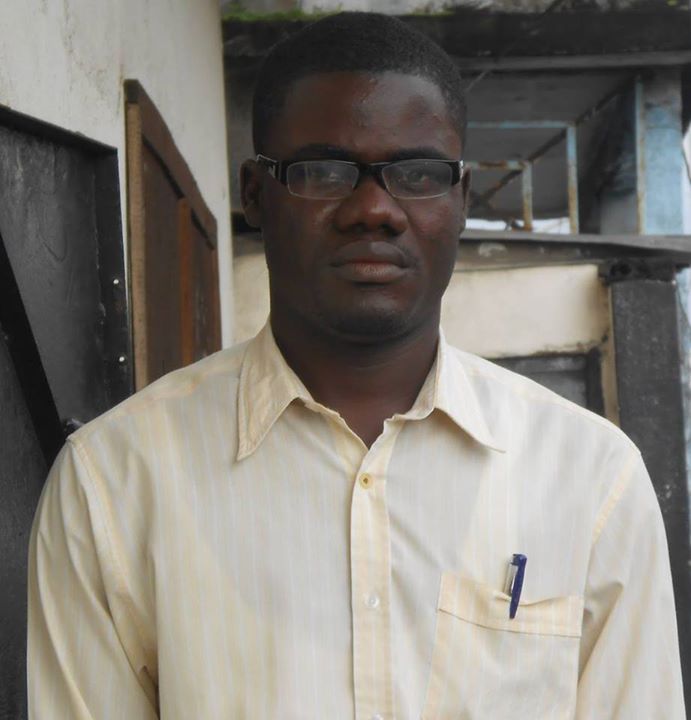 My most important teacher is an outlier in the traditional academic sense: my illiterate mother.
“No condition is permanent. You must keep focused and get a good education,” she usually says to me. I listen.
My mother knows quite a bit about reversals of fortune. I grew up in a very large family. My father married seven wives, with my mother being the last. I have 23 siblings, not counting the ones who passed away.
Before I was born, I am told that my father was relatively well off, which explains his ability to take on so many wives. However, my father didn’t store his money in a bank; he used his mattress.
He lost everything during the Liberian civil war.
My mother believes that had my father received a decent education, he would have been smarter with his money. So she dedicated her life to ensuring that my siblings and I achieve higher education.
I know that education is the surest way out of poverty. I choose to pursue academic excellence to the fullest, because education transforms not only individuals, but also nations.
I apply my mother’s advice not only in my own life but as an inspiration to positively impact my country’s educational system.
Academic malpractices – sex for grades, bribes, etc. – pervade Liberian schools, and have the potential to stifle long-term development in my country.
Teachers collect tens of thousands of dollars from students in exchange for grades. Some teachers even demanding sex from students in exchange for better grades. This appalling phenomenon is so entrenched in Liberian schools that it is now accepted as a way of life.
Liberia suffered massive brain drain during the civil war, when hundreds of thousands of Liberians, including teachers and school administrators, fled the country for safety. Today, most of the teachers are people who cannot get jobs in other sectors. As a result of malpractices, the education sector produces graduates who lack the capacity to positively contribute to society. This, in turn, creates a vicious cycle of corruption, bad governance, and lawlessness at the national scale.
Violence is another major factor. The country’s population is 3.5 million people and the young people make up 68% of this number. 74% of those who fought the 14-year civil war are young people, and today their only way out is still violence.
I am determined to eliminate violence and violent malpractices in Liberia.
In March of 2008, I founded a student organization called Students Against Destructive Actions and Decisions (SADAD), which aims to eliminate academic malpractices and violence from Liberian society.
First, I used my personal resources to run the organization, including mobilizing volunteers and conducting community and media outreach. Upon my graduation in 2010, SADAD became a registered NGO with networking structures as peace clubs in ten schools in Montserrado County.
During the May 2012 national exams, SADAD assigned 73 monitoring agents at various testing centers to supervise the exams. Due to our intervention and the Exam Council’s efforts, we saw an unprecedented drop in fraud cases – below 1985 levels. It was a huge victory for us. The organization again had 67 members in the field during the May-June 2013 WAEC Exams and the results was again one of Liberia’s best results ever.
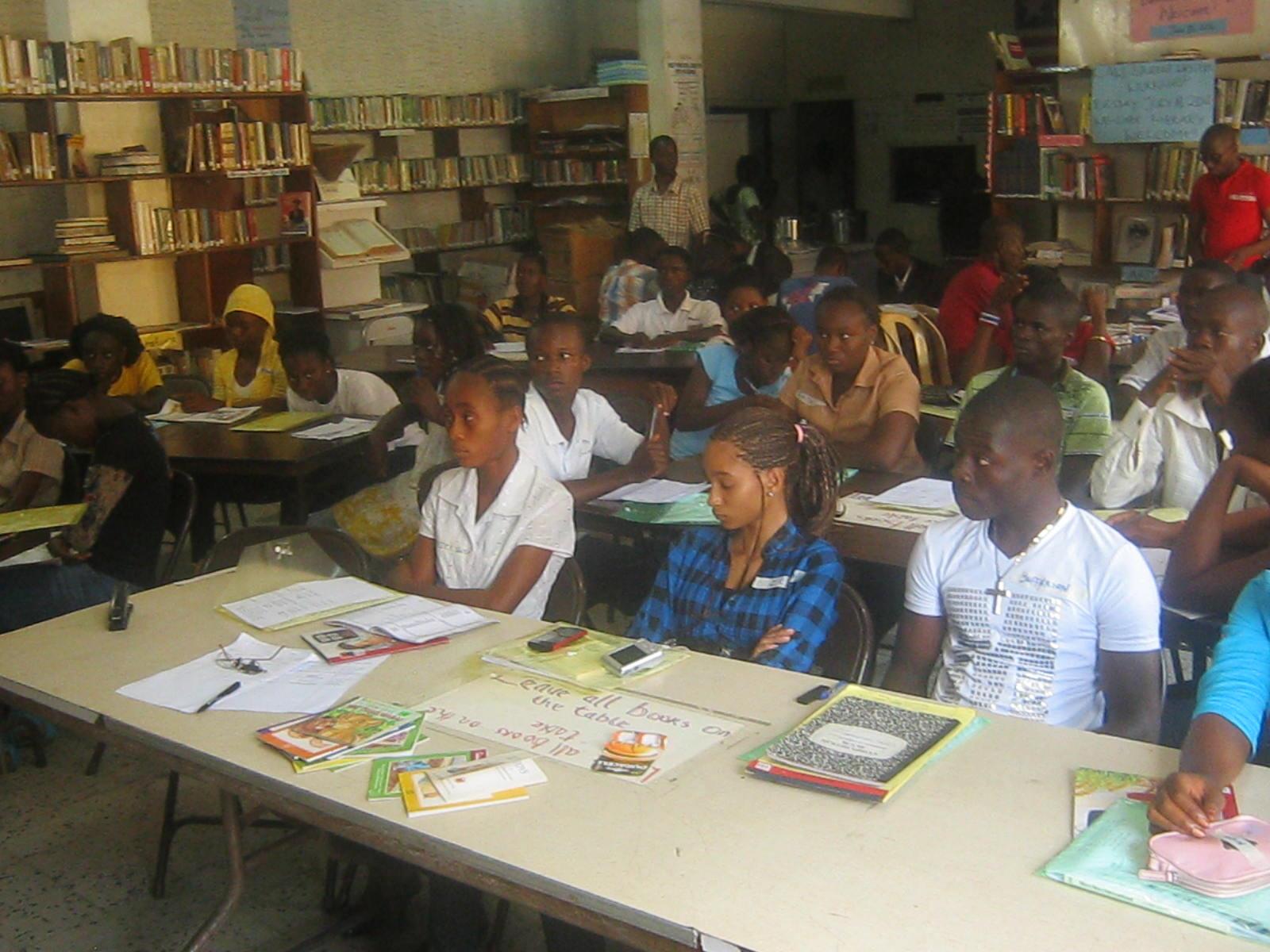
Courtsey of Student Against Destructive Action and Decisions (SADAD)
SADAD is a member of the United Network of Young Peacebuilders (UNOY), based in The Hague, and now has more than 300 young people dedicated to ending violence, many of whom are far higher than me in education and age.
Today, I am a second year student at the University of Liberia, studying Mass Communication and Sociology. I am the youngest member of the Liberia Association of Writers (LAW).
I live away from my parents in a room without even a bathroom or toilet, I go to sleep hungry some days and have to travel one and a half hours to school, spend another six hours in classes and then another hour and a half to come home. But I am focused on my vision and goal of helping to make a peaceful and an inclusive environment for all, which I can only accomplish with a good education.
I am passionate about this quest to end violence especially among youth.
When I reflect on my personal trajectory and the factors that have nudged me along, my mother has been the single most influential figure in my life. She did not have the opportunity to get a formal education but she taught me everything I need to look into the future.
If you’re inspired by Mohammed’s story and want to get involved, Join the Search. Join the Search is a global movement to end violent conflict. Just go to endviolentconlict.org to learn more and sign the pledge.
______
Mohammed Foboi is a university student at the University of Liberia and the founder of Students Against Destructive Actions and Decisions, which is apart of the United Network of Young Peacebuilders and a participating organization in Join the Search, the movement to end violent conflict.
Local Voices – Power, land and identity: the origins of violence in Masisi
Since independence was declared in the Congo, the history of Masisi has been marked by high tensions over the control of power and land between the three major communities in this territory: the Hunde, the Hutus and the Tutsis.
At the heart of these tensions is the issue of land rights and the power exercised by, or denied to, the different communities. Since 1994, regional conflicts have heightened these local tensions and reshaped the landscape of conflict in Masisi, and eastern Congo. Right up to the present day, the distribution of power remains a particularly sensitive stumbling block between local communities.
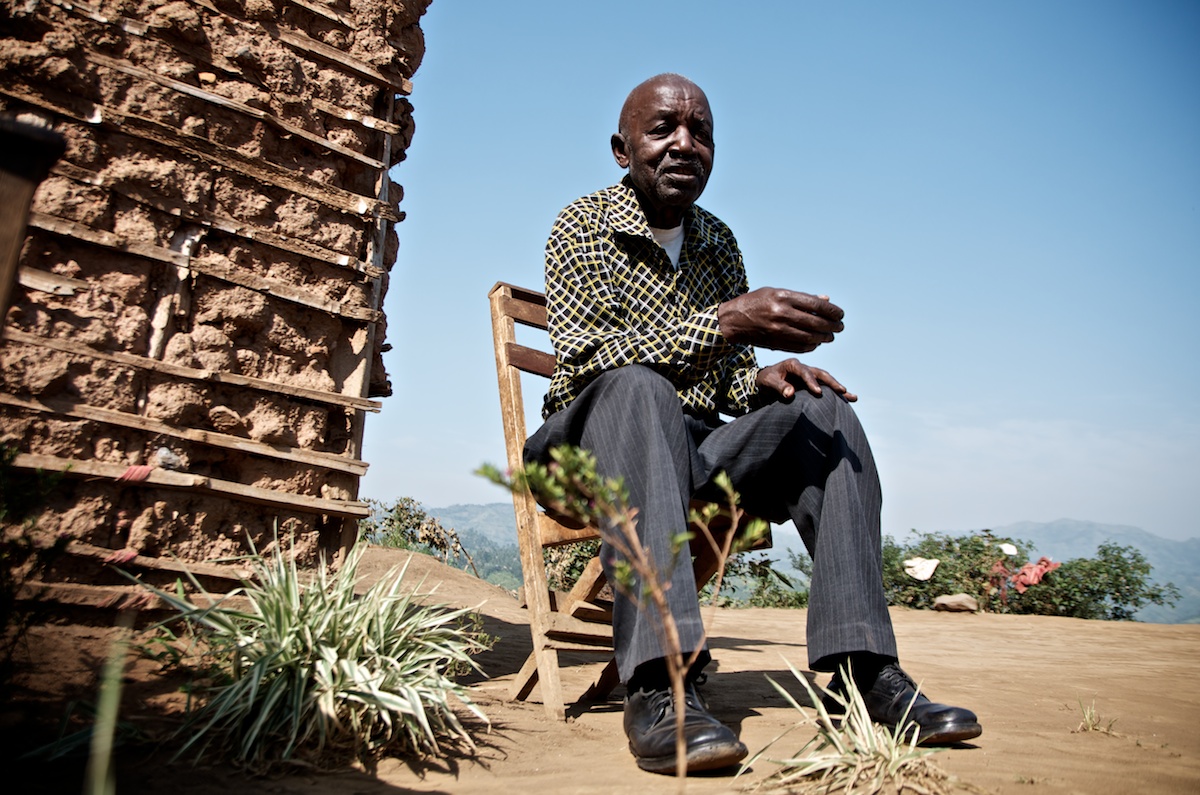
A member of the royal family within the Hunde community, Mwami Michel Bapfuna, has been the head of the Bapfuna groupement since the early 1960s. For the past twenty years he has not been able to access the majority of his land. Masisi Town, North Kivu, August 2013.
The traditional Hunde leaders in the Masisi territory almost all share the same complaint: they can no longer wield their power freely, as they did in the past when Mobutu ruled Zaire. For the past 20 years, large parts of their customary entities (divisions of land) have effectively been in the hands of armed groups; they simply do not have access to their land anymore and fear for their lives if they dare to go to the villages which they are supposed to administrate. Some heads of the groupement (a local customary and politico-administrative division) whom we met in central Masisi provided specific examples to illustrate these facts. The head of the Bapfuna groupement controls only one of the six villages within his groupement, the heads of the Buabo and the Bihiri groupement each control one out of their respective five villages, and the head of the Banyungu controls half of one of his two villages.
“Some people gave themselves permission to use weapons to take our power,” the eldest of them tells us, whilst the others agree. These big men, named ‘usurpers’ by the Hunde leaders, have, for the most part, come from the Hutu community and, through war and rebellions, have managed to bring about the recognition of the right for which they have been advocating for years: the right to administrate the land where they live and where they are the largest ethnic group.
These demands are unacceptable to the Hunde leaders. For them, this land comes from the ‘ancestors’ and can only be looked after by the traditional leaders. The Hunde believe that the people who came from Rwanda (the Hutus and Tutsis) only several generations ago, could not possibly carry out such a role. In the Hunde discourse, only the ‘autochthonous’ can be traditional leaders, by which they mean the Hunde.
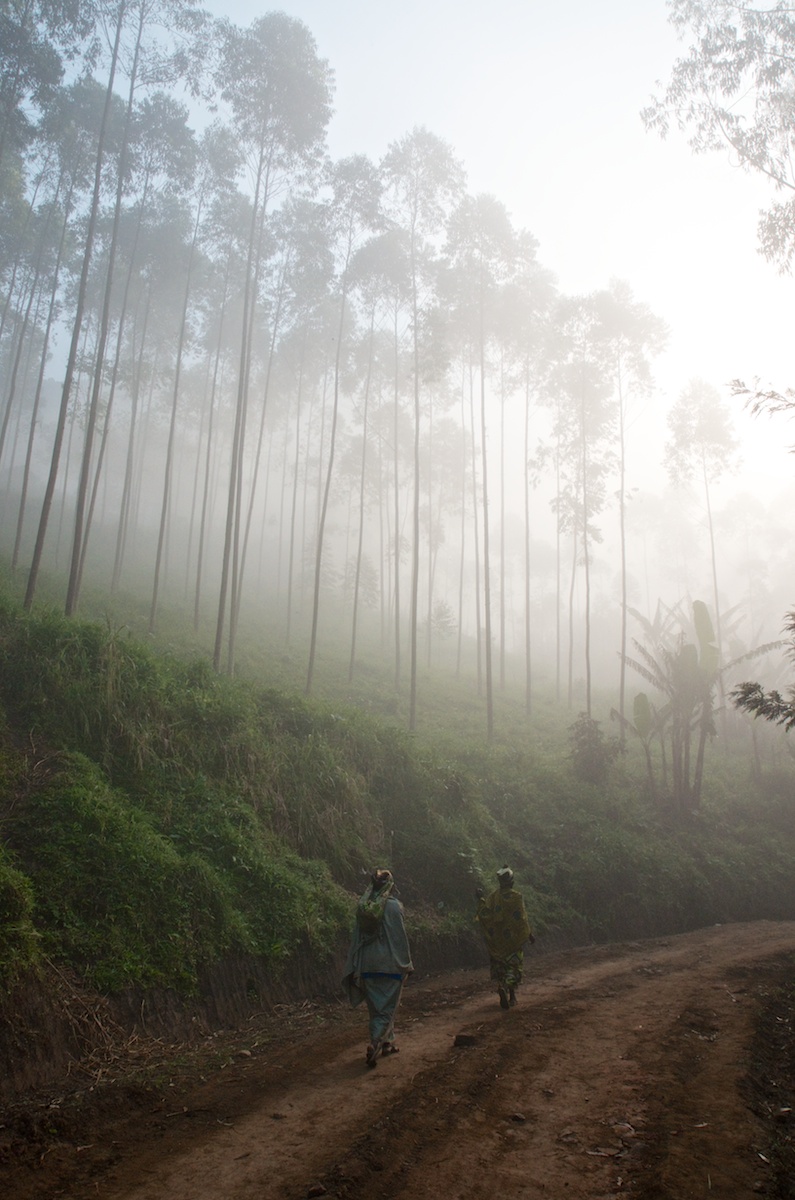
Masisi in the morning mist.
This belief in the Hunde primacy of customary power has its roots in the history of the settlement of eastern Congo, and in Masisi in particular. The Hunde community settled in Masisi before the Hutu and Tutsi communities, who arrived in the area in the 1930s to 1950s as a result of migrations organized by the Belgian colonizers, who were looking for workers for their colonial plantations, as well as due to the political situation in Rwanda in the 1950s.
As time went by, the Hutu community grew larger than the Hunde community who had originally occupied the land. The Hutus (and, with them, the Tutsis) wanted to liberate themselves both economically and politically from the authority of the Hunde’s traditional leaders. The Chef de Poste d’Encadrement (an administrative – non customary – official) for Lushebere, a Hutu leader, disputes the Hunde leaders’ complaints by saying, “The Hunde leaders are our traditional leaders, and we accept them as such.” Despite this, Hunde leaders often rise up against him when they accuse Hutu leaders of having stolen their power. They cite him as the ‘big man’ of the area, and claim that he has authority over the Nyatura, a Hutu militia who are active in the area. He defends himself against these accusations by saying, “I am the Chef de Poste d’Encadrement for Lushebere. My aim is to develop my area. The traditional leaders don’t do anything. They don’t have offices. They are weak and almost never work!”
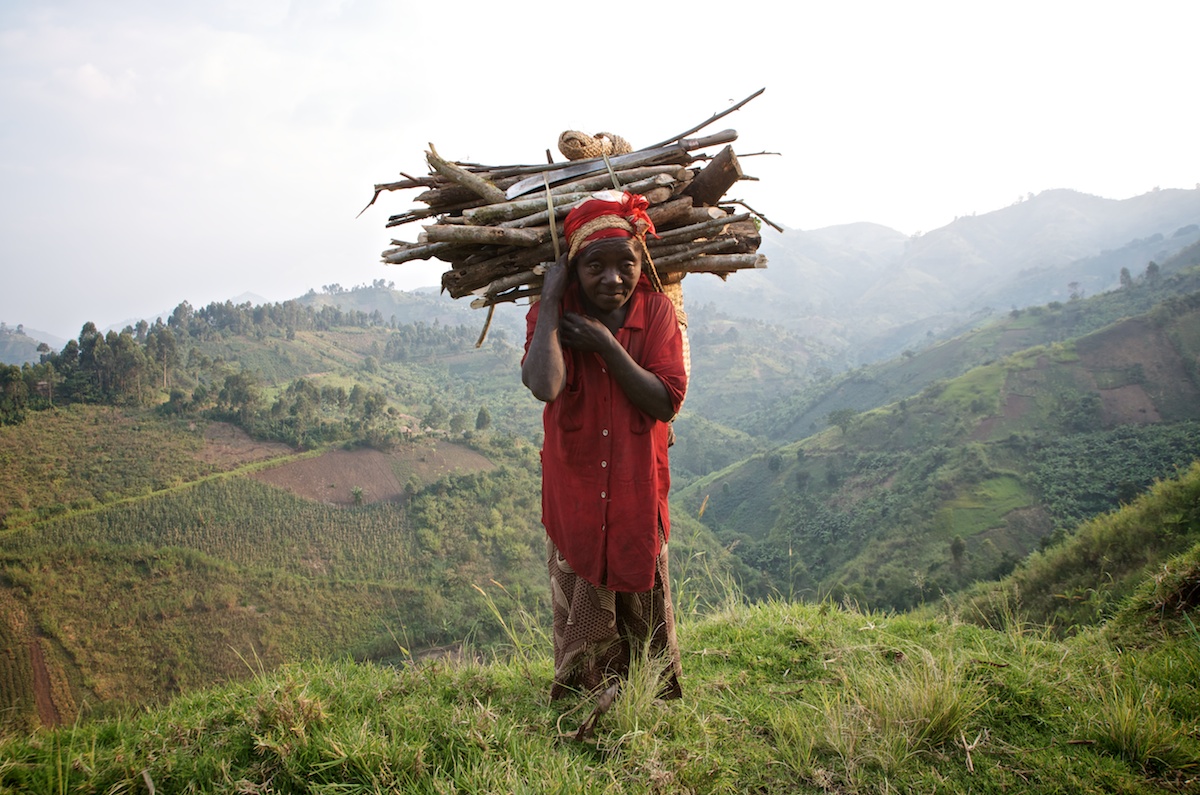
Maman Angelique has spent the whole day in the fields. At the end of the day, she goes home, overloaded with firewood which she will use to prepare food. Buabo group, Masisi territory, North Kivu, June 2013.
Even if inter-community tensions date back to the colonial period, they worsened after independence and throughout the 1970s and 1980s, due to the huge inequalities in land rights between small cultivators and large land owners. These grievances stemmed from both land owners reshaping local ethnic divisions through the introduction of a political system based on elections, as well as from changes to the law on nationality which, at the beginning of the 1980s, called into question the nationality and Congolese citizenship of Rwandophone populations. Twice, at the beginning of the 1960s and in 1993, during electoral seasons and due to influence by political leaders who manipulated ethnic allegiances for their own ends, the situation broke down into open confrontations between ethnic militias.
Emmanuel Munyamariba, the Chef de Poste for Lushebere recalls this period of unrest. At the end of the 1980s, tribal “mutualités” get organized with the Hutu MAGRIVI, the Virunga Farmers’ Association, and the Bushenge Hunde (literally, the Hunde’s meeting place). Originally a means of solidarity between members of the same community, these two associations became the spearhead of ethnic militias who confronted each other in 1993. In 1989, M. Munyamariba became the Secretary of the MAGRIVI. He explains, “the MAGRIVI quickly understood that the Bushenge Hunde planned to drive out the Hutus, to send them back to Rwanda. For me, for example, my grandfather arrived in Masisi in 1930. Where would I go in Rwanda? Thus the young Hutus put up a fight and took on the young Hunde. That’s how we came to exterminate each other.”
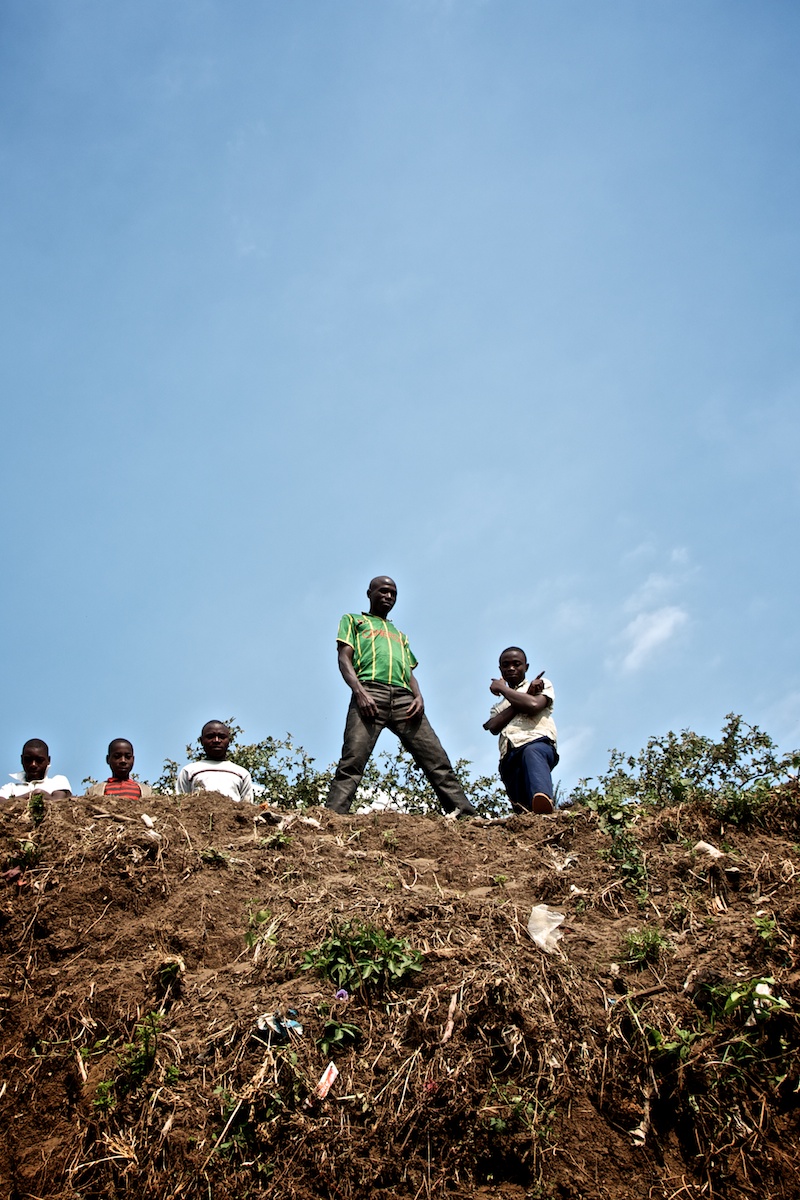
Displaced young people in the Katale Camp. Masisi, North Kivu, August 2013.
The NGO Médecins Sans Frontières (Doctors without Borders) estimates that the interethnic violence in Masisi territory in 1993 caused between 6,000 and 15,000 deaths over a period of three months. For the local population, this first round of violence marked the beginning of a war which was not going to stop easily.
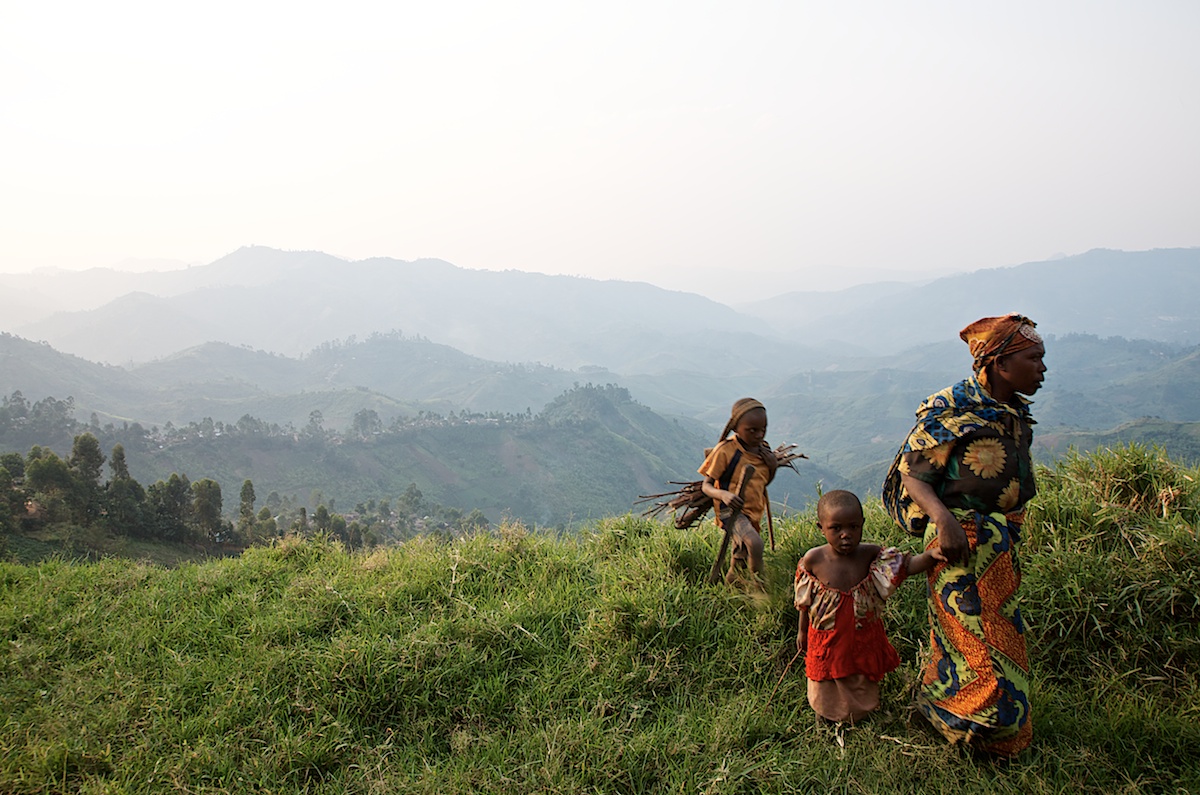
A woman and her two children go home after a day of working in the fields. Masisi, June 2013.
Apart from the huge displacement of populations and the change of the ethnic layout of the territory, this violence also reshaped the local political landscape in Masisi, as the Chef de Poste for Lushebere went on to explain, “Before 1993, all the positions (traditional and administrative) were in the hands of the Hunde. There was not a single Hutu Principal, for example. As well as the traditional leaders, all the secretaries and the administrators were always Hunde. The tribal war of 1993 changed that; we started to govern ourselves. The Hutus became the heads of the area. We had tasted authority and, once you’ve tasted it, it’s hard to stop! We often say that it is better to die than to give up power…”
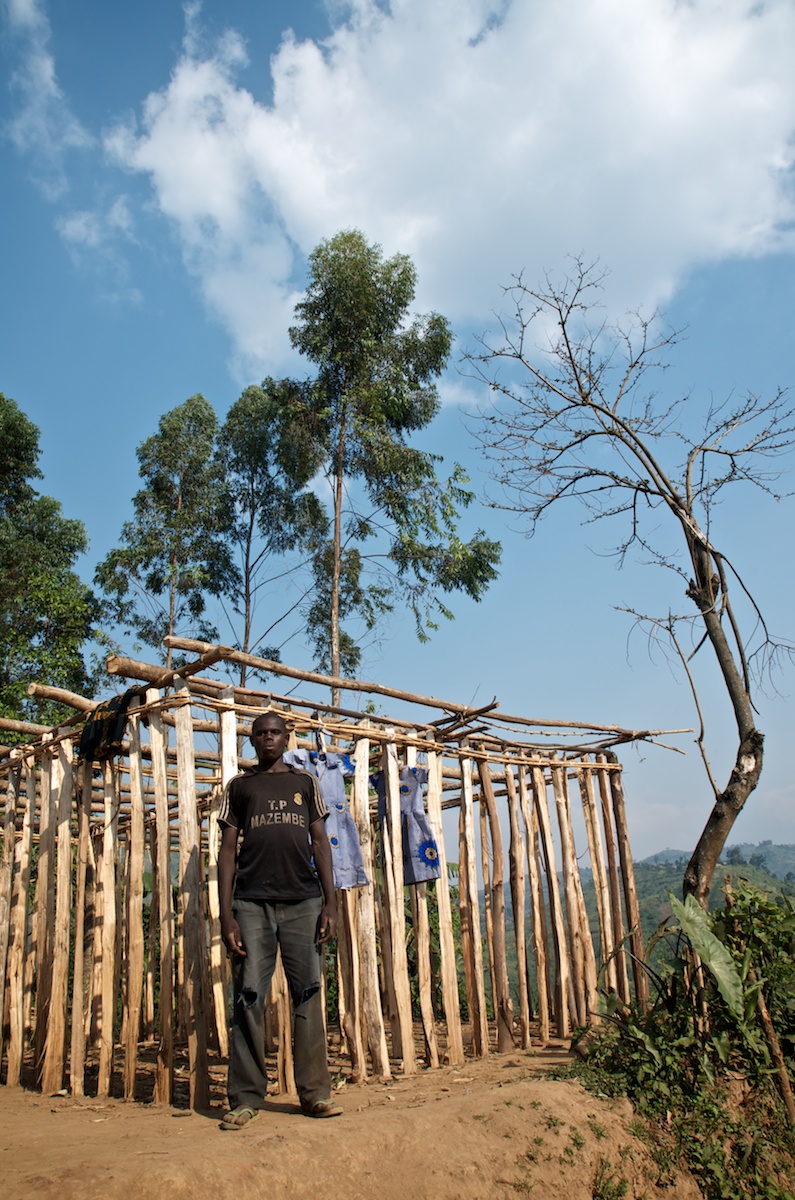
After fleeing violence for several months, Biringiro rebuild a home for his family in his native village of Bibotobolo. Their house has been destroyed during interethnic violences in November 2012. Bibotobolo, Masisi territory, June 2013.
He continues, “But then, Laurent Kabila’s AFDL (the Alliance of Democratic Forces for the Liberation of the Congo) arrived (in 1996) and told us to put an end to the tribal wars. They told us that we would overthrow Mobutu’s government and that, in the new government, there would be room for everyone. At that point we said to each other, ‘let’s share the responsibilities, let’s put Hutu secretaries to work with the Hunde leaders….’ That’s how, today, the area chiefs are often Hunde and their secretaries are Hutu.”
The Chef de Poste’s secretary rejects as well the Hunde leaders’ accusations. “It’s completely untrue to say that traditional power was usurped by force!” he says. “Right until today, there is not a single area which is managed by a Hutu or a Tutsi. There are obviously traditional leaders who fled their areas because of insecurity, but they left an intermediary who continues to report back to them. Look for just one official document signed by a Head of groupement from the Hutu community! There aren’t any!” he explains, without recognition of the Hunde traditional leaders’ complaints.
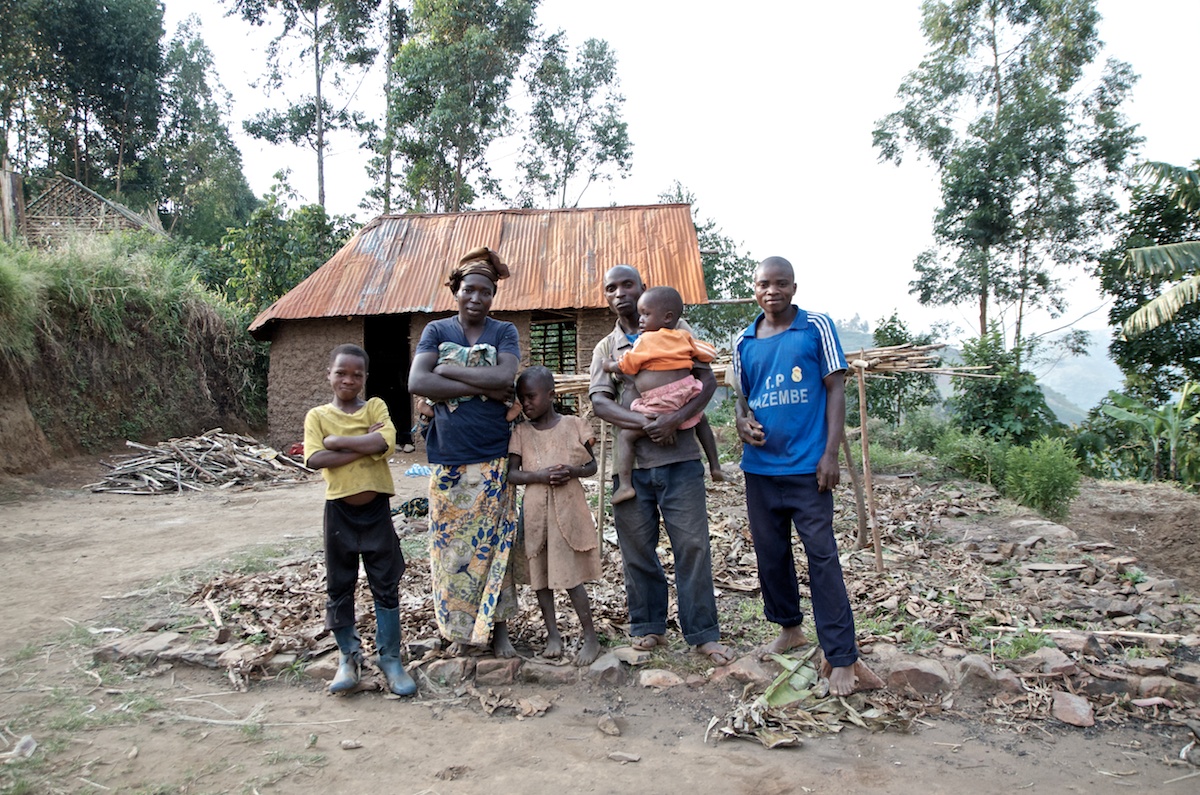
A Hutu family from the Bibotobolo village, in the Masisi territory, in the ruins of their former home, which was destroyed during the interethnic violence at the end of 2012. Having spent several months in a camp for displaced people, they have just finished building a new home (behind them), specifically by reusing the charred corrugated iron sheets from their former lodgings. Bibotobolo, Masisi, June 2013.
Regional wars and rebellions: the emergence of the Chef de Poste administrative positions.
The arrival in 1994 of two million Hutu Rwandan refugees, including many genocidaires (genocide perpetrators), into the Kivus, and the two Congolese wars of 1996-97 and 1998-2003, increased the existing tensions between communities in Masisi. The communities were swallowed up by the regional dynamics of these wars which involved almost all of the countries in the Great Lakes Region.
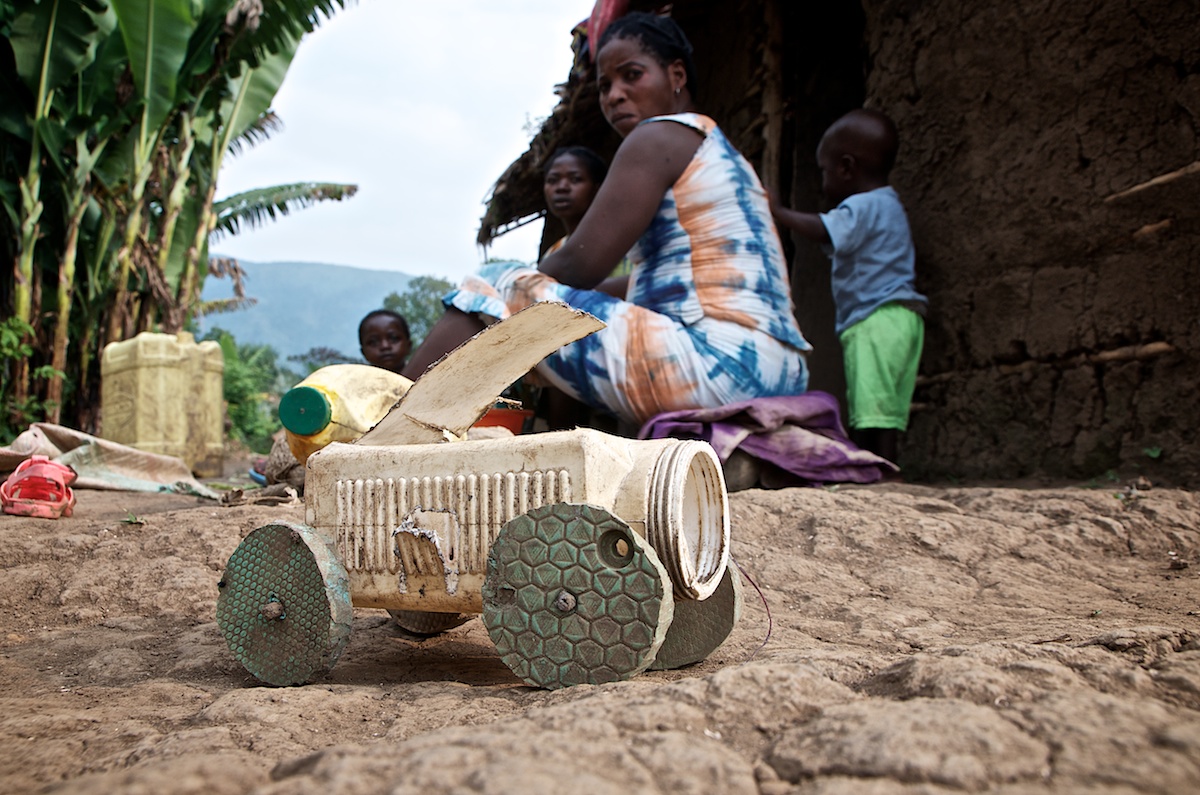
A child’s toy lies on the ground in front of a home belonging to a family who were displaced by clashes between armed groups. Nyabiondo, Masisi, August 2013.
The belligerents exploited the fears of the local ethnic groups in order to win them over to their cause and to swell the numbers of their combatants. For their part, numerous local leaders made use of the wars and its many opportunities for new alliances to develop their political and land-related agendas. In Masisi, the second war from 1998 – 2003 set the Congolese government of Laurent-Désiré Kabila against the rebellions supported by the neighboring countries. The Hunde community (with a few key exceptions) aligned itself with the government (through joining Maï-Maï armed groups) while the Hutu and Tutsi communities (also with a few key exceptions) took the side of the RCD (the Congolese Rally for Democracy) which, with the support of Rwanda and Uganda, occupied a large part of the Kivus.
By the end of the war, with massacres committed along ethnic lines, the hatred between the communities in Masisi and the Kivus had grown exponentially.
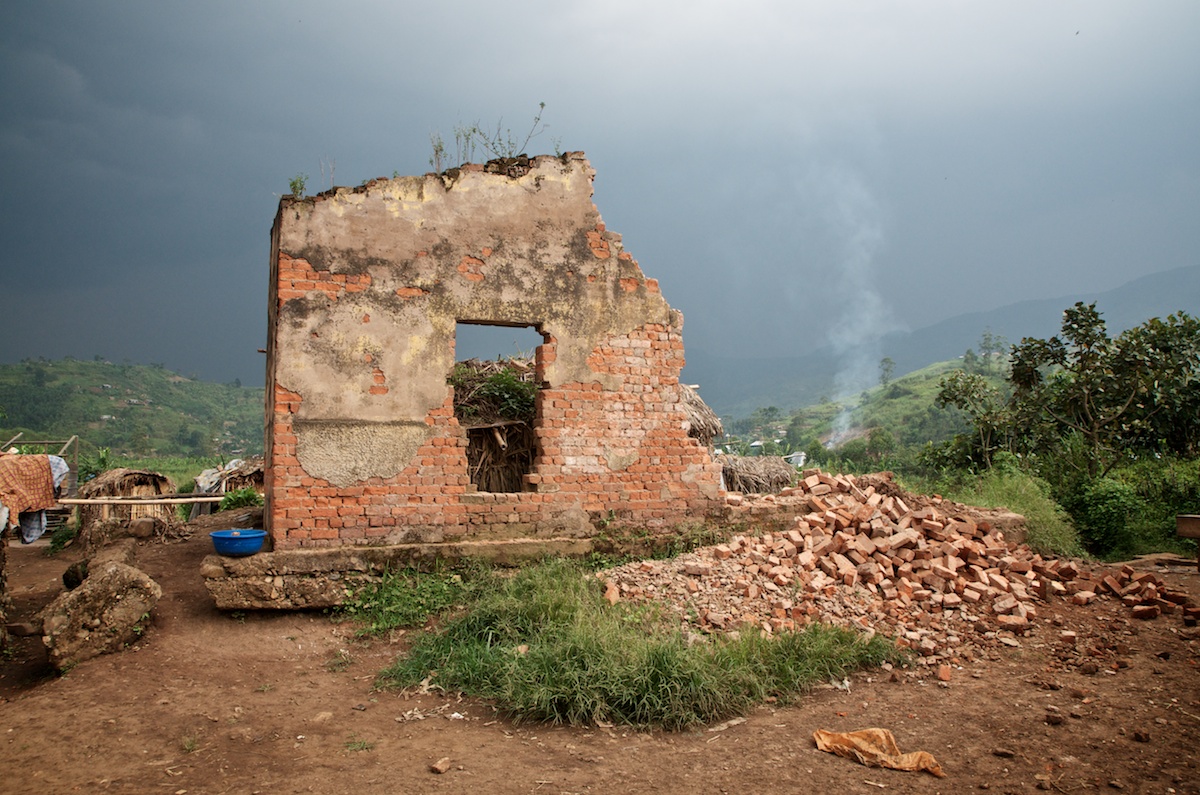
A former colonial house for TEKI workmen, the colonial business for tea production in the Kivus, destroyed by the war. Nyabiondo, Masisi, August 2013.
The RCD era coincided with further changes to local power structures in Masisi. As elsewhere, the RCD leaders wanted to bring power closer to the rural, and often landlocked, populations. The rebellion created several new state Postes d’Encadrement, taking their number from 12 to 27. The Hutu community was the largest in the territory and supported the RCD, and they benefited most from the new positions, to the great displeasure of the Hunde traditional leaders who saw their roles taken over by the new Hutu leaders.
The Chef de Poste for Nyabiondo, from the Hunde community, explained to us that this expansion of the Postes d’Encadrement and their recognition by the central government had been as well a strategy to try to end the war. “It was a way to keep the former warlords busy,” he said. It was a strategy that certainly made the traditional leaders ‘uncomfortable.’
However, as part of the decentralization process, a new institutional structure will now be implemented, and this does not include the Poste d’Encadrement positions. What will happen to the Hutu leaders who hold most of these positions in Masisi? “They will go and work in the new communes (which will be created through decentralization),” explained the Chef de Poste for Lushebere. “Even I have got to try to get myself elected as mayor, if I’m lucky!” Another leader in Lushebere is still concerned that decentralization could lead to unemployment for a large number of the current local leaders. He told us, “This would have a huge impact on peace in our area!”
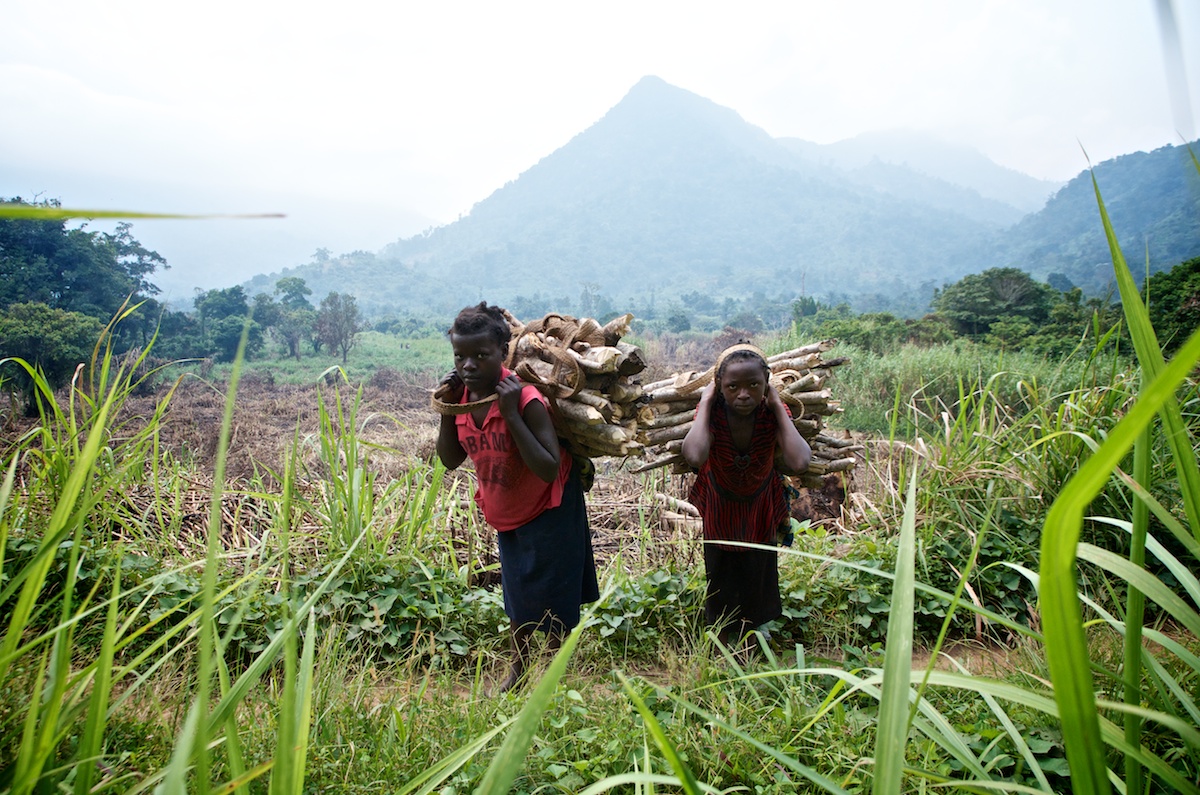
Two young girls from Lukweti carry firewood home. Lukweti is the village where the armed group APCLS set up their HQ several years ago. Lukweti, North Kivu, August 2013.
Whether power has been usurped or not, these statements demonstrate how bitter the disagreement over local power sharing is between the community leaders in Masisi.
While the most recent national elections (in November 2011) were heavily contested, particularly in the territory of Masisi, the provincial and local elections will be the next key date for the territory’s leaders and all of the communities. Before this major event in local political life, the priorities must be to establish a more peaceful environment between the communities in Masisi and between their respective leaders. Amidst the games and sometimes deadly political calculations, it is always the local populations who find themselves trapped first.
Disclaimer
Adopting the voice of the local actors does not mean that International Alert, Local Voices or Search For Common Ground endorse their views or defend their ’cause’. Instead we seek to communicate the fears, beliefs and wishes of local people in order to contribute to a search for sustainable peacebuilding solutions. To find out more about the approach of the project, see here.
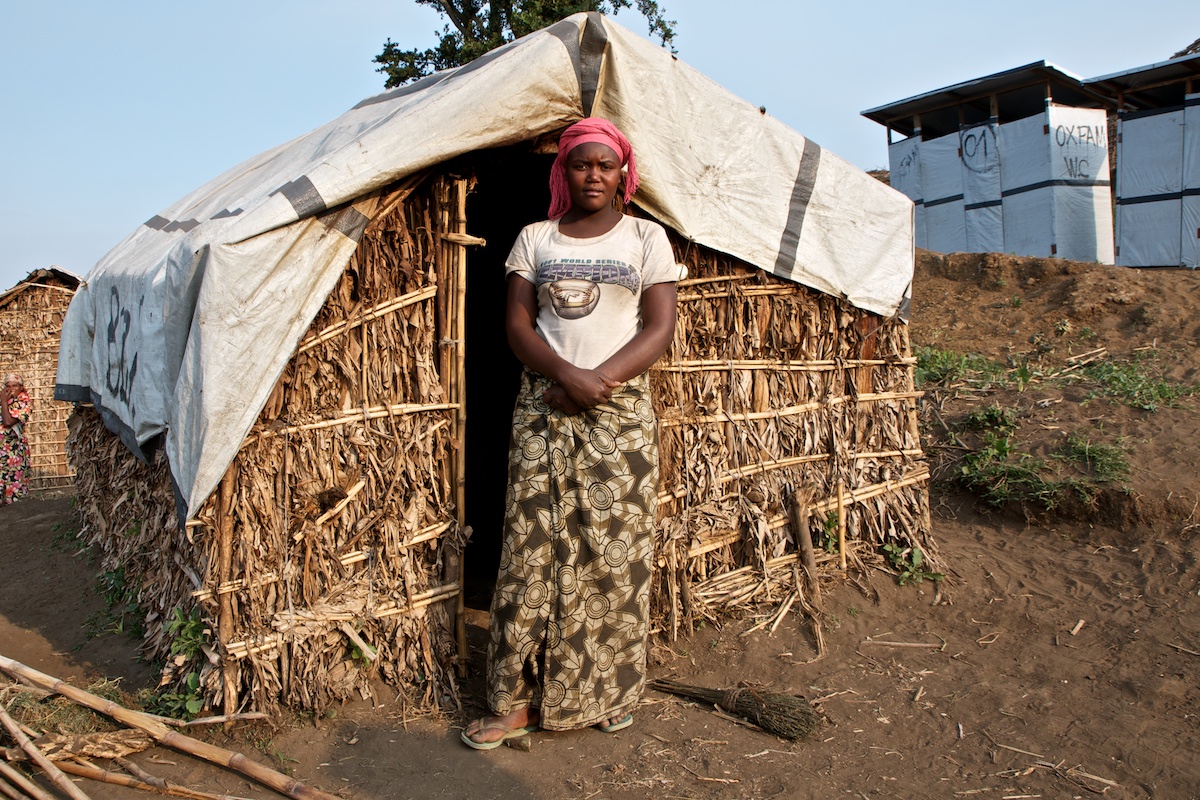
Young Sifa, 18 years old, in front of the shelter where she has been living with her parents since November 2012, in the Katale camp. Masisi, August 2013.
……………………………………………………………..
Text and photographs: Alexis Bouvy.
Facilitation in the field: Chrispin Mvano and Rodolpe Mukundi.
For more information on the context of armed conflicts in North Kivu, see Jason Stearns (2012), North Kivu. The Background to Conflict in North Kivu, Usalama Project, Rift Valley Institute, Nairobi.
See also the International Alert report, including a critical perspective of peace actions carried out or supported by the Congolese authorities and international actors: Ending the Deadlock. Towards a New Vision of Peace in Eastern DRC.
On negative discourses and stereotypes in DRC, see International Alert’s report: Words That Kill. Rumours, Prejudice, Stereotypes and Myths Amongst the People of the Great Lakes Region of Africa.
Local Voices – Congolese Communities & The Kivu Conflict enjoys the support of International Alert and Search for Common Ground.
© Local Voices 2013 with International Alert & Search For Common Ground.
By Susan Collin Marks
December 6, 2013
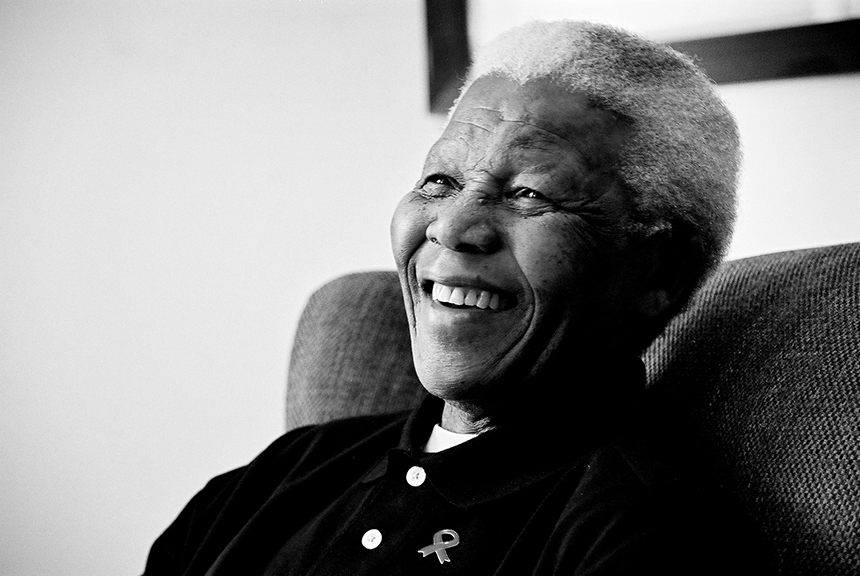
Photo Courtesy of www.parcbench.com
Washington, DC – As we collectively mourn Nelson Mandela’s passing, it is fitting to reflect on his life, and celebrate his greatness as a leader, and a man. His passing is a loss for our planet, but his spirit will live on in the fabric of the world, and in all of us.
At the age of 44, Mandela was imprisoned in a 6 x 9 foot cell on Robben Island by the apartheid regime. He was 71 when he was released on February 2, 1990, and I waited all day with 80,000 other people in the hot sun in Cape Town’s city square. Suddenly, there he was; a tall, strong, smiling, laughing Xhosa man with eyes dancing. We shouted and sang and danced our adulation and love. He dazzled us with his vision of a future where all South Africans, black and white, would live equally in their homeland. His warmth and spirit settled in us, seeping into our hearts and bones. The firebrand had come home to his wise elder self, and now he was going to take the rest of us home to the “new South Africa” with him.
As much of North Africa and the Middle East continue to push through the growing pains of the Arab Awakening – including interethnic violence and challenges in governance – Mandela’s truly uncontainable spirit and leadership style can perhaps help light the path forward for other nations, and for all of us.
He embodied the core elements of great leadership, even as he remained fully human with flaws and shadows. And he illustrated a profound truth, that we are great not despite our failings, but including them. We cannot pretend to be someone other than who we are, and much of the controlling, rigid leadership we see in the world today is armour against fear of personal failure and weakness. His authenticity taught us; he was always himself. Despite his hot temper, he was compassionate and empathetic towards those who imprisoned him, even as he lamented his inability to have a good relationship with some of his family.
He was a leader for all South Africans – never swerving from his vision of a rainbow nation – and a courageous problem solver, with pragmatism built on core values that translated into a deeply held personal and professional ethical framework. His inspiration came from a purpose bigger than himself and his presence, voice and discipline inspired others to be better than they ever imagined.
Who he was as a leader at this time of global upheaval matters. As old certainties are uprooted, the challenge is how to create a new world for the benefit of all, not just for “my” group or faction or party. He showed us not only what to do and how to do it, but also who we need to be as leaders – and citizens.
I was recently in Libya, where people hunger for a leader able to unite Libyans through their common humanity. A local leader in Sirte told me wistfully that Mandela had been South Africa’s secret ingredient, and he wished they had one too.
Next door in Egypt, people also long for a leader able to save the country from violence and continuing division. And Syrians hope for a peaceful solution that will unite the nation.
As we consider Mandela’s life and legacy, we might ponder his favourite poem, Invictus, by Victorian poet William Ernest Henley, and the lines that he said sustained him during 27 years in prison:
I am the master of my fate: I am the captain of my soul.
Mandela understood that life will throw many things at us, and it is up to us how we respond. He knew the power of forgiveness and took tea with Betsie Verwoerd, widow of Hendrik Verwoerd, the architect of apartheid. He learned that love is the greatest power in the universe, and invited his prison wardens to his inauguration as the first democratic President of South Africa. He taught us how to live with ourselves, and with each other, embracing our common humanity.
I am grateful to have been one of the thousands who stood in his shadow that day in 1990 when he came back to us, and showed us how to step into the new democratic future that, together, we would all create.
A version of this article was published by forbes.com earlier this year.
_______________________________
Susan Collin Marks, Senior Vice President of Search for Common Ground, is an internationally respected peacebuilder, mediator and author from South Africa. Her book, Watching the Wind, chronicles her experiences during the transition from apartheid to democracy. An earlier version of the article was published by Forbes.com in April 2013. This article was written for the Common Ground News Service (CGNews).
Source: Common Ground News Service (CGNews), 6 December 2013,
Photo Courtesy of www.parcbench.com
www.commongroundnews.org
Copyright permission is granted for publication.
Local Voices – Masisi, the Wound of Kivu
Torn apart by a 20 years bloody conflict, the eastern Democratic Republic of Congo is one of the most stricken areas of the world. In a region with colossal economic potential, many armed groups without specific goals regularly engage in fighting with dramatic consequences for the local populations. The armed conflict in the Kivus is extremely complex and made up of a mix of regional politics, anarchic exploitation of mineral wealth, ethnic rivalries, land conflicts, weakness of the state and political opportunism. A seemingly inextricable maze in which the territory of Masisi, North Kivu, occupies a central place. If the recent dismantling of M23 opens a new window of opportunity for peace, many deep-rooted challenges remain of great concerns.
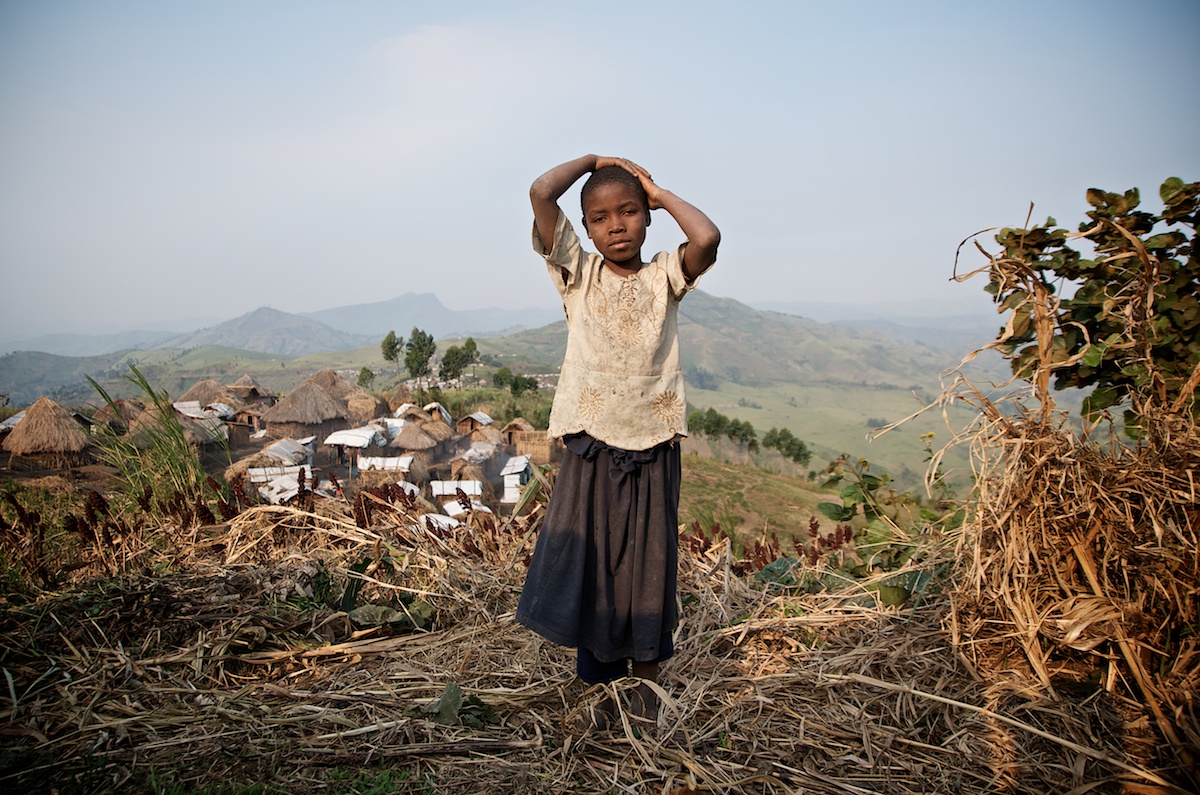
Widuhaye, a ten-years-old displaced girl in front of Katale IDPs camp. Masisi territory, North Kivu, July 2013.
* * *
Warning for the readers:
Adopting the voice of the local actors does not mean that International Alert, Local Voices or Search For Common Ground legitimize or support their positions or defend their ’cause’. Instead we seek to communicate with people who live far from this reality, the fears, beliefs and wishes of local stakeholders in order to contribute to the search for sustainable solutions. To know more about the approach of the project, see here.[1]
* * *
A paradise without armed groups
“Without the armed groups, Masisi would be a real paradise!”, Joseph Sukisa, deputy administrator of the Masisi territory in charge of economy and development stated. “We have everything here! Fields, pastures, minerals! Our lands are very fertile!”
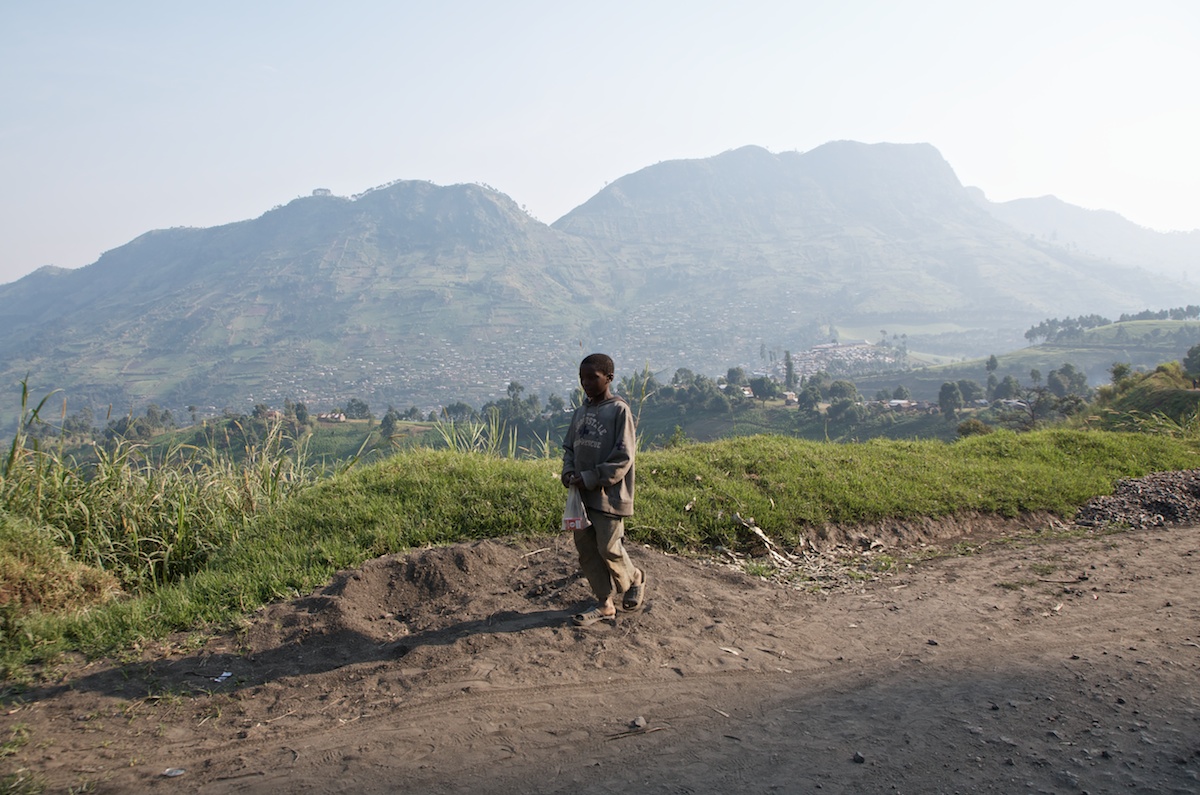
This young boy is walking with a plastic bag with cigarettes that he sells one by one in order to help his parents to pay for his school fee. In Masisi, poverty is generalized and families hardly cover basic needs such as medical care or schooling.
Despite its peaceful mountainous and green landscapes with promising potential, Masisi has been for 20 years the scene of a deadly armed conflict leading to dramatic humanitarian consequences. United Nations agencies speak of some 300,000 internally displaced persons (IDP’s) because of war in the territory of Masisi alone, out of a total of two million in North and South Kivu combined, the two provinces most affected by the war in DRC.
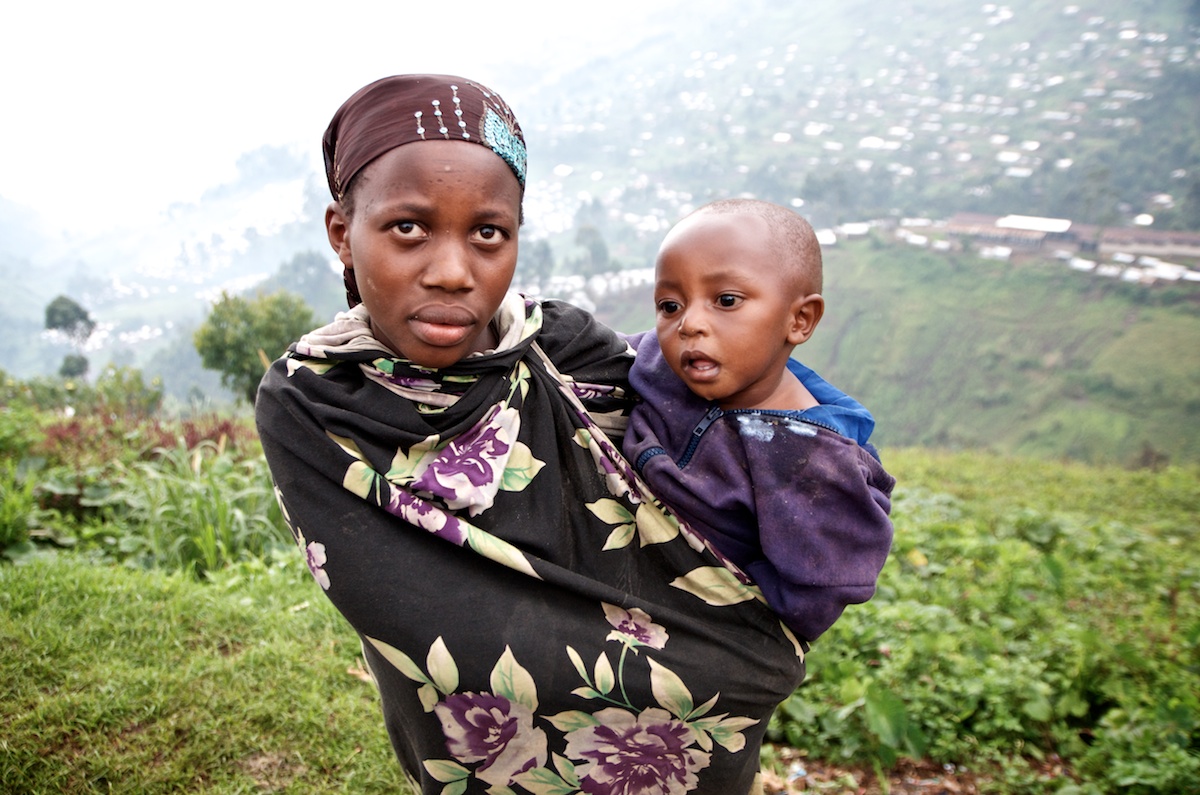
A young IDP girl with her brother in her arms. Behind her, down the hill, the IDPs camp of Lushebere. Masisi territory, North Kivu, September 2013.
Ten years after the signing of the Sun City peace agreement (2003), seven years after the first democratic elections (2006), which had to open a new era of peace and prosperity for the country, the east of DRC remains prisoner to a cycle of wars that never seems to end. FDLR, APCLS, Nyatura, FDDH, Mai-Mai Cheka, Guides, MAC… So many acronyms that refer to the many armed groups that continue to clash in Masisi and its surroundings.
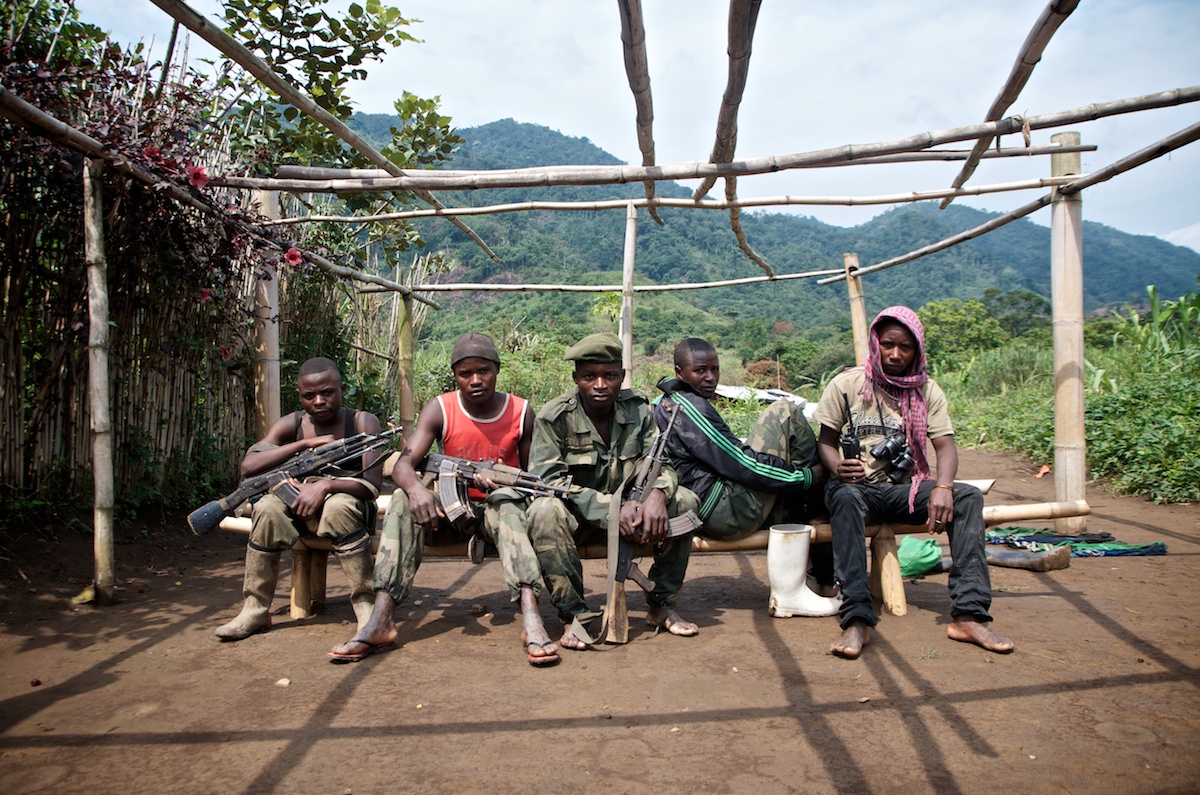
Young members of APCLS armed group, the People’s Alliance for a Free and Sovereign Congo, in their military camp in Lukweti. They are just coming back from military operations in Pinga, Walikale territory, against elements from Cheka armed group. Lukweti, Masisi territory, August 2013.
The reasons for this violence?
They are as numerous and complex as the participating armed groups. Joseph, the deputy administrator of Masisi, gives us his point of view on the continuation of the war in his country: “If armed groups continue to exist in Masisi, this is not because of tribalism, but because of the M23 which, with the support of Rwanda, seeks to balkanize our country” he said, without appeal. “But the children of Congo are hardworking and cannot accept this balkanization. That is why they continue to create armed groups!” He adds without flinching.
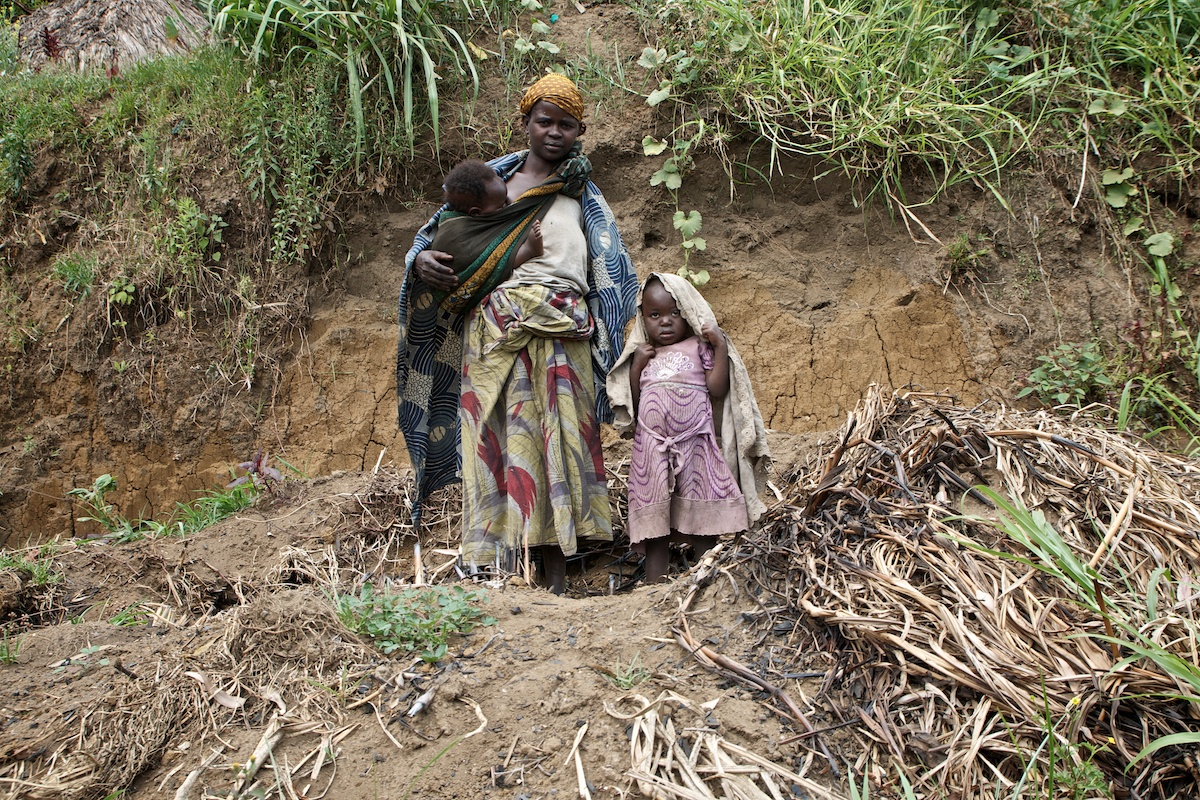
This woman and her two kids stand on the remains of their home in the village of Tunda, that has been destroyed in November 2012 during fighting between armed groups. Eight months later, inhabitants from Tunda are coming back to their village in order to rebuild their homes, but still live in nearby Katale IDP camp. Tunda, Masisi territory, July 2013.
This discourse of ‘balkanization’ of Congo by external forces remains widespread in Kivu and in the territory of Masisi in particular. It finds its justification in the existence, until November 2013, of the M23, and before that of the CNDP and RCD, three successive rebel movements evolving in eastern Congo since 1998 and who have, according to many reports by the United Nations, received broad support from neighboring countries, in particular from Rwanda and Uganda. But it is also a political discourse that oversimplifies the profound and multiple causes of the armed conflicts and masks the internal responsibilities in Congo.
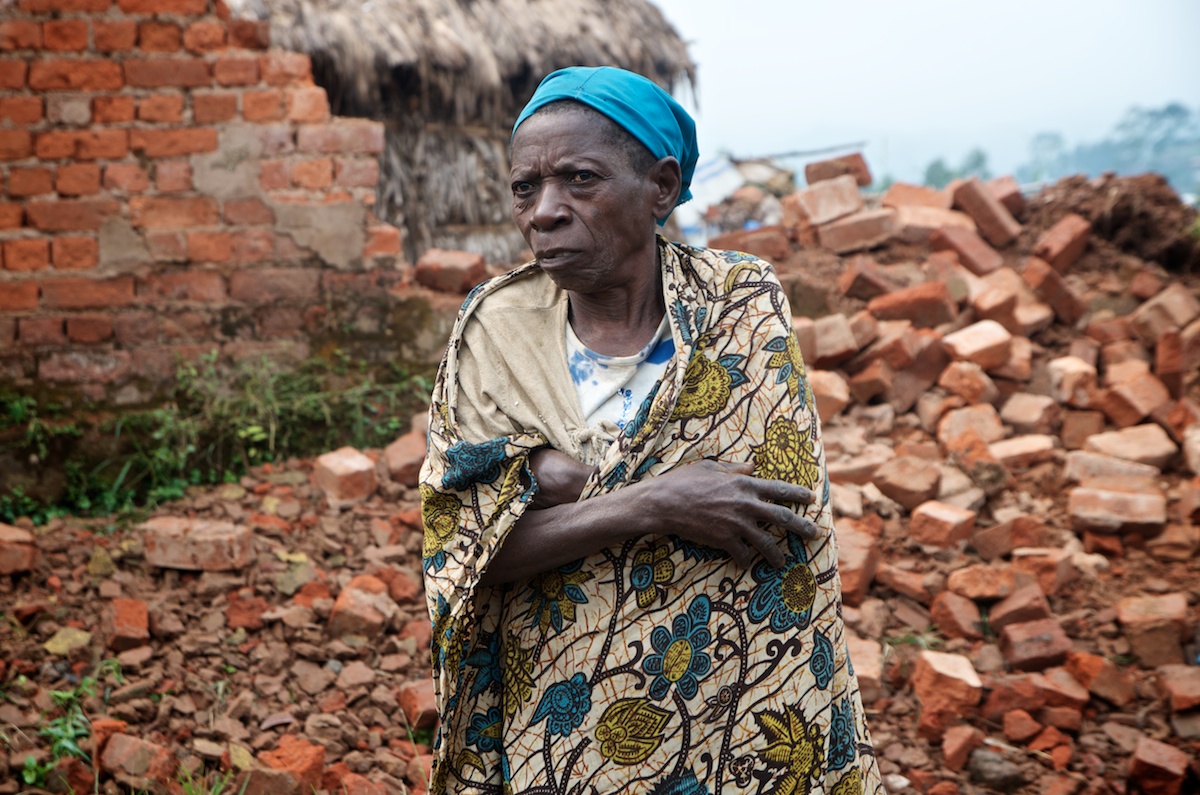
Mama Mirimo had to flee her village because of fightings between APCLS and Cheka groups. She took refuge in an IDP camp in Nyabiondo. One of her sons recently died from disease in the camp. Access to medical care remains problematic in the area, although several humanitarian agencies intervene in the health sector. Nyabiondo, Masisi territory, North Kivu, August 2013.
For this reason, a leader of the Tutsi community based in Goma condemns in strong terms a discourse that he considers manipulative: “Pointing the finger at Rwanda is a way to distract the people!” he tells us. “The discourse of balkanization serves the interests of the politicians in power. It allows them to divert the attention from the real issues, namely the lack of good governance and the incompetence of the authorities.”
Sixty kilometers north from Goma, in Masisi, Hutu women displaced by war will tell us exactly the same: “What brings armed groups here? It is the weakness and the incompetence of the government! It’s our MP’s themselves who stir up our youths, who organize them and distribute weapons among them! It’s the people in power who create these armed groups!” the women exclaim, disgusted by what the candidates for whom they voted for in the last elections in November 2011 are doing.
* * *
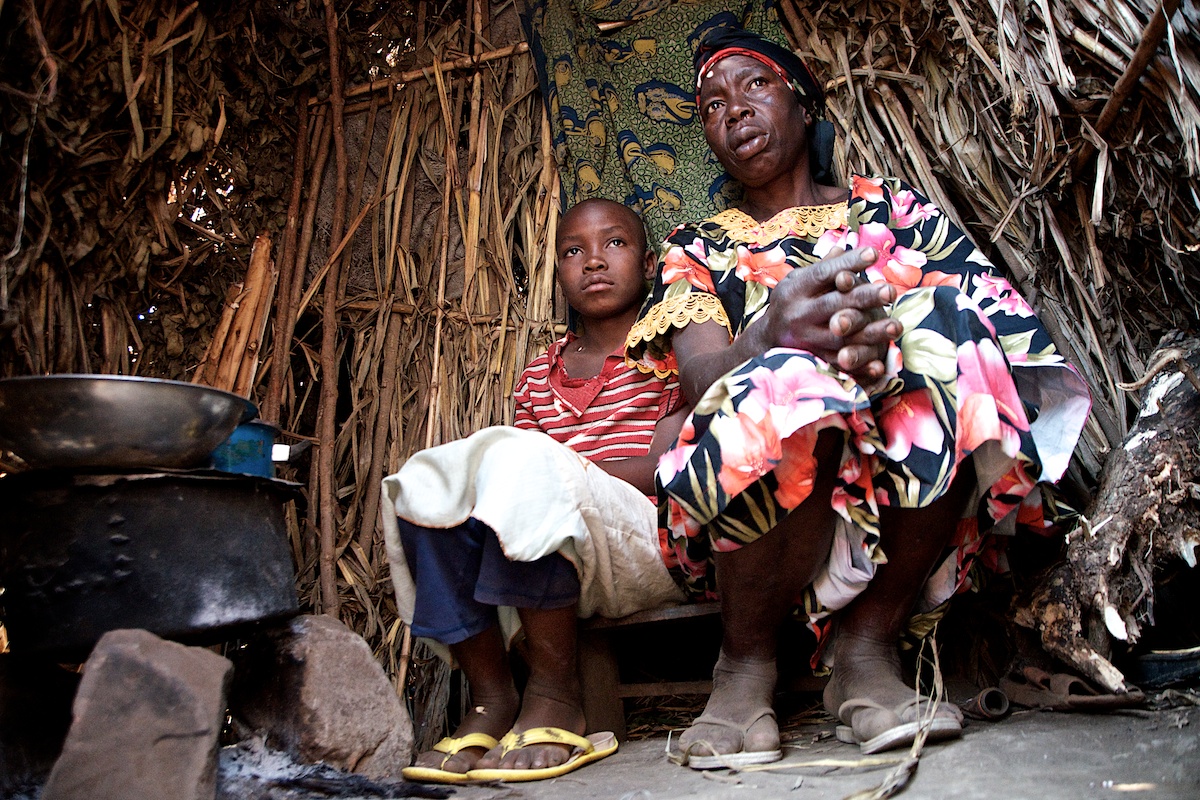
Wyduhaye, a ten-years-old displaced girl, and her Grandma in their shelter. Katale IDP camp, Masisi territory, North Kivu, July 2013
Whether real or imagined, the discourse of balkanization today continues to reflect the fears and feelings of insecurity (physical insecurity but as well economic and political insecurity) of a large part of the population in Masisi and Kivu. Masisi is indeed the center of a particularly sensitive issue, namely the return of the Congolese Tutsi (but also Hutu) refugees who, having fled the war and ethnic violence that began in Masisi in 1993, remain in Rwanda and Uganda to this day and now have to (or at least a large part of them) go back to Masisi.
However, many people from other ethnic communities in the territory are not really in favor of these returns, describing them instead as a way to steal their lands for the benefit of populations who are often farmers. They dispute for that reason the nationality of a large number of refugees and the number of 70,000 advanced by the UNHCR.
To understand this refusal, one should know that the abandoned or cheaply sold lands by refugees when they fled have often been occupied by those who remained in Masisi. The ‘new’ occupants who have sometimes exploited the land for 20 years now consider themselves as the owners and often don’t intend to give their land back to anyone. Moreover, in a context where politics are strongly influenced by ethnicity, the arrival of thousands of Hutu and Tutsi electors in Masisi doesn’t serve the interests of the Hundu community at all. In such a context, the return of the refugees, if poorly managed, can be a real time bomb for the peace process in Kivu.
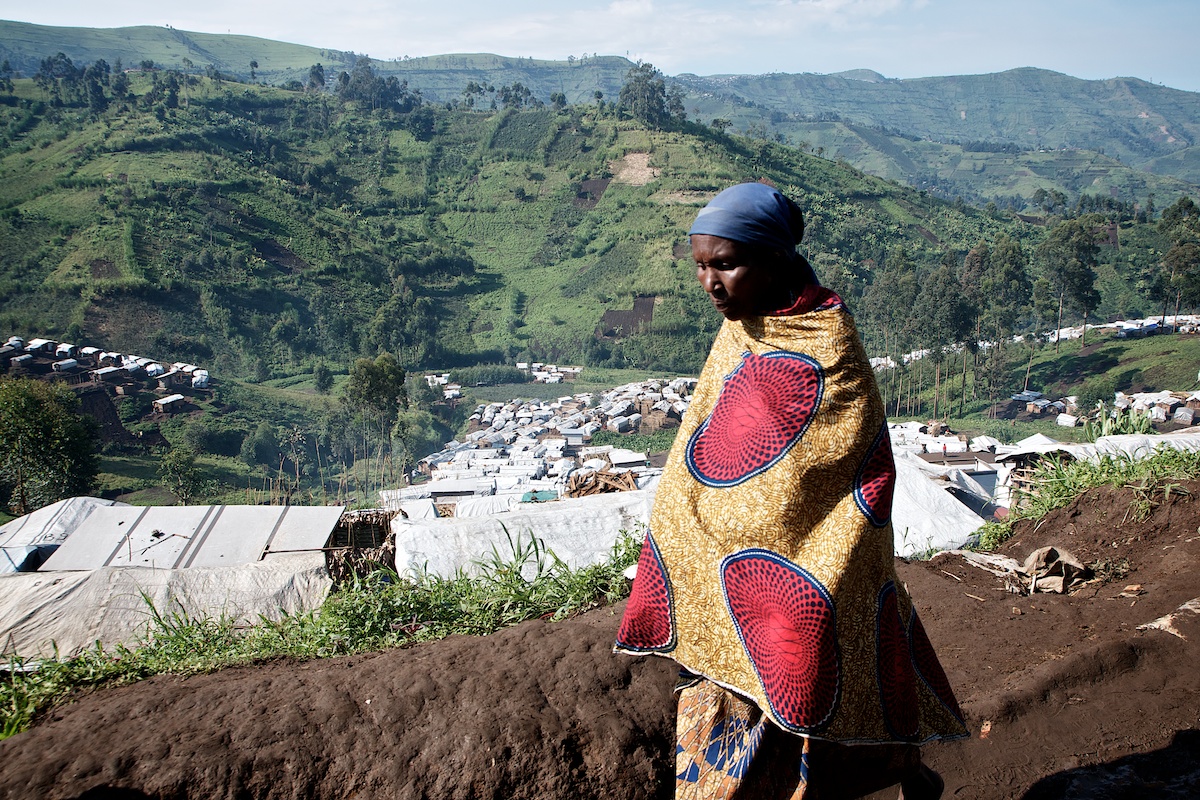
A woman walks in front of an IDP camp, Lushebere, Masisi territory, September 2013.
The return of the refugees also depends on another particularly problematic factor for the end of the armed conflicts in Kivu: dismantling the FDLR, the Democratic Liberation Forces of Rwanda. These Rwandan Hutu rebels arrived in Kivu in 1994 and many of them have actively participated in carrying out the genocides (especially those in the higher ranks). The Congolese Tutsi refugees won’t ever be able to return without fearing for their safety as long as the FDLR is still there.
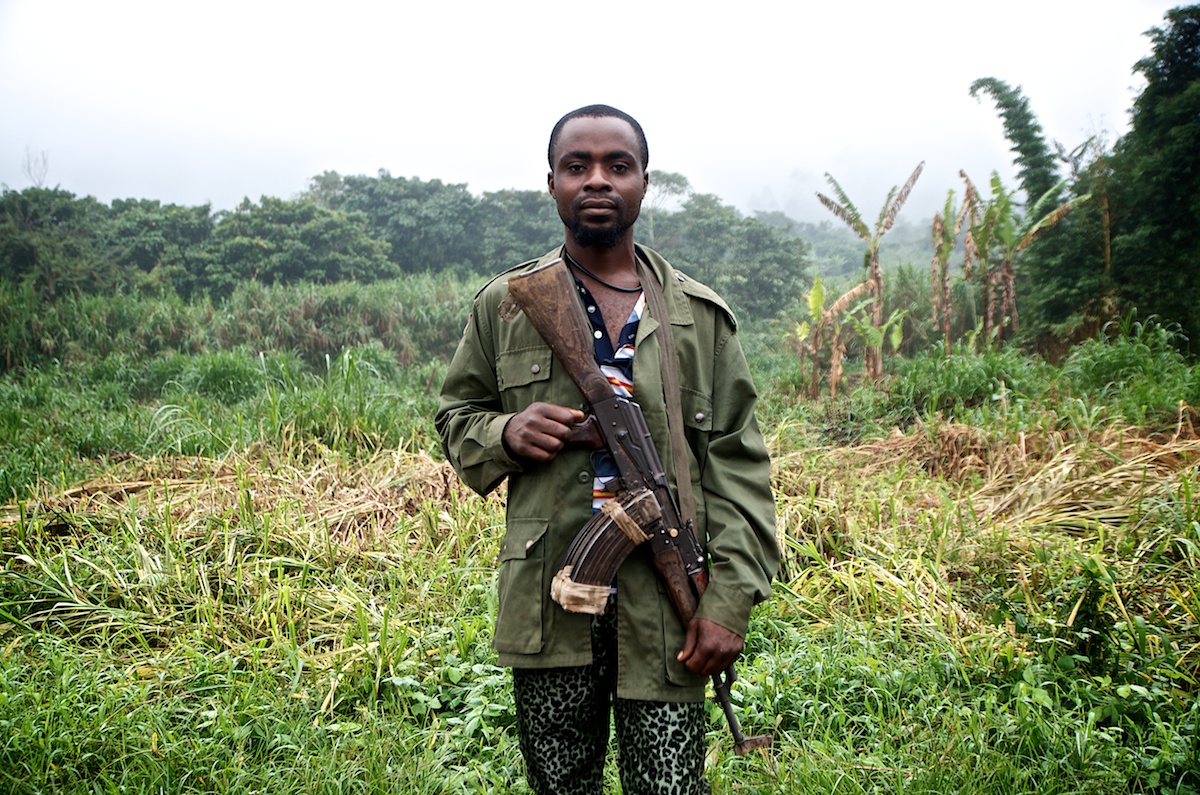
A member of APCLS armed group, on the road between Nyabiondo and Lukweti. Masisi territory, North Kivu, August 2013.
While these two particularly complex problems were never met with complete and satisfactory solutions, some armed groups have used them to stake some claims of their own. This only heats the discussion on these topics even more and diminishes the chances of finding a solution that all parties involved can agree on. For example, the M23 rebel group, a month before being defeated militarily by the national army in early November 2013, posed as its main condition for its disarmament the repatriation of the refugees and the dismantling of the FDLR.
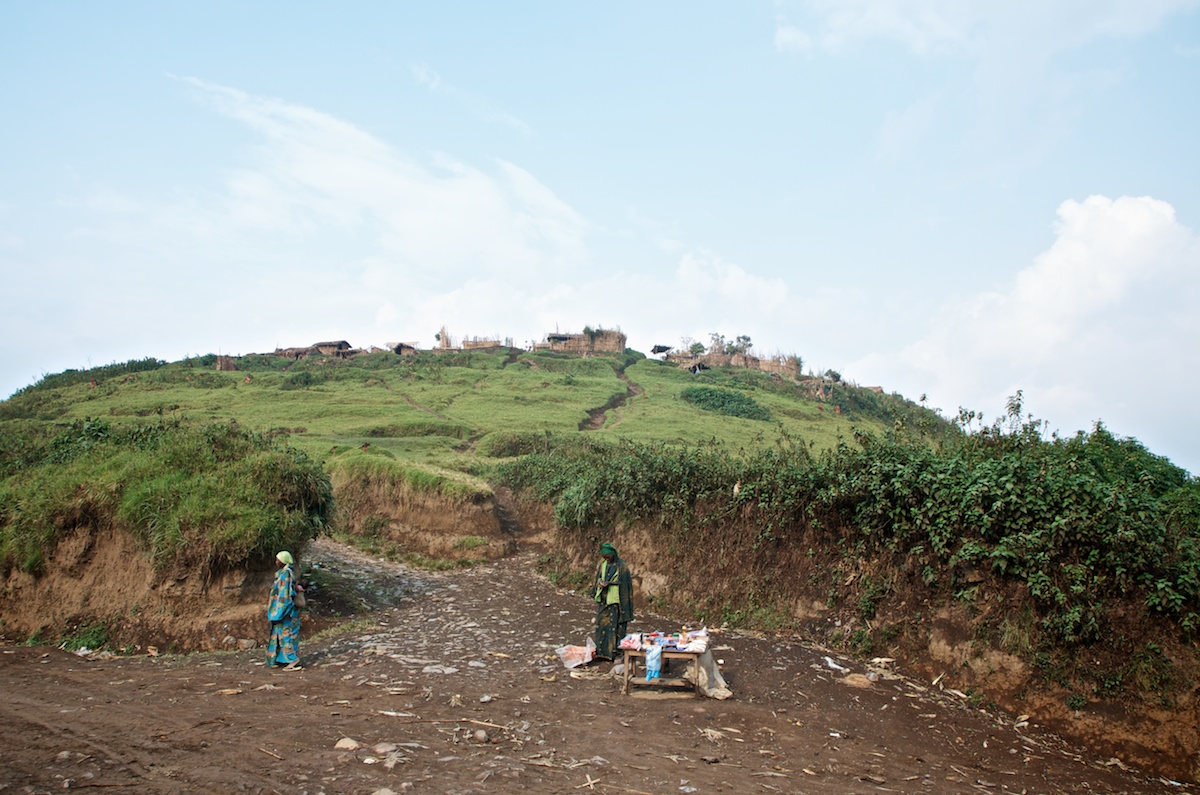
A young female merchant set up her small shop just below a military camp of the national army in Katale. The camp is empty, as Congolese soldiers left for Goma and Nyiragongo territory in order to fight with M23 rebels. Katale, Masisi territory, July 2013.
Although the military dismantling of the M23 in October constitutes a victory without precedent for the proponents of the discourse of balkanization, it should not ignore the many and profound challenges that reside both on the internal level (local and national) and on the external level. In Congo, armed groups are also the result of a corrupt and failed political system that, under the trappings of democracy and multi-party elections, hardly try to cover predatory, brutal and violent dynamics. This system didn’t just pop out of the blue. It is rooted in a long, complex and tortuous history, dating back at least to the Belgian colonial era, if not further…
………………………………………………………………………………..
Text and photographs : Alexis Bouvy.
Facilitation in the field : Chrispin Mvano and Rodolpe Mukundi.
For more information on the context of armed conflicts in North Kivu, see Jason Stearns (2012), North Kivu. The Background to Conflict in North Kivu, Usalama Project, Rift Valley Institute, Nairobi.
See also the International Alert report, including a critical perspective of peace actions carried out or supported by the Congolese authorities and international actors: Ending the Deadlock. Towards a New Vision of Peace in Eastern DRC.
On negative discourses and stereotypes in DRC, see International Alert’s report: Words That Kill. Rumours, Prejudice, Stereotypes and Myths Amongst the People of the Great Lakes Region of Africa.
Local Voices – Congolese Communities & The Kivu Conflict enjoys the support of International Alert and Search for Common Ground.
© Local Voices 2013 with International Alert & Search For Common Ground.
…………………………………………………………
The Masisi territory : basic informations
Chief-town : Masisi center ( located at approximately 70 kilometers North of Goma)
Area: 4734 km2
Main communities: Hutus, Tutsis and Hunde
Masisi is one of the six «territories» of North Kivu, border province with Rwanda and Uganda, on the eastside of DRC. Masisi consists of a mountainous and forested area and is located in the southern part of North Kivu, between the territories of Walikale, Rutshuru, Nyiragongo, Goma and the province of South Kivu. The ethnic communities in Masisi are traditionally engaged in agriculture, breed small livestock such as goats (for Hunde and Hutu) and big livestock such as cattle (for Tutsis). There are historical tensions between these three communities, in relation to the management and usage of the land and to local political and administrative positions. These tensions were subject to manipulation by political elite during the Mobutu era (and after) and were greatly aggravated by two Congolese wars (1996-1997 and 1998-2003) and the armed conflicts continuing until today.
Names and Acronyms
AFDL Alliance of Democratic Forces for the Liberation of Congo – insurrectional movement led by Laurent-Désiré Kabila who, with military support from neighboring countries (Rwanda and Uganda), overthrew President Mobutu on May 17, 1997.
APCLS Alliance of Patriots for a Free and Sovereign Congo – active armed group in Masisi associated with the Hunde community and controlled by Janvier Karairi.
«Collectivité Chefferie» A “Collectivité Chefferie” is a local entity both customary and politico-administrative, which is under the authority of a Territory. The head of leadership comes from the royal family of the ethnic community traditionally occupying this entity. This is an inherited function.
«Collectivité secteur» A “Collectivité Secteur” is a local politico-administrative entity that is under the authority of the Territory. Unlike a «Chefferie», a sector includes several ethnic communities among which the Chief of «Secteur» is in theory elected.
CNDP National Congress for the Defence of the People – armed group established by Laurent Nkunda associated to the Tutsi community. The CNDP was integrated into the Congolese army in early 2009, after Laurent Nkunda has been arrested.
FARDC The Armed Forces of the Democratic Republic of Congo – national Congolese army.
FDDH Forces for the Defense of Human Rights – active armed group in Masisi and associated to the Hutu community. The FDDH are also often presented as a subgroup of the Nyatura.
FDLR Democratic Forces for the Liberation of Rwanda – an armed Rwandan Hutu group active in South and North Kivu. Many members of the FDLR were involved in the genocide of Tutsis and moderated Hutus that took place in Rwanda in 1994.
Armed group active in Masisi territory
«Groupement» The «groupement» is a local politico-administrative and customary entity. The «groupement» is under the authority of the «Collectivités» («Secteurs» or «Chefferies»).
MONUSCO Observation Mission of the United Nations for the Stabilization of Congo – the biggest mission of peacekeeping in UN history, with 20,688 uniformed men (including 18,751 soldiers).
Mai-Mai Group of armed fighters claiming to be “indigenous” and defending the national integrity against so called “invaders”. The Mai-Mai were opposed to the RCD rebellion between 1998 and 2003.
Mai-Mai Cheka is an armed militia of the Walikale territory (North Kivu), associated with the Nyanga community. Cheka is opposed to the FDLR and APCLS. The group is also called Nduma Defence of Congo, NDC.
MAC Action Movement for Change – armed group active in Masisi territory, associated with the Hunde community. MAC is however opposed to the APCLS, another armed group associated with the Hunde community.
M23 Movement of March 23, in reference to the agreements signed on 23 March 2009 between the Congolese government and the CNDP. The M23 is an armed group associated with the Tutsi community and enjoyed, according to the reports of the expert group of the United Nations, support of Rwanda and Uganda. The M23 was militarily defeated by the national army in early November 2013.
Nyatura Armed group active in Masisi territory and associated with the Hutu community.
PARECO Coalition of Congolese Resistance Patriots – armed group that was active in North and South Kivu and was integrated into the national army in 2009. PARECO was associated with the Nande, Hutu and Hunde communities and was opposed to the CNDP.
RCD Congolese Rally for Democracy – the rebellion that occupied a large part of eastern Congo from 1998 to 2003. The RCD enjoyed the support of neighboring countries, in particular of Rwanda and Uganda.
There will be a link towards the page « about this project » on Local Voices website, where the approach of the project will be further described.