
The TEAM Brings Change in Kenya

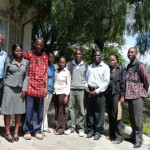
filming The TEAM
Recently, Mburugu Gikunda, Country Director of Media Focus on Africa visited the SFCG headquarters in DC. Mburugu is also the producer of the TEAM in Kenya. While in town for a USIP summit on media as a global diplomat, he spoke about the impact the Team has had on viewers. One story he shared was that of a mixed-marriage couple living in Eldoret. Located in western Kenya, it is a largely Kalenjin area, the tribe that the husband was from. In the post election violence, many members of the Kikuyu tribe were attacked and killed. This was the tribe the wife belonged to. During the chaos the wife, “got herself” raped. This was how her husband saw it, a not uncommon reaction. With both the shame of her tribe and the rape against her, her husband cast her out. Then one day, while driving, the man was listening to a radio broadcast of The TEAM. It was an episode dealing with rape and the blame that rape victims must often bear. After listening, he was moved to reconsider his treatment of his wife. The two have since reconciled and are living together again. Fortunately, this has not been an uncommon reaction.
The TEAM was screened with facilitated discussions by FilmAid International, in eight locations across Kenya (Mathare, Kibera, Naivasha, Nakuru, Eldoret, Kakamega, Kisumu and Mombasa). Because of these discussions, we have more great stories, like the one Mburugu shared, from participants in the post-screening discussions:
Makena* was a Kikuyu woman living in a predominately Luhya region. The violence forced her and her two-month old son to flee to an IDP camp. There, her son fell ill due to poor conditions and malnourishment. She traveled to a hospital in the Kakamega district. Upon hearing her child’s Kikuyu name, however, the charge nurse refusing to treat him. She told Makena to take the baby to a Kikuyu hospital. Unfortunately, the child died. Once the violence subsided, the woman moved out of the camp to a neighborhood where she often saw the same charge nurse. Makena attended the mobile cinema screenings and was especially moved when a fellow participant admitted his guilt in destroying his neighbor’s property. She decided to confront the nurse, who admitted her mistake and remorse. Makena said she would not have forgiven the nurse had it not been for The Team, and she invited the nurse to the next screening.
Since the post-election violence, many Kenyans have come together to form what are known as “peace groups.” These groups, many registered CBO’s, engage in peacebuilding, conflict resolution and inter-ethnic activites to counter tribalism. After her experience with the TEAM screening, the nurse has joined some of these groups and no longer grants or withholds her services according to tribal affiliation.

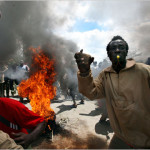
Post-election violence in Mombasa (http://www.nation.co.ke)
Hassan Sheer was a youn manwho had participated in post-election violence. Influenced by his peers and caught up in the moment, he organized the looting of his neighbor’s businesses. Though he regretted his actions and wanted to apologize, he was afraid of retribution. The mobile cinema screenings gave him a safe space to share his experience with other participants. Through the sessions, he worked up the courage to confess and apologize to his neighbors. Initially his apology was not well received. He persisted, however, and eventually they were able to forgive him. Hassan claims that The Team’s programming changed his life, and his neighbors say they wished they also had the opportunity to participate.
Kibera
The Lebour Youth Group (a corruption of the English word ‘labour’) was initially formed by young, unemployed men gathering at the entrance of the Kibera slum near the chiefs’ offices. They were formerly involved in petty theft and crime. This group was widely feared and nobody wanted to walk in Kibera past 7pm. During the post-election violence, the group members turned against each other and the majority Luos chased away the Kikuyu members. After attending the mobile cinema screenings, they felt empowered to transform their lives. They now involve themselves in entrepreneurial activities through various projects such as selling water to the community, hiring out social halls, growing vegetables for market, running a local hotel, rearing chickens and offering sanitation facilities (i.e. toilets) for a fee. All these activities have helped them to improve their living conditions and economic standards. They have also registered with the government as a legal group and are no longer a gang.
Media can be a powerful tool for social change and in small ways, it’s making a difference in the lives of many Kenyans. For more information on the TEAM go here. You can also watch episodes on LinkTV.
*name changed
Related Posts
 Kenya Coffee Bar Offers More Than Coffee: Youth and Officials Join with The Team to Build Peace in Kenya’s Rift Valley
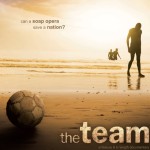 The Team Plays on the Big Screen
 This Week in Conflict – Nigeria and Kenya
 A young life at stake – Denied medical care due to tribe
 The Team Documentary Readies for its US TV Premiere!
 Peacebuilding on the Silver Screen
Comments are closed.

I love ua work
I love ua work keep it up
Thanks for the support Kennedy!