
Communicating Healthcare and Accountability in Sierra Leone

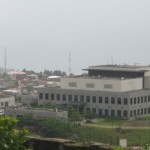
Government hospital in Bo, Sierra Leone's 2nd largest city (Sarah Ochs)
By Sarah Ochs
On April 27th of this year the government of Sierra Leone launched a holistic, nation-wide healthcare initiative, within which provisions were made to lift service fees for all pregnant and lactating women and children under five (essentially making healthcare free for them.) Talking Drum has undertaken a nation-wide media campaign to disseminate primary information about the government plan and the mechanisms in place to pursue transparency and accountability.
(Remember, Americans, when our television went digital and someone had to explain it to us? Well, it’s like that, but serious.)
My purpose here in Sierra Leone is to monitor this Talking Drum Studio media campaign, and to assess it in terms of its efficacy in educating people about both the initiative and the mechanisms to address corruption and transparency.
Sierra Leone has the lamentable distinction of having one of the highest rates of maternal and under-five child deaths in the world. It ranks third from the bottom on the UNDP’s Human Development Index, just above Niger and Afghanistan. Average life expectancy is only 48. Now when I see a pregnant woman I think “that woman has a 1 in 8 chance of dying during childbirth” and shudder. With small children I wonder if they have hit five yet – it’s sometimes hard to tell with the malnutrition here. But of course this is a bit sensationalist – I live in the nation’s capitol, Freetown, where health and healthcare tends to be better. There are other factors, too, that determine mortality rates such as education level, and of course, income. Nonetheless, I always wonder what women think their chances will be of making it to the other side when they go into labor.
It’s not only pregnant women and children who suffer from Sierra Leone’s poor healthcare and corruption plays a huge role in the system’s failures. The following are excerpts from a report on the nation’s healthcare system produced by the Anti-Corruption Commission of Sierra Leone in mid-year 2009.
“Corruption in the Ministry of Health and Sanitation (MoHS) ranges from informal payments for services, healthcare fraud and conflict of interest to inexplicable financial transactions.” [Previously, bribery in hospitals began the moment you entered the grounds. For treatment you would have to pay the orderly, the nurses, the doctors, the lab techs, and so on. It was like a rich person tipping at a swanky resort, except…not.]
“In other hospitals such as the Magburaka Government Hospital expenditure is done without any authorization. There is no level of accountability and transparency in the collection and utilization of hospital funds. The practice is unethical and completely untenable in the domain of sound financial practices.” [I have heard reports of money being requested for the upkeep of ambulances (fuel, drivers, and parts) that are broken down and rusting on hospital grounds.]
“The Port Loko Government Hospital, for example, does not have a bank account or safe to keep hospital-generated funds.”
“Most nurses abandon their posts in remote areas since accommodation and remote area allowances are not made available to them”
A friend of mine watched a nurse try to insert a syringe into a patient that was having a seizure. Not knowing to first strap the patient down, she stabbed and re-stabbed the girl over and over and over again. This friend later watched a doctor tell a group of nearby nurses to attend to a woman who was suffering from obstructed labor. They were just standing there. Last month I visited the Bo Government Hospital and saw vultures circulating next to the pediatric ward.
During a production meeting one day my boss, Ambrose, said that there is a problem of patients’ families sleeping in hospitals. There are no waiting rooms, much less sleeping quarters. This is, of course, no good, as well as unhygienic, to have people camping out on hospital grounds and sleeping under patients’ beds. He explained that in Sierra Leone, families come to the hospitals to supplement the care that the hospitals are not giving.
They come to watch over their loved ones and will no doubt continue to do so until conditions improve.

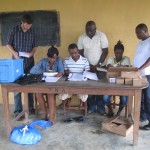
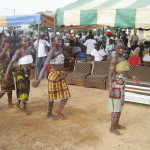
Mothers from focus group discussion in Bo

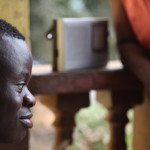
Fathers of children under five who participated in a focus group discussion in Blama.
Comments are closed.

This is a wonderful post on maternal mortality in Sierra Leone. We are really interested in following the story of the user fees being lifted– do you know if anyone is formally tracking or evaluating the before/after on this?
Also, we would like to know if you will work with us to help map these facilities that you mention– we are creating a global map to crowdsource the location of all facilities that provide emergency obstetric care…
Please email me if you can participate as you travel to different clinics and hospitals.
Great post about Sierra Leone. Insightful and entertaining as always! Keep up the good work
Thank you, glad you enjoyed it!