
Back to the Congo
Michel holds a bachelor degree in social sciences from the University of Ottawa (Canada). After working more than 15 years in special event/music production, he decided to change careers at 42. He volunteered in 2006 in Burkina Faso in AIDS advocacy capacity building and he recently returned from the Congo after 15 months managing humanitarian aid projects with Oxfam Quebec. He is currently pursuing a Master’s degree in conflict analysis and resolution at ICAR and has returned to the DRC this summer to intern with SFCG.

Michael interviewing a challenger in SFCG DRC's reality show: Tosalel'ango
By Michael Gratton
I’ve been with Search in DRC since July 12th, already half way through my field mission, but it feels like I’ve been here much longer. I was in DRC between April 2008 and August 2009, so I was looking forward to coming back, seeing familiar faces and tasting again the delicious roasted goat meat from street vendors…Not much has changed in the last year it seems, except the main roads in Kinshasa are now paved thanks to the Chinese; it is still very dusty in Bukavu during the dry season, and armed conflicts still persist in eastern DRC, although everything is relatively calm right now. The UN mission just changed its name to MONUSCO, which sounds a little like some kind of company making Monuses, whatever that is…Anyway, I preferred MONUC. It must be costly to change all the business cards, signs, decals and the like. And their presence does not feel any different on the streets with the new name.
So far, I’ve travelled by plane between Kinshasa and Goma—must be more than 2,000 km—then by boat 3 hours between Goma and Bukavu (another 200 km), then just a little further down south through Rwanda on to Uvira on the shores of lake Tanganyika (around 200 km). If that were not enough, another 3.5 hours of dirt roads for 75 km to Baraka and why not another hour to Fizi (35 km)…That’s almost 3 000 km in 3 weeks. Now I’m back in Bukavu after spending a week in Fizi District.

A focus group with youth from Baraka
I’ve been meeting many partners and participants of Search’s program here in DRC to conduct a program evaluation. Interviews, focus groups and small group meetings have been my main activities her in the Congo. It’s always nice to listen to stories on how the programs have changed their lives and transformed the way they deal with conflict, either in school, their communities or within their own families. Search is making a difference in many peoples’ lives. Although most people on the street do not know Search’s name or what it means, they certainly have heard of a radio program, a tv show, theatre on the streets, a dialogue held at university or a quiz show at a local school. Some even want to meet the fictitious character, Commandant Janvier (January in English), to tell him to stop his corrupt practices. Between 4,000 and 6,000 calls a month are made to Search in DRC to ask questions, make comments, get information or just to scold Commandant Janvier. Now that certainly is telling. The message is clear from everyone; Search’s programs are important and must continue.
I’ll be looking forward to meeting many more people here in Bukavu, then on to Goma to finally ending in Kigali.
Read more about Search projects in DRC!

Downtown Bukavu in the shape of Italy
Related Posts
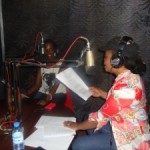 100 episodes: Radio bridges youth of DRC, Burundi & Rwanda
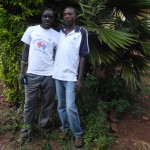 A Tale of Two Neighbors
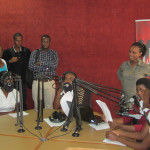 The Second-Annual RFPA Awards: Three African Journalists Awarded for Their Contributions to Peacebuilding
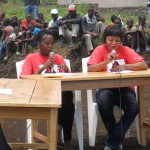 Building Bridges Across the Great Lakes Region Through Live Radio
  Radio Across Borders: New Levels of Connectivity Uniting a Region’s Youth
 SFCG addresses conflict mining at the local level
Comments are closed.

i want receive the information running in rdcongo.
Hi Moses,
What kind of information are you looking for? Our Africa Team sends out regular updates and you can get their newsletter if interested.