Congo: Tackling child exploitation in schools
By Julia Boccagno
“Hi son, what did you do in school today?”
“Oh, I spent most of the day collecting firewood for Mr. Johnson’s class.”
“What?!”
Imagine finding out your child is forced to work for the school, when he or she should be learning math, grammar, and history… That next parent-teacher conference might get a little heated.
This is exactly what’s happening in the Democratic Republic of Congo.
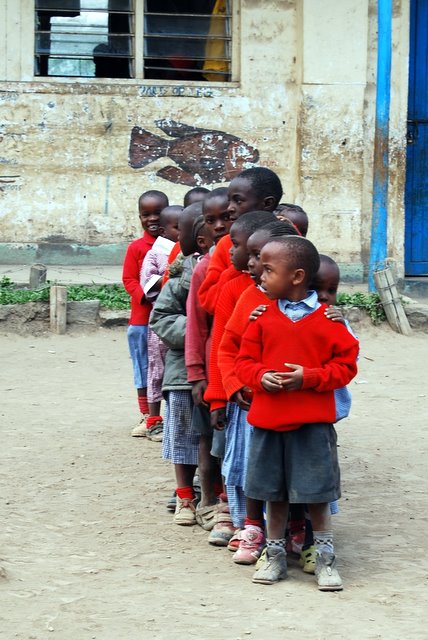 Many Congolese children do not have the privilege of attending school because there’s too much work to do at home, such as fetching firewood, carrying water, and tending field crops. Children often become students only because of their parents’ sacrifices. Now the dutiful parents find out their children are doing these same tasks for the school instead.
During a long day of learning in the classroom, Congolese children are forced to carry out any job the school administrators demand. If these tasks are not successfully completed, the teachers won’t permit students to return home.
This has provoked heated friction between the parents and teachers.
Seeing the situation escalate, Search partnered with UNICEF to transform the dynamics of conflict in 20 different schools in the Equateur and Katanga provinces. Known as “Peacebuilding and Education,” the project allows students, parents and teachers to come together in a safe and open discussion about educational ethics using participatory theater and scorecard evaluations.
Surrounded by a massive crowd, the participatory theater events raise the public’s awareness of the exploitation of children in schools. 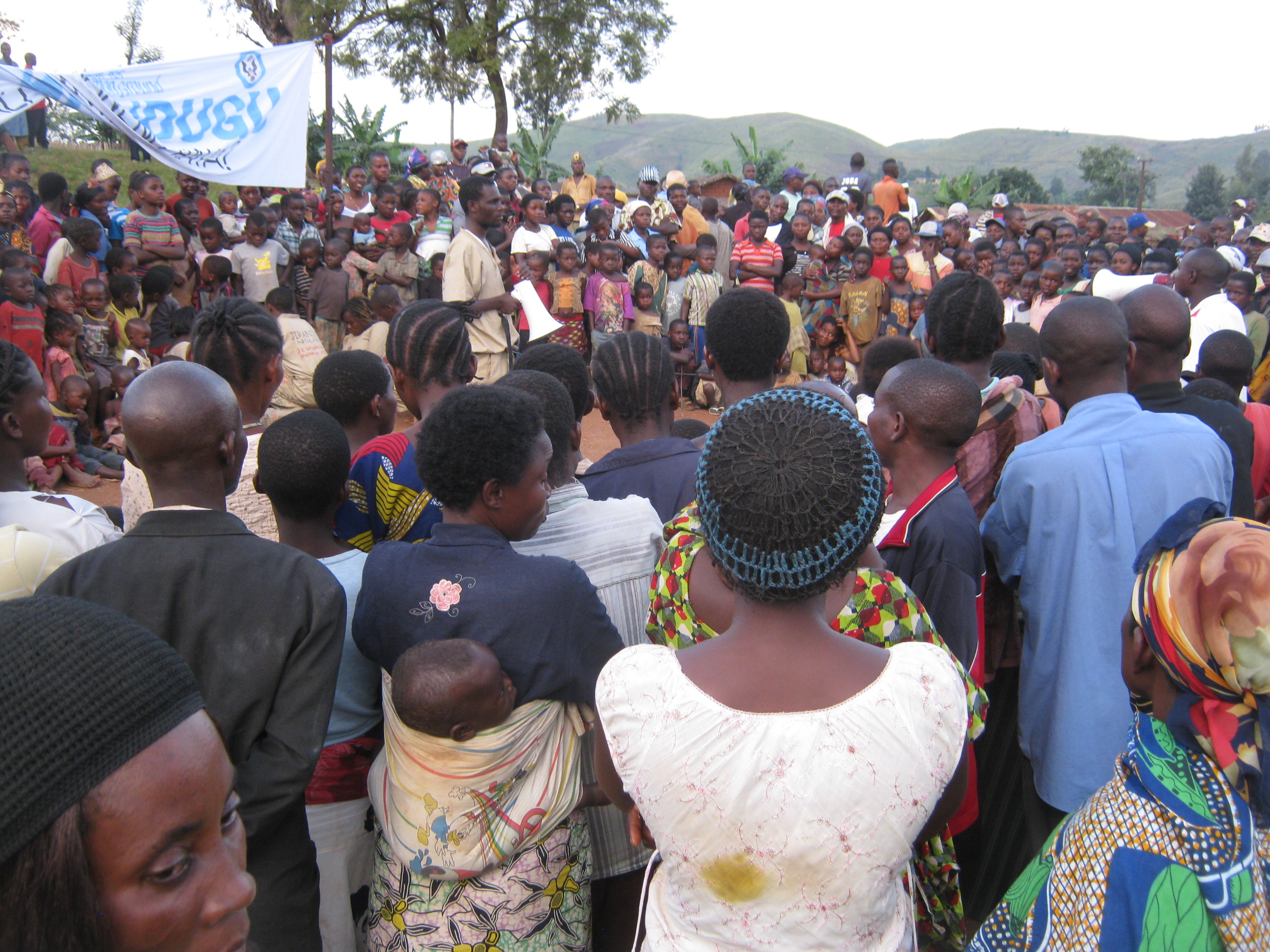 “The student who fails to bring me a bundle of firewood will fail the class,” the teacher-actor proclaimed during an event.
The student-actor vehemently responded, “But we came to school to learn, not to work!”
Participatory theater allows community members, parents, teachers and children to voice their opinions in a non-confrontational way and gain a greater understanding and respect for one another.
Zorrobabel, a student at Bilenge primary school, explains,
“We didn’t perform the play to criticize our teachers or our principal, but rather, to show our community some of the problems that face us in school. I’m happy SFCG introduced this innovative method to our schools.”
To promote further unity, citizens “rate” the quality of the social services in their communities while providers “rate” their own performances as well. Following these scorecard evaluations, the two groups reach common ground by attending a town hall meeting to compare their scores, discuss methods for improvement, and establish committees to monitor the progress.
The DRC’s educational problems are strongly linked to broader governance issues and existing internal conflict. We hope that the “Peacebuilding and Education” program can prepare a new generation of hopefuls and peace-seekers to solve the country’s complicated socioeconomic issues.
_______________________
As a rising American University junior, Julia Boccagno majors in Broadcast Journalism and double-minors in International Studies and Italian with the hopes of becoming a future foreign correspondent. She firmly believes that objective news reporting is a vital tool within the peace and conflict resolution conversation. She is currently the New Media Intern at Search for Common Ground.
Homecoming for “The Team”: Popular international drama airs in USA

By Katherine Seaton
“The Team” has aired in 17 other countries. So why are we bringing it home to the U.S.A.?
At Search for Common Ground, my focus is on projects that find common ground between people who identify themselves differently: republican or democrat, male or female, gay or straight, black or white. While conflict may get described along these lines, these descriptions fall short of people’s experiences. Especially for younger generations, differences are not a one-or-the-other phenomenon; they are a one-of-many issue. The United States of America is becoming more diverse than it has ever been before yet some studies say that we are more racially segregated today than we were during colonial times.[1] [2] Immigration is becoming a hot-button issue once again; we now have new words to describe the LGBTQ community; and new political parties are popping up that stray beyond the republican and democrat divide. As these differences become more visible and complex in our society, today’s youth are exploring and embracing the intricacies of their identities.
 As these complexities arise, many young people are at a loss as to how to approach differences in themselves or in others and it often exacerbates bullying. According to the U.S. Department of Health & Human Services, teenage bullying affects 20% of students in grades 9–12.[3] A 2009 survey conducted by stopbullying.gov found that of more than 7,000 LGBT students aged 13–21 years found that eight of ten students had been verbally harassed at school because of their sexual orientation.[4] Bullying is a growing issue that stems from stereotypes and is fueled by social media.
Social media creates a transparent world where differences are highlighted and perception is reality. Seeing an online profile has more weight to a teenager than passing a classmate in the hallway. Young people are engaging with each other through social media without actually having a face to face conversation, strengthening misunderstanding and escalating reactions. If youth fail to talk about their issues, we will have an entire generation that doesn’t know how to resolve conflict without violence. It takes an entirely different and new skill set to squash conflict and focus on commonalities. But finding common ground does not come easily, especially when differences are broadcast on a profile, or in a picture for the world to see. It takes a new and creative approach, one that will reach young people the way they understand themselves and others, to change the way youth perceive and react to differences.
With the right resources, we can help end violence in hallways or on the internet and help youth understand their differences in more constructive ways. This is why Search has decided to produce a TV show called The Team DC, which will help youth talk about their different identities in healthy ways while using a medium that they are extremely comfortable with. We will broadcast the show as a web series and take input from youth across the United States to help develop characters in the series and discuss the issues they face to make it as interactive and relevant as possible. Through a web series format, young people will be able to watch the show whenever and wherever they want and immediately post their thoughts and experiences with the different issues on social media sites. Using this creative and relevant method to reach young people, we hope to stir up a new conversation, focused on mutual respect and understanding for one another.
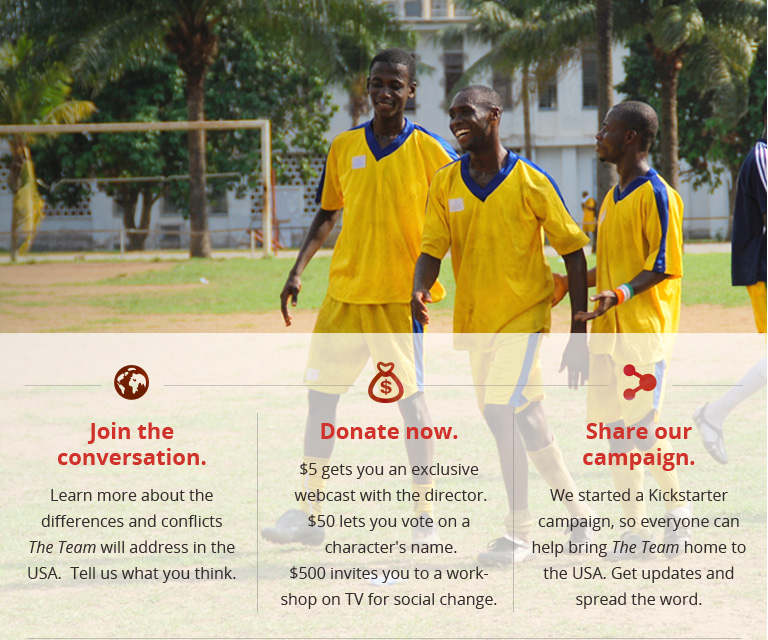
Click below, to learn more about about the project.
_________________________
Katherine Seaton is a Program Associate for Search for Common Ground USA. A graduate of American University in Washington, DC, she majored in International Communication but has changed her focus for the time being to work on issues affecting the United States of America.
By Inbal Ben Ezer
“Let your love be like the misty rain, coming softly, but flooding the river.” ~Liberian Proverb
Like misty rain gathering together, various organizations all over Liberia have come together to create a powerful force for change.
The analogy of the drops of mist coming together to create a great movement is visible in every aspect of Liberian life. There is a constant drip of rain and sweat from the hot and sticky weather. The streets are speckled with people, bravely facing the intense stream of traffic. And a subtle sense of deep pain flows in the air, remnants from the past 14 years of brutal conflict.
Although years of violent civil war have damaged this beautiful country, Liberia begins its journey to peace. Dozens of Civil Society Organizations (CSOs) are working in Liberia across the different levels of localities and sectors (justice, security, governance, youth, gender…etc). They all strive to bring about positive change for their nation and fellow citizens, but they struggled to accomplish it on their own.
In order to expedite the peacebuilding process, Search is bringing the leading CSOs to cooperate across sectors and geographical locations. This past weekend the first participating CSOs met to create a joint strategy for the upcoming “flood”.
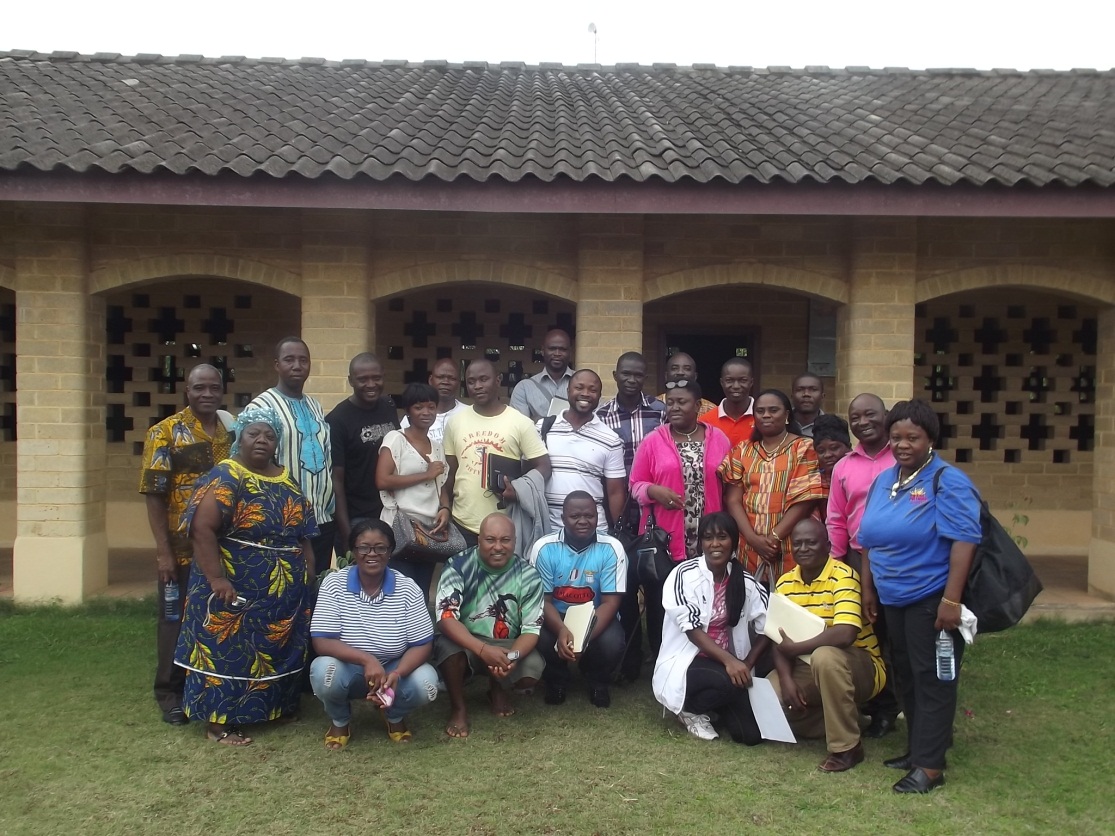
Oscar Bloh, Country Director of SFCG Liberia, opened the workshop with high hopes:
“I want us to think differently,” He said, “What have we not done yet?”
Slowly, connections began forming between the groups. Before long, cooperative ideas and potential opportunities were everywhere. “Security Sector Reform must be linked to Natural Resource Management!” exclaimed one of the participants. Another group discovered that engaging youth in Bong and women in Bassa both related to national decentralization. Experts in security sector reform offered to help local communities better their relationships with the police.
These different organizations found their strength in cooperative action. The CSOs realized that, together, they are a powerful force able to solve Liberia’s plaguing issues.
One’s strengths will strengthen another’s weaknesses, and together, peace will come softly and flood Liberia, clearing away the wreckage and nourishing the land and its people.
_________________________________________
Originally from the Middle East, Inbal Ben Ezer is a Coexistence and Conflict Masters candidate from the Heller School of Social Policy and Management, Brandeis University. An Israeli with expertise in peacebuilidng through sports, Inbal firmly believes that Israelis and Palestinians WILL find common ground and she will not stop until they do! Learning from a different perspective, she is currently an intern at the Search For Common Ground Liberia Office.
Documentary on Balkan teens’ theater plays for social change
“All the world’s a stage” ~William Shakespeare
This phrase is truer than ever for these Balkan teenagers. They are artists. They are leaders. They leave it all on the stage.
In 2001, Macedonia balanced on the verge of civil war and sharp divides still exists between ethnic Macedonians, Albanians, Turks, and Roma. SFCG: Macedonia decided to empower youth to tackle these divides through theater. Sharing Common Culture: Balkan Theatre Networks for EU Integration was born.
In partnership with Centre for Drama Education from Mostar and the Student Cultural Center from Nish, the project held 63 performances of six new theater plays– two in Serbia, Bosnia and Herzegovina, and Macedonia.
Eighty-four youth, ages 15-19, headed everything from the creation of the concept and script; to the design of set and costumes; to the actual performances. The plays raised questions about cultural diversity, intercultural dialogue, social and civic responsibility, and regional cooperation based on common cultural values.
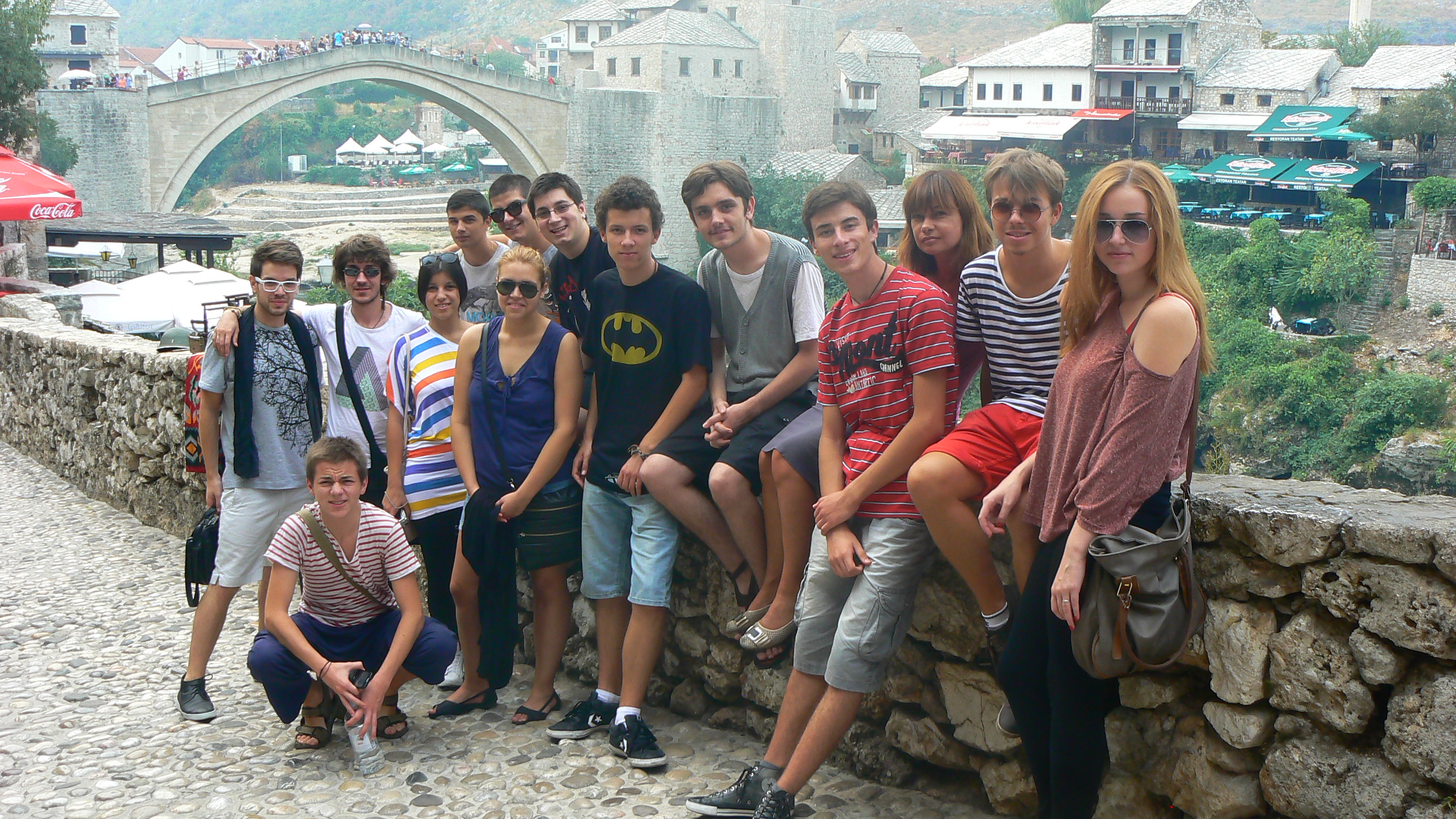
Beside the in-country tours of the dramas, Search organized three regional out-of countries tours for the plays in Mostar, Kragujevac and in Skopje.
“There is so much intolerance for the diversity, for people who are “different” in the world today. This project made me realize we can at least change our attitudes, if not those of the others. All the rehearsals, performances, the touring enabled us to get some wonderful new friends and this makes me feel so happy, not to mention the new experiences I’ve got. The project made me a better person,” said a youth participant from Kragujevac.
Watch this documentary and fall in love with these bright young actors and actress as they embark on the road towards discovery.
Two men, fifteen scars–one act of forgiveness
By Jean Baptiste Ndabananiye & Julia Boccagno
Physical and mental scars can’t be erased; they serve as constant, unforgettable reminders of the past. Yet, with the correct tools and resources, even the worst scars eventually fade.
Our team in Rwanda attempts to do just that—heal the emotional and psychological scars of genocide survivors through reconciliation programs.
For Gakwerere Innocent, a genocide survivor, sincere and genuine forgiveness was never an option. After being slashed with a machete 15 times and having 36 family members killed, Innocent craved revenge towards those who inflicted this unbearable pain.
As for Wellars Uwihoreye, a genocide perpetrator, he was one among many instructed to hunt and murder Innocent. “It’s thanks to God that I didn’t kill him since I was hunting him,” he said. He’d given up hope of ever being forgiven for committing these inhumane crimes.
That all changed.
Because of the USAID funded program “Maximizing the Impact of Reconciliation in Rwanda,” Search’s radio journalists launched “Success Stories on Reconciliation in Rwanda,” a media initiative that publicly broadcasts personal stories of internal conflict resolution. The subjects of the stories become role models, inspiring both victims and perpetrators of genocide to embark on the challenging and rewarding journey to forgiveness.
The program allowed Gakwerere Innocent and Wellars Uwihoreye to peacefully reunite. With additional help from the nonprofit Christian Action for Reconciliation and Social Assistance (CARESA), Innocent was greatly moved by Uwihoreye’s plea of forgiveness. Innocent explained, “Uwihoreye asked me for forgiveness from the bottom of the heart so that I felt really fully satisfied to forgive him. He knelt before me and beseeched me pardon; he did it in a spirit of deep sincerity and conviction with deep feeling.”
Uwihoreye was awed and speechless by Innocent’s graciousness, “It was like a dream when I heard Innocent forgive me because I wouldn’t imagine because of cruelty I had committed against him, I immediately saw him like God.”
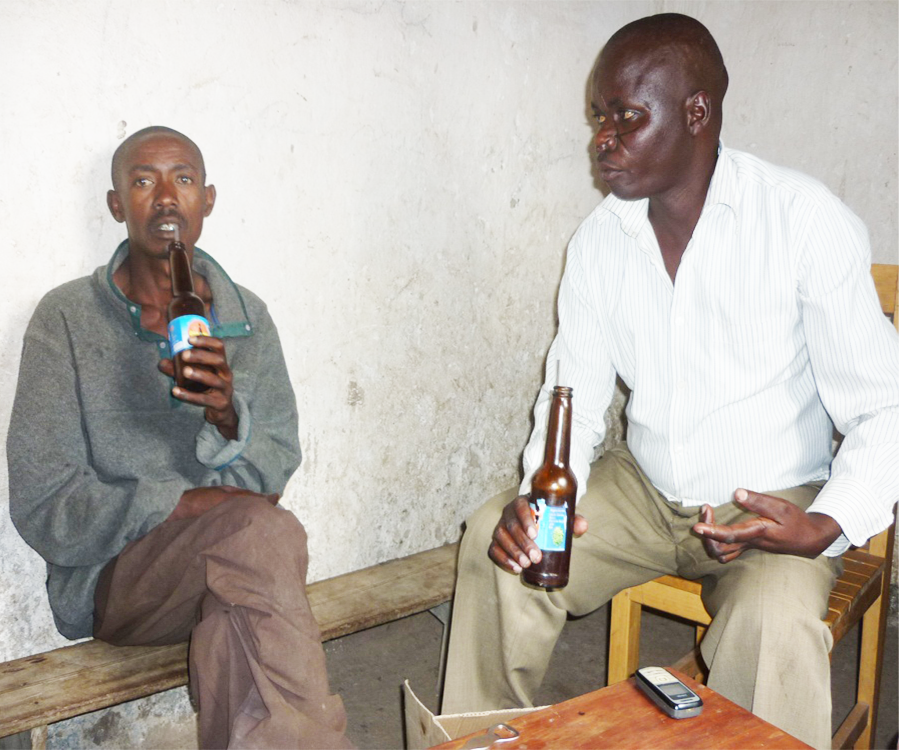
Uwihoreye on the left and Innocent on the right sharing beer at Innocent’s house.
Now, Innocent and Uwihoreye are not only close friends, but their wives also confide in one another. Innocent and Uwihoreye even share a cow as part of an initiative known as “Cows for Peace,” which strives to build sustainable socioeconomic relationships among its clients through the joint ownership of a farm animal.
To forgive is not to forget. The horrific mental, physical and emotional scars caused by the 1994 genocide will always remain a part of Rwanda’s history. However, thanks to grassroots reconciliation programs, scars of the past can be lessened and healed to restore unity among the people.
Please share their story.
_______________________________________
As one of Search’s radio journalists, Jean Baptiste Ndabananiye, helped produce content for Success stories on Reconciliation in Rwanda as part of “Maximizing the Impact of Reconciliation in Rwanda.”
As a rising American University junior, Julia Boccagno majors in Broadcast Journalism and double-minors in International Studies and Italian with the hopes of becoming a future foreign correspondent. She firmly believes that objective news reporting is a vital tool within the peace and conflict resolution conversation.. She is currently the New Media Intern at Search for Common Ground.
Sri Lanka street drama takes on child labor
By Julia Boccagno
Honoring World Day against Child Labour
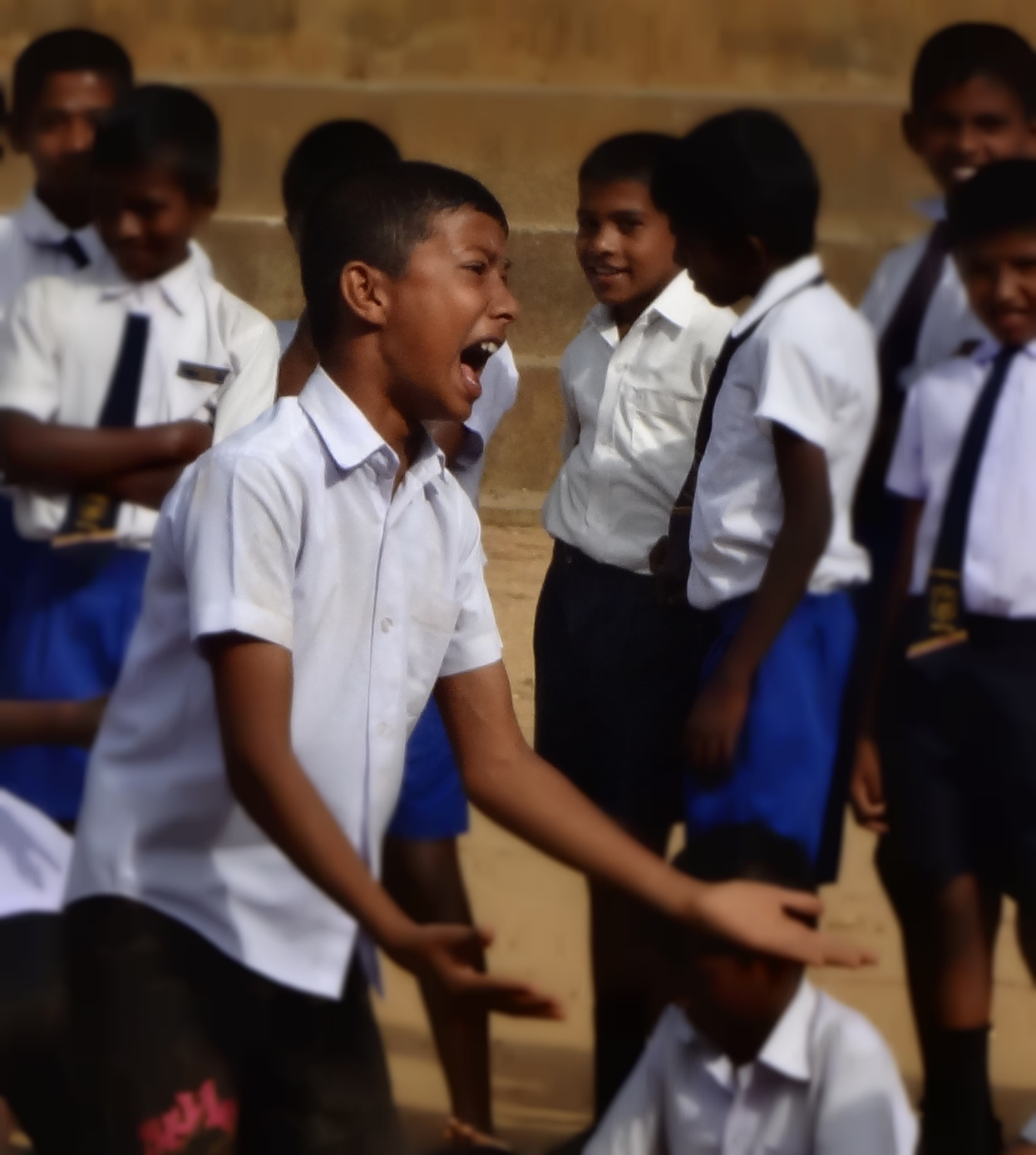
Young actor performing during the street drama.
“We want our childhood; we want our right to be educated in schools,” an 11 year-old actress cries out on stage, as tears stream down her cheeks.
Every time these novice street actors and actresses step on stage in Sri Lanka, there isn’t a dry eye among the hundreds of spectators.
The tears well up out of memories—of physical pain and emotional hardship— to those robbed of an education as child laborers in Sri Lanka’s plantation sector.
From an early age, children learn that money is more valuable than an education. Because of the extreme poverty in the plantation sector, parents rely on their children for additional income. They simply cannot afford an education, even though it is free, because schooling doesn’t provide immediate economic security for the rest of the family.
This widely held attitude forces children to drop out of school and work in difficult conditions—as domestic servants in wealthy households, factory workers, or agricultural laborers.
To address child labor, Search established “Promoting Active Civic Participation in the Hill Country” to raise awareness among the local community about the importance and benefits of receiving an education. In order to create an interactive, engaging environment, Search communicates its themed messages to audience members through radio channels, talk shows, and participatory theater performances.
The program also strives to strengthen the skills of young leaders to engage their communities and with decision makers. By engaging the youth in participatory theater programs, they learn how to serve as catalysts of socioeconomic change, claim their legal rights, and access government services.
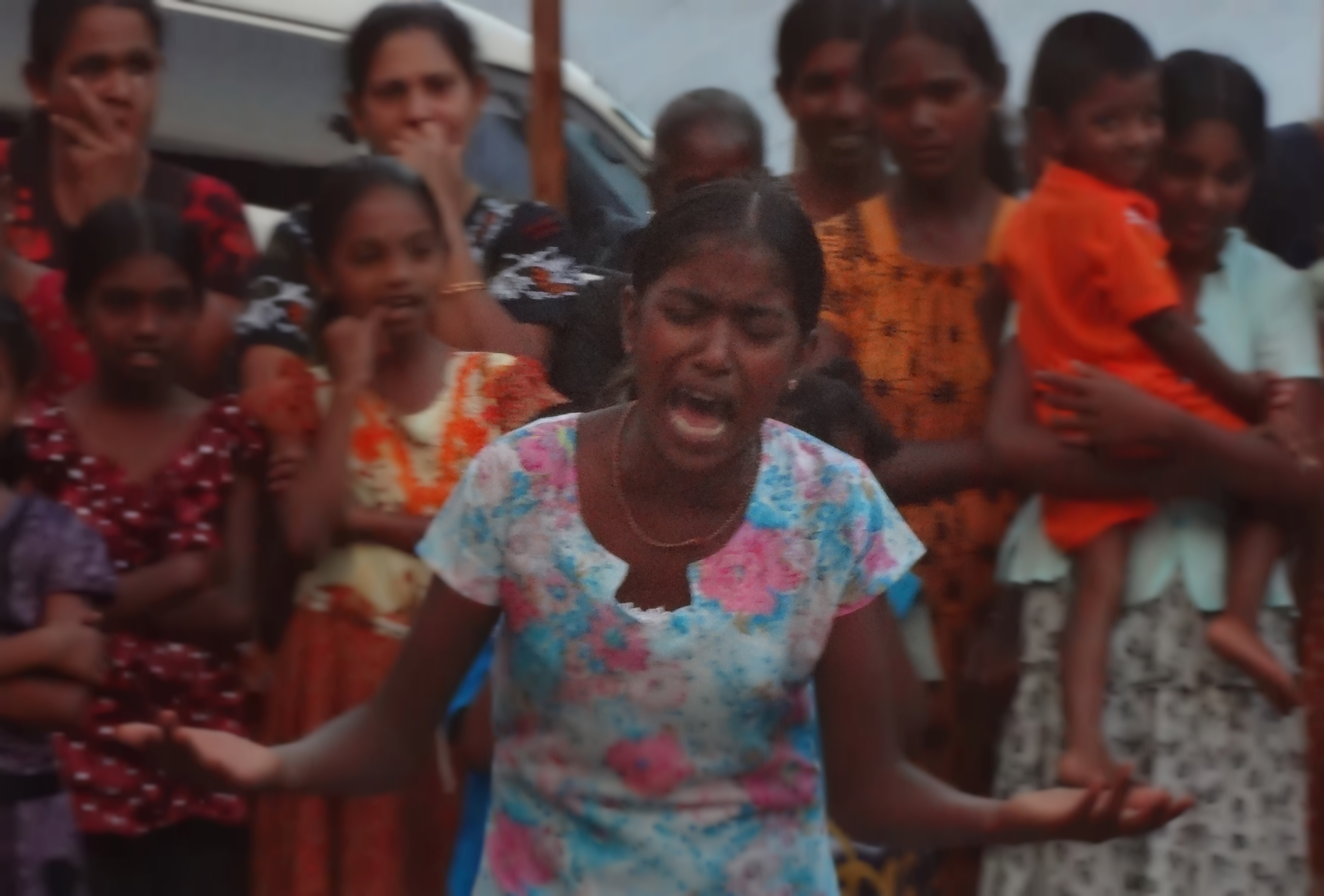
Young actress performing during the street drama
Because the problems explored throughout the theater performances are a reality for many, both the child “actors” and audience members are emotionally moved and inspired to break the cycle of exploitation. The impact of the program is best understood through the powerful words of an 11-year-old student,
“I worked in a grocery shop after being dropped out of school. I never knew how important it is to study until I joined this street drama group. Now, I am determined to go back to school.”
Although labor laws are being addressed in Sri Lanka, millions of other children worldwide experience the worst forms of child labor, such as slavery and engagement in armed conflict.
Raise Awareness. Support World Day against Child Labour!
Learn more about our work with children all over the globe, click here.
____________________________________________
As a rising American University junior, Julia Boccagno majors in Broadcast Journalism and double-minors in International Studies and Italian with the hopes of becoming a future foreign correspondent. She firmly believes that objective news reporting is a vital tool within the peace and conflict resolution conversation. Always eager for adventure, Julia has a passion for traveling and views it as an avenue to achieve cultural understanding. She is currently the New Media Intern at Search for Common Ground.